Doss family breakdown
Dr. DeathDoss family breakdown is the gradual estrangement among Richard Doss, Joanne Doss, Eric Doss, and Stacy Doss, made acute by Joanne’s illness and death. The crisis is not explained by a single rupture: the family’s history of passivity, unequal participation, and unspoken feeling leaves its members isolated even while they argue over what happened. Joanne’s death becomes the point at which old grievances and uncertain explanations converge, and the family’s intense conflict briefly gives way to physical tenderness without resolving its underlying causes.
A decline without a settled explanation
Richard describes Joanne’s illness as a gradual transformation. She had been energetic and athletic, but fatigue gave way to joint pain, headaches, sensitivity of the skin, and increasing withdrawal. She stopped socializing and exercising, spent more time in bed, and gained weight rapidly. Richard says that she eventually weighed 210 pounds, more than twice her earlier weight. He remembers feeling that the woman he had married had become a stranger, even as he continued to believe that withdrawing food from her would be cruel because it seemed to be the one thing sustaining her.
The medical search did not produce a clear cause. Richard recounts consultations with numerous doctors and extensive testing, including scans and two lumbar punctures. A later file contains reports from fifteen doctors and a range of investigations, among them blood and urine tests, X-rays, CAT scans, PET scans, MRIs, and the lumbar punctures. The recorded results are repeatedly negative. That documentary trail supports the uncertainty surrounding Joanne’s condition, but it does not settle what caused it. The distinction matters because the family’s later explanations carry emotional and moral judgments as well as claims about illness.
The physical contrast between Joanne before and during her decline is also conveyed through a Polaroid: a distant view of a king-size bed, with a swollen face visible among pillows. The image makes the deterioration concrete, while its distance and framing leave Joanne herself difficult to know. Richard’s account supplies symptoms and chronology; the photograph supplies an arresting appearance. Neither grants the family a definitive explanation for the change.
A family organized around silence
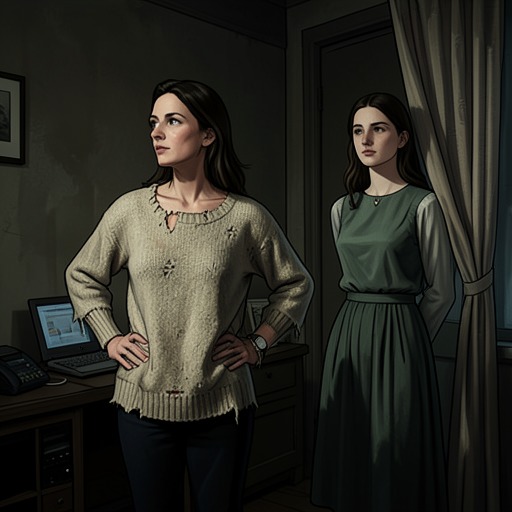
Stacy’s recollections suggest that the distance among the Dosses preceded Joanne’s illness. She remembers her mother as passive, with Richard deciding even the family’s dinner menu while Joanne prepared the meal. An old box of menus and recipes cut from magazines suggests that Joanne had once taken an interest in planning, but Stacy cannot say when that interest faded. In the household as Stacy experienced it, her father and Eric held the strongest opinions, and their quick-moving exchanges made it difficult for her to join in. She does not describe deliberate exclusion so much as a family conversation whose momentum left her outside it.
Later, Stacy tells Alex Delaware that the family lived together without truly connecting. She cannot recall a clear, happy relationship with Joanne from her childhood, though she does not deny that Joanne performed the expected work of a mother. Her image of her mother is one of emotional insubstantiality: someone difficult to reach or grasp. This recollection complicates any account that treats the family’s disconnection as a sudden consequence of illness. Joanne’s decline intensifies an existing absence rather than creating it from nothing.
The siblings respond differently to loss. Stacy says Eric took Joanne’s illness much harder than she did and connects his late-night walks to the way he had cared for Helen, the family’s aging yellow dog. When Helen lost the use of her legs, Eric built a small wagon and pulled her around; he stayed out all night when she died. Stacy suspects that his own distress over Joanne may likewise have driven him away from home, though she does not know what he was doing. Her account offers a possible pattern of grief and withdrawal, not a confirmed explanation for Eric’s actions.
Joanne’s death and the struggle over blame
The family’s estrangement sharpens around Joanne’s decision to seek help from Eldon H. Mate. Stacy argues that the family had made Mate into a monster because Richard and Eric could not face the possibility that Joanne had chosen to die. Her question of responsibility is not presented as a settled verdict: it reveals how difficult it is for her to reconcile her mother’s agency with the suffering and confusion that preceded the death.
Bob Manitow offers a sharply different account. He characterizes Joanne’s deterioration as psychological collapse and depression, says she refused psychiatric help, and believes that Richard should have had her committed. In his view, treatment might have kept her alive and spared the children what followed. His certainty contrasts with the inconclusive medical records and with Richard’s description of the prolonged search for a physical cause. The competing accounts divide not only over diagnosis but over responsibility: whether Joanne was ill, withdrawing from life, exercising a decision, or some combination the family cannot confidently establish.
The unresolved history invites further speculation. Alex Delaware considers whether guilt or an older family wound might lie behind Richard’s displaced anger toward Mate, and wonders whether Eric had discovered something. These remain questions, not revelations. The narrative links the family’s scattered difficulties—Eric’s breakup and poor school performance, Stacy’s loss of focus, Joanne’s withdrawal from tutoring, and Judy Manitow’s strain—to a larger pattern of distress, while stopping short of proving that they share one cause. The breakdown’s force comes partly from that gap between an accumulating set of troubles and the absence of a confirmed explanation.
Rupture, tenderness, and what remains unresolved
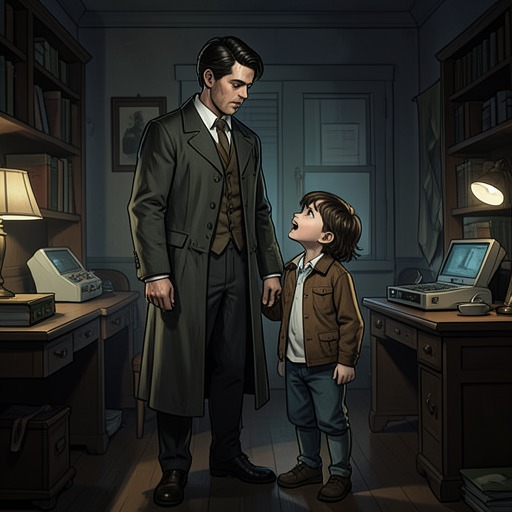
After Eric’s anger erupts amid the destruction of the family’s possessions, Alex Delaware thinks of Richard and Eric as volatile and concentrates on getting Stacy out of the house for a night or two. Joe Safer persuades her to pack a bag. When Alex accompanies him back into the living room, the wreckage has been partly swept into piles, but the family’s immediate emotional condition is visible in a different way: Richard and Eric sit on the floor with their backs against the sofa, Richard’s arm around his son, Eric’s head against his chest and his face wet with tears. The scene does not cancel the conflict; it shows father and son seeking comfort inside it.
Alex reads the embrace alongside the family’s failure to forgive. He thinks Richard has not forgiven and is now paying for that refusal, but this is Alex’s interpretation rather than a definitive account of the family’s past. The tenderness between Richard and Eric is therefore both a change in the scene and a limited one: for a moment, the adversarial energy gives way to care, while the questions surrounding Joanne and the family’s accumulated silences remain.
As a state within the novel, the Doss family breakdown is defined by competing explanations and uneven access to grief. Stacy feels outside the father-son bond; Eric’s pain appears in withdrawal and explosive anger; Richard alternates between describing the labor of caring for Joanne and judging how far she changed; and the family cannot agree on what her death means. Their crisis is not neatly repaired by the embrace. Instead, it makes visible the fragile connection that persists beneath estrangement and the unresolved history that continues to press upon it.