Eldon H. Mate
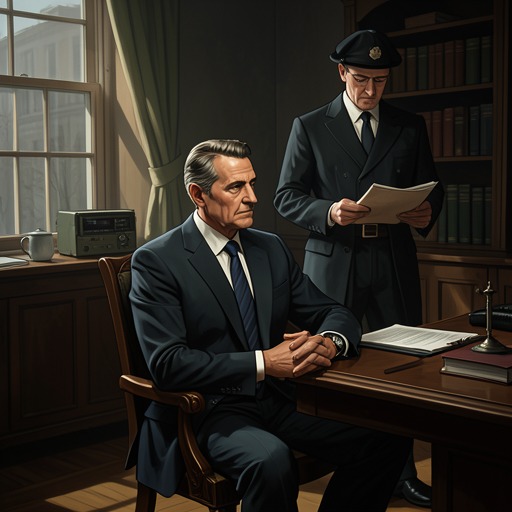
Dr. DeathEldon H. Mate is the physician known in public as Dr. Death, a figure whose work assisting people to die divided observers between condemnation and mourning. His murder made that division literal: he was found trussed to the Humanitron, the device associated with his work. The contrast between the machinery’s ungainly construction and the moral weight attached to it, as well as the gaps in what was known about Mate’s medical career, leaves him at the center of both a murder investigation and a dispute over who had the authority to define suffering and death.
Identity and Medical Background
Mate was born in San Diego sixty-three years before the account of his murder. His path to medicine was unusual: he earned a chemistry degree from San Diego State, worked as a chemist for an oil company, and entered medical school in Guadalajara at forty. After an internship at a hospital in Oakland, he became a licensed general practitioner at forty-six. The sequence suggests a deliberate midlife change of profession, but the available biographical record does not establish what prompted it.
His credentials and employment history complicate the public image of a conventional practicing doctor. Mate had no specialty training. The jobs identified in news accounts were civil-service positions at health departments across the Southwest, where he oversaw immunization programs and handled administrative work. The account finds no indication that he had ever treated a patient in those jobs. It therefore presents a striking division between his formal medical qualification and the public identity that grew around his assistance in dying: his career brought him into medicine, but the reported employment record offered little evidence of ordinary patient care.
A marriage license issued in San Diego twenty-seven years before the investigation records Mate and Guillerma Salcido Mate as marrying. The document establishes a significant part of his personal history, but does not, by itself, explain the state of their relationship at the time of his death. Like the clipped biographies assembled after his murder, it provides a concrete record while leaving much of the private life behind it unknown.
The Humanitron and Public Reputation
Mate’s machine had a name of his own: the Humanitron. It was associated with what he called a silent passage for people undertaking a final journey, and news coverage described him as a one-way travel agent. Those terms framed his work as a service while making death its destination. In the immediate public response, the image of Mate depended heavily on prior judgment. People who had seen him as an Angel of Death could feast on the irony of his murder; those who had regarded him as Mercy Personified grieved. The same reported facts could thus confirm opposite moral narratives.
The Humanitron itself did not resemble the polished, advanced apparatus that its reputation might lead people to imagine. Milo Sturgis described it to Alex Delaware as makeshift: mismatched screws, an unstable appearance, and the look of a junior-high science-fair project assembled from spare parts. Yet the machine worked. That mismatch is central to Mate’s public image: a device that appeared crude and improvised had become the instrument attached to consequential decisions about death. Its name promised humane passage; its physical appearance offered no corresponding technological authority or reassurance.
Joanne Doss and the Limits of Diagnosis
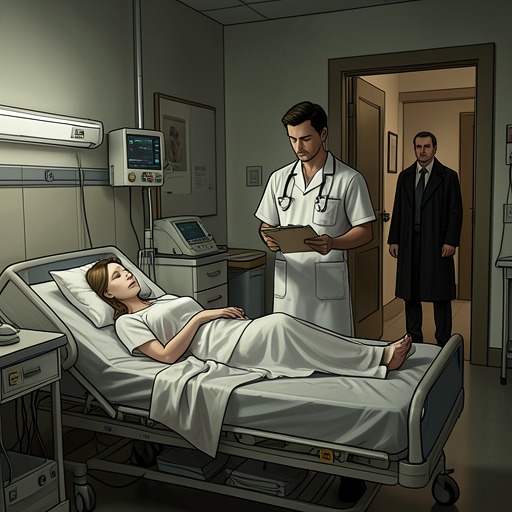
The account of Joanne Doss’s illness supplies a specific context for Mate’s place in the story, but it also preserves uncertainty about what was wrong with her. Richard Doss described a gradual decline beginning with fatigue and continuing through joint pain, headaches, skin sensitivity, and increasing disengagement from her family and former activities. She withdrew from social life, stopped playing tennis and using the gym, and eventually spent much of her time in bed. Her weight rose from 110 pounds to 210 in less than a year, while food remained one of the few things she continued to seek.
The medical search had been extensive without producing an explanation. Richard recounted consultations and tests including CAT scans, MRIs, and two lumbar punctures; a later file gathered laboratory reports and results from fifteen doctors. Blood and urine tests, X-rays, PET scans, and other investigations had not resolved the cause. The record repeatedly points to negative findings rather than a settled diagnosis. A photograph of Joanne from this period makes the bodily change stark, but neither the image nor the reported tests establish why she became ill.
Richard interpreted Joanne’s death as the result of depression and said that she had called a doctor to finish the job. His account is a family member’s explanation, not a conclusive medical finding: the extensive negative workup establishes diagnostic uncertainty, not that Joanne had no physical illness. Mate’s association with her death therefore sits inside a conflict over interpretation. Her suffering could be described through symptoms and inconclusive tests, through Richard’s belief that she had withdrawn from life, or through the decision to seek assistance in dying. The available details do not make those accounts equivalent, nor do they settle what Mate knew about her condition.
Murder and Narrative Significance
The first public reports disclosed only a narrow outline: Mate’s van had been parked on a remote stretch of Mulholland Drive, hikers discovered it just after dawn, and Mate had been murdered while attached to his own device. The announcement that Dr. Death had been murdered became the sharp, compressed headline through which readers encountered him. Alex Delaware knew more than the newspapers had released because Milo Sturgis provided details, but the early public record remained dominated by old photographs, biographical clippings, and familiar arguments about the ethics of assisted death.
Mate’s death reverses the role his public identity seemed to assign him. The man associated with arranging other people’s passage becomes the victim at the center of a homicide investigation, his own apparatus turned into part of the scene. The reversal does not disclose who killed him or resolve the ethical dispute surrounding his work. Instead, it forces the public debate and the private crime to occupy the same space: Mate is at once a contested doctor, the maker or user of a device that worked, and a murder victim whose final circumstances intensify the uncertainty surrounding his life.