Eric Doss
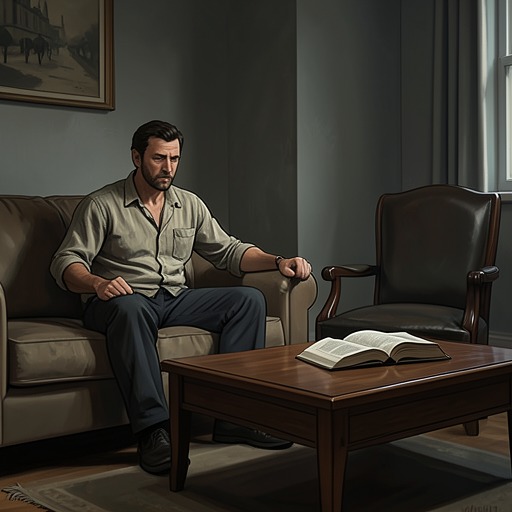
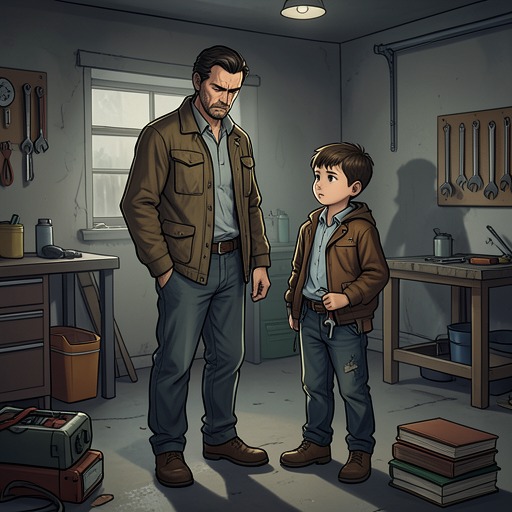
Dr. DeathEric Doss is the brilliant, driven son of Richard Doss and Joanne Doss, but his gifts do not protect him from the family’s prolonged encounter with illness and death. After returning from Stanford in the midst of a private crisis, he presents himself as both a young man in need of help and someone prepared to claim the right to decide when suffering should end. His account of killing the family dog, Helen, gives that belief a chillingly concrete form; his later fight with Richard makes the family’s conflict physical.
Identity and Early Promise
The Doss family describes Eric as an extreme genius, a forceful presence whose accomplishments extend across academics and sports. His sister, Stacy Doss, remembers a family story that captures how early his intellectual precocity appeared: at five, he picked up The Wall Street Journal, read an article about supply and demand in the soybean market, and lectured his kindergarten class on it the next day. As a young man, he already seemed to know what he wanted, in contrast to Stacy, who felt less certain of her direction. She imagines him pursuing a Nobel Prize in economics and then making billions, an exaggerated but revealing picture of how completely his family associates him with ambition and confidence.
That portrait is reinforced by his academic record. Richard reports that Eric returned to Stanford, completed the academic year with excellent grades, and began working with an economics professor on an honors paper. Yet the account of achievement exists beside signs that Eric’s composure can fail. The same family that regards him as exceptionally capable must also confront his unexplained withdrawal, missed exams, and refusal to speak.
Joanne Doss’s Illness and the Photograph
When Joanne Doss’s illness kept her at home, Eric left Stanford during his second semester to be with her. Richard says that Eric devoted himself to his mother over the more than a year in which she declined. Eric also took a photograph of her near the end of her life. The image, showing Joanne alive but in a state Richard describes as a living death, initially strikes Alex Delaware as if it might be a postmortem picture. Richard explains that Eric wanted a record of what had happened to his mother, and that the sight of her condition angered him.
Richard resists judging his son’s decision to photograph her. He argues that Eric had remained with Joanne through a long decline, and that the photograph captured her condition as it was. In his view, the picture must be understood alongside Eric’s devotion, not as evidence of indifference. He also says Joanne did not object to being photographed. The episode makes Eric’s response to suffering difficult to reduce to either tenderness or detachment: he stayed with his mother, recorded what illness had done to her, and was enraged by what he saw.
Disappearance and Return from Stanford
During another period at Stanford, Eric misses an exam and goes missing from his family’s view. Stacy considers whether he may have gone hiking. She recalls that, when he lived at home and was caring for Joanne, he sometimes came in late with mud on his shoes. On one occasion, she woke and found him folding a nylon tent in his room, alongside a backpack and supplies including potato chips, candy, and pepperoni sticks. She had teased him about the solitary excursion; he became angry and sent her out. She also remembers his former interest in astronomy and imagines that he might have wanted to escape the city lights to look at the stars. These memories offer possibilities, not an explanation for his disappearance.
Richard eventually finds Eric on campus at four in the morning, sitting beneath a tree in an out-of-the-way place. Eric has apparently been there for a long time, but will not tell his father why. Richard gets him onto a plane and brings him back to Los Angeles. Although Eric has missed multiple exams, Richard says the academic damage no longer matters to him; he wants Alex to see his son. The return is a reversal of the family’s accustomed story about Eric: the student who usually takes care of business is now silent, absent from his ordinary responsibilities, and unable or unwilling to explain himself.
Claims About Suffering and Control
When Eric meets with Alex, he insists that he wants to be there and says he deserves to be. He describes himself as dysfunctional, then turns attention to the language used to name that condition, objecting to the use of a word for sex as a general insult. The exchange shows him directing the terms of the conversation even as he acknowledges that something is wrong. He tells Alex, in effect, that discovering what is wrong is the therapist’s job. His self-awareness is real, but it does not by itself indicate that he can manage the crisis he is describing.
The danger becomes clearer through Stacy’s account of a conversation after the family returns home. Eric tells her, for the first time, that he killed Helen. The dog had been sick; he said the act was humane and presented it as putting her out of her misery. Stacy reports that he laughed while talking about it. He described Helen looking up at him and licking his face before he struck her once over the head with a rock, then buried her. He framed the decision as brave and necessary, and called helping Helen the noblest thing he had ever done.
Stacy is disturbed not only by the killing but by the argument Eric builds around it. She says he suggested that people sometimes have to take matters into their own hands, that right and wrong may depend on being in the person’s position, and that moral rules can reflect other people’s fear of making their own decisions. She understands his account as hinting that he may have had something to do with Joanne’s death, though the evidence here establishes Stacy’s fear and Eric’s suggestive remarks rather than a confirmed role in his mother’s death. His certainty about Helen and his unsettling talk of human suffering bring the family’s grief into conflict with his claim to personal moral authority.
Family Conflict and Narrative Significance
Eric’s words also strike at Stacy’s sense of safety. When he tells her that people are never truly free of misery unless they put themselves out of it, she stops and visibly convulses with emotion. Later, as she recounts what he said about Helen, she clutches a worn stuffed elephant. Her distress makes clear that his disclosures are not abstract arguments to her: they turn the memory of his action against the dog into a frightening possibility about what he might do, or what he might believe he has already done, to a person.
The confrontation with Richard brings the dispute over control into the open. Eric laughs and swings a baseball bat at the family’s porcelain. Richard rushes forward and grabs for the bat; the two struggle and fall to the floor among broken glass and dust. Alex dives in to seize the weapon and is struck in the jaw while trying to hold on. The scene ends with Eric and Richard still fighting and spitting, their conflict no longer contained by explanations or family achievement. Eric’s arc therefore joins extraordinary promise to genuine vulnerability and a dangerous confidence in his own judgment. The unresolved question surrounding Joanne’s death remains part of that tension, while the confirmed killing of Helen and the assault on the family collection show how his ideas have already crossed into action.