Joanne Doss's Assisted Death
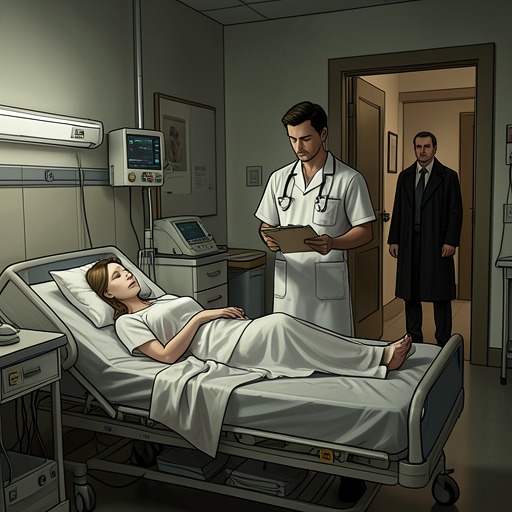
Dr. DeathJoanne Doss’s assisted death with Eldon Mate is reconstructed through her daughter Stacy’s later conversations with Alex Delaware, not shown as a scene. Its decisive significance lies in Stacy’s refusal to make Mate the author of her mother’s death: she sees him as the means Joanne used to carry out a choice already formed, and the event as the final expression of Joanne’s withdrawal from her family. That interpretation separates Stacy from Richard and Eric, who respond by blaming Mate, and leaves her wrestling with the harder possibility that her mother chose to leave.
Causes and Background
Stacy’s account places Joanne’s decision within a longer history of emotional distance. Looking back, Stacy cannot recall whether she and her mother had enjoyed closeness when Stacy was young and Joanne was healthy. She does not deny that Joanne performed the acts expected of a good mother, but says she could not quite reach her: Joanne seemed to her made of air, impossible to hold onto. The illness did not create the entire separation; in Stacy’s view, the family’s disconnection preceded it.
That history shapes what Stacy means when she describes her mother as having erased herself. By the time Mate entered the picture, she believes, Joanne had already withdrawn from wanting to be alive. Stacy characterizes the assisted death as the ultimate passivity, not because she thinks Mate’s involvement was irrelevant, but because she sees the decision as Joanne’s and considers his role secondary to it. Her account therefore shifts the question from what Mate did to what Joanne had already stopped trying to do.
The Last Morning and the News
Stacy recalls no warning that Joanne was about to die. On the morning in question, Joanne called her in to say hello before Stacy went to school and told her she looked pretty. Joanne had said such things before; nothing in the exchange struck Stacy as different. She remembers her mother looking as she always did. There was no goodbye, and Stacy did not understand the ordinary-seeming moment as a farewell.
Stacy learned what had happened through the news. Her first response was shock. After that shock passed, however, she found the event consistent with her understanding of Joanne’s state of mind. The gap between the routine morning kindness and the news of her mother’s assisted death gives the memory its particular force: what looked unremarkable to Stacy at the time became, in retrospect, the last contact before a departure she had not been told to expect.
Blame and Competing Interpretations
Richard and Eric direct their anger at Mate, making him the family’s focus when confronted with a death they cannot control. Stacy describes that response as a tendency to attack what cannot be controlled, a posture she associates with a masculine urge to crush whatever causes distress. When Alex asks whether her father wants to crush Mate, she clarifies that this is rhetorical: Richard uses similar violent boasts about people who anger him, including someone trying to cheat him in a business deal. Stacy treats the language as a familiar habit, not as evidence that he literally intends to kill Mate.
Her own judgment of Mate is contemptuous, but it does not make him the central cause. She calls him pathetic and a loser, then insists that Joanne would have stopped being even without him. Later, when Alex asks directly what she thinks of Mate, Stacy again refuses to treat him as the decisive force in her mother’s death. In her view, the public story gives him too much agency: he did not create Joanne’s wish to disappear, and there was nothing left for him to do once she had already given up on being.
Family Silence and the Aftermath
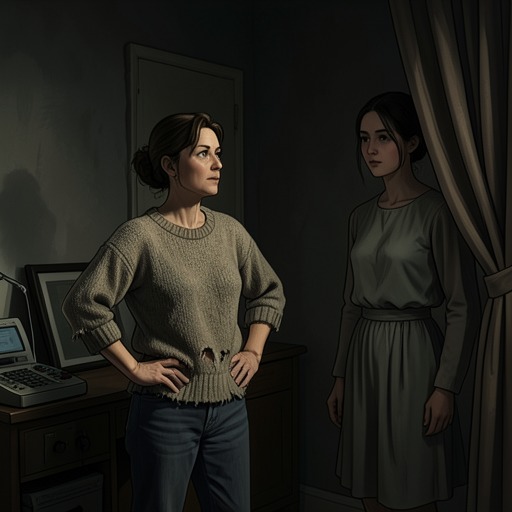
The conversations also bring into focus a household in which people lived together without truly connecting. Stacy admits that in earlier sessions she had not been honest about how troubled the family was. She remembers little of her early relationship with Joanne and cannot resolve what her mother did. Richard and Eric’s shared accusation against Mate, she argues, lets them avoid the truth that the choice was Joanne’s. Alex answers that, ultimately, it was; Stacy then describes Mate as the vehicle Joanne could have replaced with anyone else. She understands the death as a decision to leave her family without saying goodbye.
This conclusion does not give Stacy emotional closure. The loss remains bound up with unanswered questions about whether Joanne cared enough to keep trying and why she never told her daughter what she intended. In one session Stacy’s grief appears in her posture: she crosses her arms over her chest and draws her shoulders forward as if bound by a straitjacket. At another point, after saying that nothing more remains to be said about her mother, she announces that she must attend to her own future and has finally decided she might want one. The shift does not undo the death or settle its meaning; it marks a tentative turn from interpreting Joanne’s disappearance toward imagining a life of her own.
Narrative Significance
Because the event reaches the reader through Stacy’s recollection, its meaning remains inseparable from what she could observe and what she later inferred. The book gives concrete detail about the last morning and the family’s competing responses, but no account here of the assisted death itself. Instead, the ordinary compliment, the absent farewell, and the later argument over responsibility become the evidence through which Stacy makes sense of Joanne’s choice.
The event also complicates a simple opposition between an active helper and a passive patient. Stacy condemns Mate personally while denying that he made the fundamental decision for Joanne. That distinction does not erase his involvement; it shows how the daughter struggles to understand the death without accepting the explanation her father and brother prefer. In the process, Joanne’s assisted death becomes both a rupture in the family and the occasion on which Stacy begins to name its older silences—and to consider a future beyond them.