Lancaster, where Joanne met Mate
Dr. DeathLancaster, where Joanne met Mate, is both the reported setting of her death and the place that gives Richard Doss’s grief its sharpest contradiction. Richard had spent years working there and asking Joanne to visit, but she always refused. Her eventual journey to Lancaster was not the ordinary visit he had wanted: it was bound to her decision to end her life with Eldon Mate’s assistance. The place thus links a public account of a suspected assisted suicide with a private history of invitations, refusals, and belated recognition.
The Reported Death in Lancaster
The first account of Joanne Doss’s death reaches Alex Delaware through a conversation about her illness and suicide. Joanne had deteriorated severely without receiving a definitive diagnosis. Several doctors had examined her, including Bob, who worked her up as a favor to Richard, then referred her to an immunologist and other specialists. The chain of consultations did not establish what had caused her decline. Joanne eventually chose to contact Eldon Mate without telling Richard, and she disappeared one night. Richard learned what had happened only when police called him.
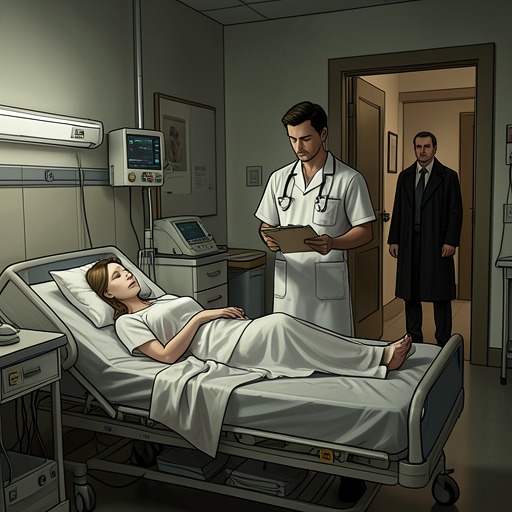
A newspaper report locates the discovery of her body at the Happy Trails Motel, on the outskirts of Lancaster. A maid found Joanne early in the morning. She was forty-three, fully clothed, and the report described no forced entry or signs of a struggle. Toxicology found two drugs that the account said Mate used consistently, while puncture marks suggested an intravenous injection. Although the report noted that no one had reported seeing Mate’s van nearby, investigators suspected assisted suicide. These details supply a public, forensic outline of the death without resolving every part of the story or establishing that Mate’s van had been at the motel.
The report also records the arrangement of the room: classical music played on the radio, and Joanne had eaten a last meal. The lead investigator observed that Mate encouraged patients to listen to music. In this account, the motel is presented not simply as a place where a body was found but as the setting of a carefully prepared death. The absence of a reported struggle, the meal, and the music make the scene appear peaceful to the investigator, while the later disclosure of Joanne’s unexplained deterioration and solitary decision gives that appearance a more troubling context.
A Destination Richard Had Asked Her to Share
Lancaster already mattered in Richard’s life long before Joanne’s death. He said he had spent extensive time there on development projects, building shopping centers and traveling between the Municipal Bank Building and Palmdale. He recalled flying by helicopter as far as Palmdale and driving the rest of the way. The work occupied so many hours that he felt, as he described it, made of sand. His account makes Lancaster a recurring landscape of labor and distance, not a place Joanne had shared with him.
Richard had repeatedly asked her to come out, sometimes begging her to join him for lunch and see what they were accomplishing. He tried to imagine the trip as an occasion for the two of them: the desert could be beautiful if viewed differently, and they could find inexpensive food. He suggested even a casual meal at Pizza Hut, recalling the time when they were dating and broke. His invitations connected the developed landscape to a memory of their earlier life together, when an ordinary meal might have been enough to make a day feel shared.
Joanne always turned him down. Richard recalled her objections as a succession of practical reasons: the drive was too far, traffic was too heavy, and the desert was too dry or hot; she was busy. The accumulation matters to his later reaction. What he remembered was not one refusal but a pattern that had become part of their marriage. Lancaster was somewhere he wanted her to see and somewhere she would not go with him. When her death was connected to a journey there, that old pattern acquired an unbearable new meaning.
The Revelation and Richard’s Grief
When Richard was asked whether Joanne had ever been to Lancaster, he answered that she had never been there before that night. He then explained that the place had been “a thing between us”: he had worked there, asked her to come, and watched her decline. The revelation does not undo the newspaper account that her body was found at the motel. Instead, it sharpens the distinction between a destination she had refused to visit with her husband and the journey she ultimately made in connection with Mate.
Richard’s response turns the place-name into an accusation against the past, though not a settled explanation of Joanne’s choice. He broke into tears, punched the air and his knees, struck his own chest and shoulder, and hid his face. He then ran to the French doors and cried while facing his pool, his land, and the distant ocean. From that view, Lancaster was far away, yet his memory of it had become immediate. He said Joanne must have hated him. His statement is an expression of grief and self-reproach, not proof of what she felt or why she chose to go.
The bitterness of the moment lies in the contrast between the visit Richard had imagined and the journey that occurred. He had wanted Joanne to accompany him to see his work, share lunch, and revisit something of their early life. Instead, Lancaster enters their story through her concealed decision, his discovery by police, and the death scene at the motel. The city therefore gathers together two forms of distance: the physical distance Richard crossed for work, and the emotional distance he felt when Joanne repeatedly refused his invitations.
Narrative Significance
Lancaster’s importance comes from this collision of public place and private memory. The newspaper places Joanne’s body at the Happy Trails Motel and presents evidence that led investigators to suspect assisted suicide. Richard’s later account does not replace those details; it reveals what the location meant within the marriage. Its significance changes from a location in a report to the destination of a final journey that Richard cannot separate from all the visits she declined to make with him.
The sequence also leaves limits around what can be known. Joanne’s illness had not been diagnosed, she had kept her decision from Richard, and the reported evidence supports the suspicion of assisted suicide without describing every step that brought her to Lancaster. Richard’s painful recollection gives his loss a personal shape, but his belief that she must have hated him remains his own interpretation. The place holds these accounts together without resolving their uncertainties: the motel’s reported details, Joanne’s private choice, and the unanswered meaning Richard gives to her arrival.