Leimert Fusco’s psychological deterioration
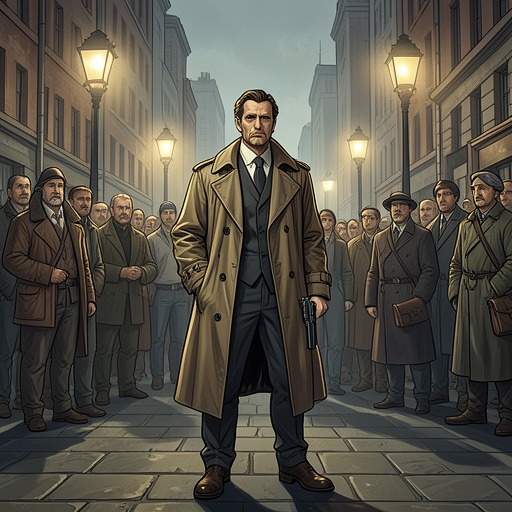
Dr. DeathLeimert Fusco’s psychological deterioration grows out of the death of his daughter, Victoria, and becomes visible in the way his grief is redirected into a prolonged pursuit of Roger Sharveneau and Michael Burke. Once an FBI behavioral-sciences director with an honorable career, he loses professional standing as his efforts to identify a suspected killer become increasingly unauthorized and consuming. The account leaves the daughter’s death medically tragic but not inevitable, and Fusco’s accusations unproved; that uncertainty is central to the widening gap between his focus and his judgment.
Identity and Background
Fusco had served for several years as director of behavioral sciences in the FBI’s Midtown Manhattan office. After his wife died of breast cancer, he became the sole parent of their fourteen-year-old daughter, Victoria. Her history made the bereavement especially harrowing: as a toddler, she had been treated at Sloan-Kettering for a bone tumor and apparently cured. Fusco requested a transfer, explaining that he wanted to raise her in a quieter environment. The Bureau placed him in an administrative position in Buffalo, New York, and he bought a home near Lake Erie. The move was described not as a career advance but as a choice shaped by devotion to his daughter.
For a couple of years, life seemed stable. Then, at sixteen, Victoria developed leukemia. Her doctors apparently attributed this secondary tumor to the radiation used to treat her earlier bone cancer. Fusco brought her to Sloan-Kettering for renewed treatment. She entered remission, relapsed, underwent more chemotherapy, and reached only partial remission. Experimental drugs brought some improvement, but she continued to weaken. Hoping to build her strength enough for a bone-marrow transplant in New York, Fusco moved her treatment to a hospital in Buffalo. She improved for a time, then developed pneumonia while her immune system was weakened by chemotherapy and died. Her death was described as neither unexpected nor inevitable: the medical uncertainty provided no simple resolution for the father left behind.
From Loss to Suspicion
Months passed before Fusco connected Victoria’s death to Sharveneau or Burke. His suspicion gathered force after Sharveneau began confessing. Fusco said he recognized Sharveneau from the hospital ward and had seen him in Victoria’s room without a good reason to be there. The account supplies Fusco’s claim, not independent confirmation that Sharveneau had been responsible for Victoria’s illness or death. The distinction matters: a remembered presence became the basis of an investigation, but not proof of a crime.
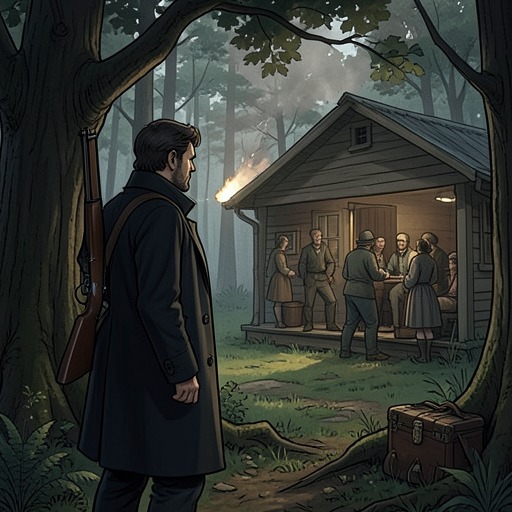
Fusco attempted to interview Sharveneau in jail. Buffalo police refused permission because the FBI had no standing in the case and Fusco had no official role; his interest was plainly personal. Rather than accept the boundary, he reacted badly and continued pursuing the matter. After Sharveneau was released, Fusco harassed Sharveneau’s lawyer. He persisted even after Sharveneau committed suicide. His pursuit therefore outlasted both the opportunity to question Sharveneau in custody and the suspect’s death, becoming a continuing course of action rather than a bounded inquiry.
Professional Decline and Unauthorized Investigation
Fusco was never considered a suspect in Sharveneau’s apparent suicide. Sharveneau had been hiding, and investigators had no evidence that Fusco had found him. The absence of that connection did not restore Fusco’s professional footing: his work product deteriorated, and the Bureau sent him back to Quantico for several months. There he taught seminars to beginning profilers, an assignment intended as a cooling-off measure. For a time he appeared calmer and more content, giving his superiors reason to think the intervention was working.
That appearance proved misleading. While teaching, Fusco was using most of his energy to research Burke and accessing data banks without permission. The contrast between outward calm and concealed activity marks a further stage in his deterioration: institutional reassignment had changed what he did publicly, but had not ended his pursuit. He was summoned to New York to meet with his superiors and was then dismissed on a disability pension. The condition was characterized as an emotional disability, although the account does not offer a more specific diagnosis.
Fixation, Judgment, and Consequences
When asked whether Fusco seemed seriously disturbed or out of touch with reality, the evaluating doctor described him as focused. That assessment did not reassure his former colleagues. They regarded excessive focus as the problem: by the time of the disclosure, Fusco had already committed a score of felonies, mostly multiple thefts. The offenses were described as principally thefts, not as a record of violent crimes. His concentration, once a professional strength associated with behavioral-science work, had become entangled with unauthorized access and an increasingly personal campaign around Burke.
Fusco’s story thus turns on a painful asymmetry. He had cared for Victoria through successive treatments and a long decline, but after her death he could not secure an official investigation into the person he believed he had seen at her bedside. The available account neither confirms his suspicions nor erases their emotional source. Instead, it traces the consequences of acting on them: harassment, deteriorating work, secret research, data theft, and the loss of his FBI career. The temporary calm at Quantico and the subsequent discovery of his covert activity make the decline especially stark. What first appeared to be a contained personal fixation had become a pattern of conduct with criminal and professional consequences.