Malibu
Dr. DeathMalibu in the novel is more than a coastal destination: the name also points toward a secluded family property in the mountains, where Tanya Stratton once sought quiet and where an investigation later converges. The cabin’s isolation, shabby infrastructure, and distance from the ocean shape the search for Paul Ulrich and the uneasy scene that follows.
The Property and Its Ownership
The land belongs to Tanya Stratton and her sister, Kris Lamplear. Their parents bought it years earlier, intending that their father build a house there, but he never did. Kris estimates the property at five or six acres, though she is not sure of its exact size. To her, it has become an inconvenient, potentially valuable asset: she says she would have sold it long ago, and describes little there to justify keeping it.
What stands on the property is a small, neglected cabin rather than the house their father once planned. It has no telephone, an unpleasant bathroom, and a tiny septic tank. The electricity lines are often down, and the road regularly washes out. Kris’s account makes the cabin’s remoteness practical as well as atmospheric: reaching it can be difficult, and staying there offers few comforts or distractions. She imagines her children becoming bored there almost immediately.
A Mountain Retreat Away from the Coast
Although the property is called Malibu, Kris distinguishes it from the beach. It lies in western Malibu, in terrain more like Agoura, across the Ventura County line and up in the hills. The distinction matters during the search: Malibu first sounds to Milo Sturgis like a familiar coastal destination, but the relevant place is inland, reached by a winding route into the mountains.
Milo drives west on the 405, takes the 101, exits at Kanan, and follows the Pacific Coast Highway north. Past Trancas Canyon, the Coast Highway is nearly empty; the route crosses the county line at Mulholland Highway, near Leo Carrillo Beach. From there Milo turns inland and climbs. The contrast between the serene ocean and the difficult approach sharpens as the car leaves the coast behind. The destination is nearly five miles from the ocean, beyond its nearest neighbor and preceded by roughly a mile of state land.
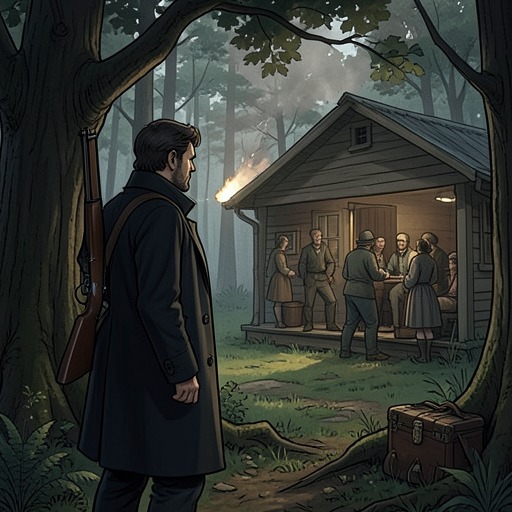
The entrance is easy to miss. Milo initially drives past it, and the pair must circle back. The mailbox, concealed by plumbago vine, is rusty and missing its door; most of its gold-foil address numerals have disappeared, leaving only three curling digits. There is nothing in the box. After Milo parks and switches off the engine, he and Alex Delaware return on foot. The unmarked dirt road, closer to a path, bends left and winds through dense greenery. These details turn the final approach into a search in its own right: an indistinct entrance, a damaged marker, and a track that seems to disappear into vegetation.
Tanya’s Use of the Retreat
The property is not merely an unwanted inheritance. Kris says Tanya likes it because she likes quiet. Tanya went there while recuperating from chemotherapy, although Kris is uncertain whether the retreat was simply restorative or also a way for Tanya to demonstrate her toughness. That uncertainty belongs to Kris’s account; what is clear is that Tanya had chosen this difficult, isolated place at a time when she was recovering from serious illness.
The contrast between the sisters’ attitudes helps explain why the property remains available. Kris sees a remote, poorly maintained parcel that could be sold, while Tanya values its quiet and has used it as a refuge. Kris also recalls that Tanya can be stubborn. The cabin’s limited comforts and unreliable utilities therefore do not make it unusable for Tanya; they are part of the place she chooses when she wants distance from ordinary demands.
The Search and Its Aftermath
Kris’s description gives the investigators a reason to try Malibu when Paul Ulrich sometimes goes off by himself for a day or so. She does not know where he goes, but suggests the property because it is the one place Tanya likes. The lead redirects the search from the familiar coast toward the sisters’ mountain land. For the investigators, the very qualities Kris lists as drawbacks—seclusion, a rough road, and few nearby neighbors—also make the property a plausible place to look for someone seeking to be alone.
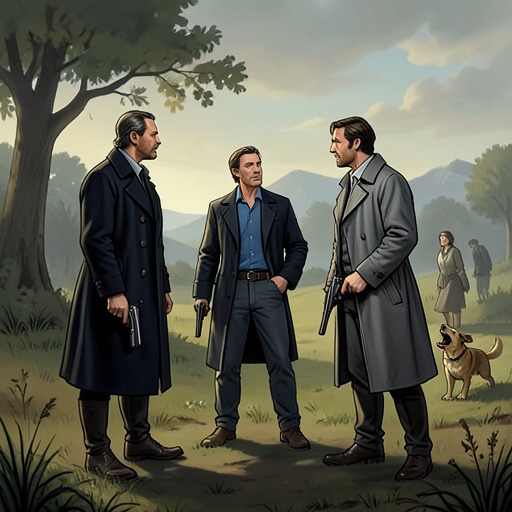
The property becomes a crime-scene setting. After gunfire, Duchess barks while Milo keeps his gun trained toward the trees and the surrounding silence. Deputies arrive from the Malibu substation and assemble a squad to travel up to the ridge, wary that the shooter may still be nearby. While the officers gather, Milo works alongside the coroner and inspects the scene without openly displacing the deputies’ authority.
Tanya is kept away from the crime scene. Alex is asked to comfort her, but she refuses conversation and seeks solace by speaking to her sister on a cell phone and stroking her dog. Sitting beneath a silver-dollar tree with her knees drawn up, sunglasses on, she softly strikes her own jaw. Her visible distress brings the investigation’s danger into the same landscape Tanya had once used for recuperation and quiet.
A later careful search of the cabin finds little of evidentiary value. The exception is an old, burnished-leather doctor’s bag bearing the gold initials EHM. The absence of other obvious trophies or useful material leaves the bag as a distinct object of interest, while its initials connect the cabin’s sparse interior to the investigation surrounding Eldon H. Mate. Malibu thus holds two roles at once: it is a family retreat whose meaning differs sharply for the sisters, and an isolated site whose approach and sparse contents become part of a criminal inquiry.