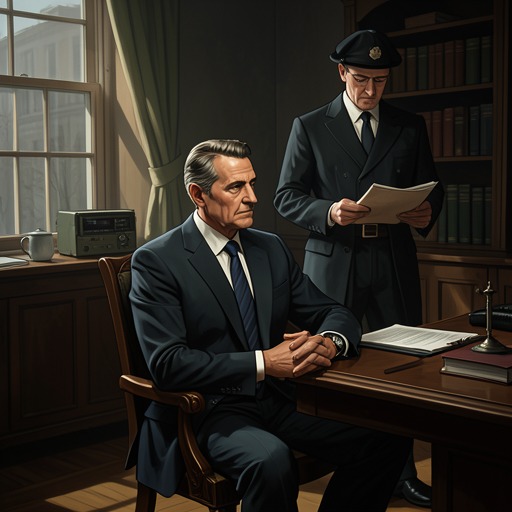
Milo Sturgis
Dr. DeathMilo Sturgis is an LAPD homicide detective whose work on Eldon Mate’s murder combines brisk field investigation with a deliberate resistance to publicity. He is Alex Delaware’s police contact and partner in pursuing leads, but he is more than a procedural guide: his rapport with Alex, sardonic humor, and moments of uncertainty give the investigation a human counterpoint to its accumulating suspicions.
Detective and public role
During July and August, Milo had solved four homicides: one domestic-violence killing and three shootings among intoxicated patrons in Westside bars. The cases were ugly but comparatively straightforward, and catching the killers helped keep his solve rate high. He regarded that record as making his position a little easier as the only openly gay detective in the LAPD, though not by much. The detail locates him within the department as both an experienced homicide investigator and someone conscious of his distinct public position there.
Milo is also careful about what the press learns. After Mate’s murder, he let six days pass before calling Alex, by which time the body had been cold and the newspapers had moved on. The restraint suited his preference for solitude, described in terms of an artist’s need to work without an audience. It also followed orders from the department’s brass, with whom he shared the view that reporters were usually adversaries. The press had assembled its coverage from old biographies, photographs, quotations, and the ethical debate around Mate; the police had released little beyond the fact that Mate had been killed with his own device. Milo’s silence is therefore both personal temperament and investigative policy.
Partnership with Alex Delaware
Milo’s call to Alex marks the resumption of their close working exchange after the initial public attention has ebbed. Alex serves as the psychological consultant, and Milo introduces him in that professional capacity to witnesses Tanya Stratton and Paul Ulrich. The introduction places Alex inside the police inquiry, while Milo remains the detective responsible for coordinating the witnesses and the investigation. Stratton’s unenthusiastic response to Alex does not unsettle Milo’s practical handling of the meeting.
Their conversations are informal without being careless. When Alex calls the station, Milo greets him simply, then explains that Detective Steve Korn is one of his assistants. The brief exchange makes the department’s working relationships visible: Milo has help, but Alex can contact him directly and bring him information. Later, when Alex receives a call from Leimert Fusco, he checks with Milo before speaking to the federal investigator. Milo’s presence in that decision reflects the trust between the two men and Alex’s awareness that information in a homicide investigation has consequences beyond a single conversation.
Following the Mate investigation
Milo and Alex pursue Roy Haiselden as a possible suspect in the widening inquiry. They examine Haiselden’s home, a modest peach-colored house west of Westwood, and find no mail in the slot, suggesting that he has left recently. The empty driveway and secured front door add to the impression of an absence that needs explaining, though they do not establish where Haiselden has gone. Their attention then turns to his office on Miracle Mile, where he leases space above a Persian restaurant among other low-rent businesses.
The suspect theory develops through questions about Haiselden’s connection to Mate. Alex considers whether Mate gave the lawyer a cause and a public identity, and whether a later rift or desire for more attention might have altered that relationship. Milo responds by moving the inquiry forward: Haiselden has climbed the suspect list, so they should visit his office. The shift from speculation to a concrete investigative step captures their complementary rhythm. Alex tests psychological explanations; Milo translates an emerging theory into a place to search.
The case also leads Milo to consider Mate’s associates and family. While discussing Donny Mate and the possibility of claims against Mate’s estate, Milo observes that anger and money often shape people’s actions. His remark is grounded in the practical questions raised by the case, including the more than three hundred thousand dollars Mate had left in the bank. He agrees to look into Donny while keeping pressure on the search for Haiselden, treating financial motive and personal grievance as parallel lines of inquiry rather than mutually exclusive explanations.
New leads and shifting suspects
A painting associated with the investigation prompts Milo to consider what its surface might reveal. He notes that it has no fingerprints and entertains the possibility that the person responsible is both careful and disturbed. The painting gives Alex little new insight, but it keeps their attention on the mixture of rage and ambivalence directed at Mate. Milo’s response to a call during their discussion changes the immediate focus: Petra Connor has found information about Donny and is on her way to meet them after a trial at the Santa Monica courthouse. Milo’s evident excitement turns a speculative conversation into a fresh lead.
The possibility that Richard Doss has been arrested also reaches Alex through Milo. When Alex later asks about the news, he explains that Steve Korn and Brad Demetri had come to the house and taken Doss away in front of his children. Milo’s role in that exchange is to convey the investigative development plainly, while Alex’s reaction registers its personal shock. The arrest is a consequential change in the case, but it does not end the need to test other evidence or revisit the assumptions that led investigators toward Doss.
That uncertainty is especially clear when Alex interrupts Milo as he is trying to obtain paperwork on Doss. Milo says he has already secured some and objects that Alex’s efforts to reach MacIntyre nearly disrupted the process. Once Alex explains what he saw in Alice Zoghbie’s backyard and that he reported it to the police clerk, Milo immediately changes course. Concerned that Alex may still be watched, he proposes meeting in a central parking lot and gives him practical instructions for checking whether a blue sedan is following him. The exchange shows a detective who can be irritated by interference but responds to a potentially important observation with caution and protective action.
Temperament under pressure
Milo’s humor is often a way of measuring the distance between the work and the rest of life. In one exchange about domestic routine, he says he would rather have a freeway pileup if it meant he was being useful. The joke is pointed: emergency work gives him a clear task, while ordinary domestic life is harder to treat as a solvable problem. It also keeps his partnership with Alex from becoming merely a channel for police information; their banter conveys familiarity even as the investigation weighs on them.
At another point, Milo is on Mulholland, staring at the dirt and trying to work out whether he has missed something. The image counters the confidence of his decisive movements through the investigation. He can identify the next office to visit, arrange a meeting, and warn Alex about surveillance, yet the case still leaves him searching the ground for an overlooked clue. That combination of competence and doubt defines his contribution: Milo drives the inquiry forward without pretending that each new lead has made the mystery simple.