Richard Doss–Eric Doss father–son relationship
Dr. DeathRichard Doss and Eric Doss are bound by affection and family loss, but their relationship is repeatedly unsettled by Eric’s insistence on privacy and Richard’s need to understand and manage what is happening. Joanne Doss’s illness and death leave them with a shared grief that neither readily discusses: Richard expresses anger, while Eric’s silence and self-reproach suggest a more private crisis. Their story turns on the difficulty of caring for one another without converting concern into control.
Family Background and Contrasting Temperaments
Stacy Doss describes Richard as a self-made man whose parents, Greek and Sicilian immigrants, ran a grocery in Bayonne, New Jersey. Eric later draws on that background while trying to explain his father’s guilt: in his view, Richard’s family life has been shattered because he could not save his wife. Eric’s angry response to questions about whether Richard could have prevented Joanne’s death shows how difficult he finds the distinction between responsibility and powerlessness.
The two men are also presented as sharply different in how they handle uncertainty. Eric has been exceptionally focused from childhood. Stacy recalls that at five he read an article about supply and demand in the soybean market in The Wall Street Journal, then lectured his kindergarten class about it the next day. His precocity developed alongside a strong resistance to being questioned or directed; Richard, meanwhile, is described as active, purposeful, and unsettled by circumstances he cannot control.
Eric’s Independence and Richard’s Attempts to Reach Him
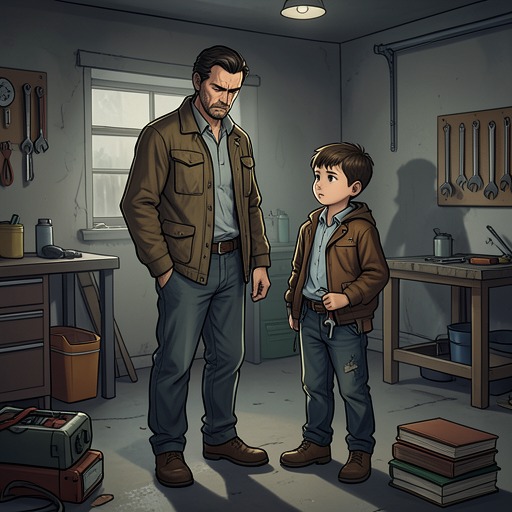
Eric’s departures from home began years before the crisis at Stanford. In ninth or tenth grade he would skip school, ride away on his bicycle, and spend the day in used-book stores, playing pool on a pier, or listening to trials at the Santa Monica courts. His exceptional grades meant that he could evade serious consequences at school. After getting his driver’s license, he sometimes stayed away overnight. Richard would wake to find Eric’s bed still made, then confront him when he returned at breakfast and began toasting Pop-Tarts. Eric refused to say where he had been, and the exchanges became arguments. Joanne had once taken Richard’s side, Stacy says, but Richard was always the parent most directly involved in these clashes.
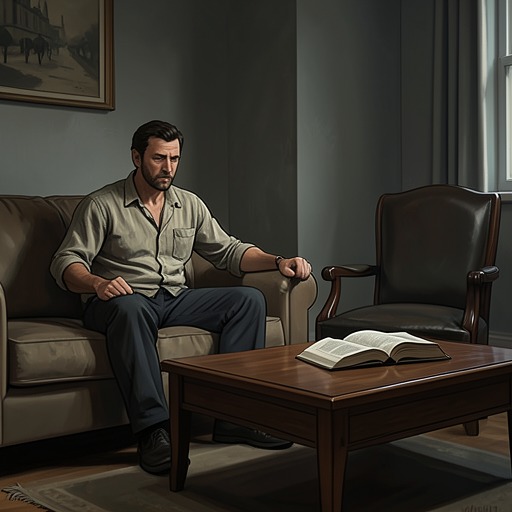
The same pattern of absence and unanswered questions reappears when Eric is at Stanford. Richard tells Alex Delaware that he found his son on campus at four in the morning, sitting alone beneath a tree in an out-of-the-way place. Eric had apparently been there for a long time, but would not explain why and would not speak to Richard. Richard nevertheless got him onto a plane and brought him back to Los Angeles. Eric was missing exams, but Richard said the academic consequences mattered less to him than getting help for his son; he asked Alex to see Eric and checked that Stacy agreed. The request marks a change from the earlier confrontations: Richard seeks outside help rather than treating Eric’s silence simply as defiance, even as his urgency conveys how frightened he is by it.
Shared Grief and Anger
Joanne’s illness altered the family’s earlier pattern of shared activity. Before she became ill, Stacy remembers her parents jogging, dancing, playing tennis, and traveling together. As Joanne’s health failed and she stopped participating in their former life, Richard was left on his own; Stacy says the change drove him to distraction and made him cranky. Her description is notably detached, as if she has taken the role of family observer rather than participant. That distance helps explain why Richard and Eric’s conflict is often seen through another family member’s account, while the two men themselves struggle to speak openly.
Their anger over Eldon H. Mate gives their grief a common target without making their responses identical. Stacy characterizes both Richard and Eric as men who become angry when faced with something they cannot control, wanting to crush what frustrates them. Richard’s talk of pulverizing or wiping disliked people off the planet is presented as rhetorical macho bluster, used even about a business adversary; it is not established as a literal plan. Eric, by contrast, calls Mate pathetic and a loser, and says that Joanne would have ceased to live with or without him. The difference matters: Richard’s hostility is bound up with the sense that something precious was taken from him, while Eric rejects the idea that Mate could ultimately have changed his mother’s fate.
Guilt, Care, and the Limits of Control
Eric’s account of Richard’s guilt exposes the emotional burden beneath their arguments. He sees his father as a man who could not save his wife, and reacts sharply when asked whether that had been within Richard’s power. The question feels structurally impossible to him, because it asks the grieving family to imagine control over an outcome they could not master. His anger does not resolve the question; it reveals how much the question itself wounds him.
Eric’s own behavior makes the family’s conflict over care and control more urgent. In a later conversation, Stacy says that Eric had taken the family dog, Helen, to the mountains and put her out of her misery when she was sick. She reports that he spoke of the act as humane and had only just begun discussing it openly with her. The account does not establish that Richard knew about the act, but it adds a disturbing parallel to the family’s earlier struggle over Joanne’s suffering and death: Eric, too, has faced a decision about ending suffering, and his account combines justification with a striking absence of ordinary conversation about what happened.
When Eric finally meets with Alex Delaware, he insists that he wants to be there and says he deserves to be there. He describes himself as dysfunctional, then turns to the language he has used, noticing that a word for sex is commonly made into a term of contempt. The self-correction gives the encounter an uneasy mixture of defiance and self-observation. It also contrasts with his refusal to talk to Richard at Stanford: Eric can begin to articulate his distress in a clinical setting, but the available scenes do not show him opening up to his father in the same way.
Relationship in Crisis
The relationship’s immediate crisis is not resolved by Eric’s return from Stanford. Richard succeeds in bringing his son home and arranging a meeting with Alex Delaware, but Eric remains unwilling to explain why he sat alone on campus or to speak directly with his father. The rescue is therefore practical rather than a reconciliation: Richard can get Eric onto a plane, yet cannot compel the disclosure he wants.
That uncertainty also raises a question of safety. Joe Safer asks Alex Delaware whether Eric might endanger himself or others and says that a seventy-two-hour hold is possible. Alex recognizes a conflict of interest and refuses to make that judgment himself, asking that someone else assess Eric. The exchange extends the father-son conflict beyond their private arguments: Richard’s concern has reached the point of seeking professional intervention, while the people around Eric must distinguish protective care from a decision that would further constrain him.
Richard and Eric’s bond thus remains both intimate and obstructed. Richard’s efforts to find and help his son are real, but so is Eric’s longstanding refusal to account for his movements or submit easily to his father’s demands. After Joanne’s death, their shared anger cannot substitute for conversation, and their different responses to helplessness leave them close to the same loss but apart in how they bear it.