
Drive My Car
Overview
“Drive My Car” is a short story by Japanese writer Haruki Murakami, first published in 2014 as part of his collection Men Without Women. It is literary fiction built around character, memory, and emotional change rather than a tightly resolved mystery. A car provides the story’s practical setting and its central image: a confined space in which two people share time while remaining partly unknowable to one another. The story became one of Murakami’s best-known recent short works, and its international profile grew considerably after Ryusuke Hamaguchi adapted it into a feature film released in 2021. The film’s success brought new readers to the original while also inviting comparison between the story’s inward, compressed form and the adaptation’s broader treatment of its characters.
The protagonist, Kafuku, is a middle-aged actor whose wife, Oto, has died. Before her death, he knew that she had been unfaithful, but he never understood what her affairs meant or what she had been seeking. After a minor traffic accident reveals a blind spot in his vision, Kafuku is required to have someone else drive him. He hires Misaki, a young, quiet woman whose skill behind the wheel suits the work. Kafuku prefers routine and solitude, so at first their relationship is defined by practical arrangements and stretches of silence. Their regular journeys gradually become a space in which he can think, remember, and speak.
Kafuku also spends time with Takatsuki, one of Oto’s lovers, hoping that contact with someone who knew her intimately might clarify the life she kept beyond his understanding. The effort does not yield a simple key to Oto’s character. Instead, the story tests the limits of what one person can know about another, especially after death has made questions impossible to ask directly. Misaki, too, carries a painful past of her own. As she and Kafuku talk, their connection develops not as a neat exchange in which one person cures the other, but as a cautious recognition between two people living with loss. The movement of the story is from Kafuku’s fixation on his wife’s secret toward the harder task of acknowledging grief, love, and uncertainty while continuing to live.
Themes and literary background
The car shapes both the action and the emotional logic of the story. Kafuku sits in the passenger seat, no longer fully in control of his movement, while Misaki steers through familiar streets. Their journeys are repetitive and ordinary, yet the shared enclosure makes conversation possible without requiring either character to surrender everything. The blind spot that alters Kafuku’s driving also resonates with his incomplete knowledge of Oto: intimacy does not grant total access to another person. A loved one can remain partly beyond comprehension, and memory cannot supply a definitive explanation for the dead.
The story also considers acting, performance, and the difference between speaking another person’s lines and facing one’s own feelings. Kafuku’s profession gives him experience with roles and speech, but it cannot spare him from the uncertainty of his private life. Murakami’s restrained prose lets pauses, routines, and repeated journeys carry emotional weight. Rather than turning infidelity, mourning, or forgiveness into a simple moral verdict, the narrative asks how someone can go on when the truth is incomplete. Its concerns connect with the larger frame of Men Without Women, whose stories examine men marked by separation, loneliness, or the absence of intimate relationships. The writing background most firmly established for the story is this place within Murakami’s 2014 collection; its distinctive method is the transformation of a commonplace drive into a setting for memory and difficult conversation.
The story’s standing rests on its economical psychological portrait, its memorable driver-and-passenger arrangement, and its refusal to solve grief as if it were a puzzle. Hamaguchi’s internationally prominent 2021 adaptation extended its reach, but the original remains a self-contained work with a quieter scale and room for readers to consider what its characters cannot know. Its lasting appeal lies in the idea that understanding may remain partial, while listening, admitting uncertainty, and accepting the presence of others can still make continued life possible.
About the Author
Early life and education
Haruki Murakami was born on January 12, 1949, in Kyoto, Japan, and grew up in the Kansai region, particularly around Kobe. His father taught Japanese, and books were part of his early environment, although Murakami’s own strongest literary interests came to include Western writing, especially American literature. He was also deeply drawn to jazz, an interest that would remain important throughout his life and work. In 1968 he moved to Tokyo to attend Waseda University, where he studied drama in the university’s First Faculty of Literature. His university years coincided with the era of student activism in Japan, a formative social setting, though his fiction cannot be reduced to a direct record of those movements.
During and after university, Murakami married and, with his wife, ran a small jazz bar called Peter Cat. The business operated for seven years. The combination of music, work, and everyday encounters in an urban setting preceded his full-time literary career. Murakami has often recounted a decisive moment in 1978: while watching a baseball game at Tokyo’s Jingu Stadium, he suddenly thought that he might be able to write a novel. He went home and began writing. The story is often presented as a striking point of origin, but it came after years of reading and alongside a life already shaped by independent work and artistic interests.
Writing career and major works
Murakami’s first novel, Hear the Wind Sing, appeared in 1979 and won the Gunzo Prize for New Writers. He followed it with Pinball, 1973 (1980) and A Wild Sheep Chase (1982); the three books are often grouped as the “Trilogy of the Rat.” A Wild Sheep Chase received the Noma Literary New Face Prize. His 1985 novel Hard-Boiled Wonderland and the End of the World won the Tanizaki Prize and displayed his characteristic ability to place everyday experience beside elaborate, dreamlike or speculative structures. Norwegian Wood (1987), a novel concerned with youth, love, and death, became a major popular success in Japan and introduced his work to a much larger readership abroad.
His later major novels include The Wind-Up Bird Chronicle (1994–95), which won the Yomiuri Literary Prize in 1996; Kafka on the Shore (2002); and 1Q84 (2009–10). Across these works, Murakami often follows isolated protagonists through recognizable contemporary settings that gradually open onto uncanny, symbolic, or surreal dimensions. His uncluttered prose, recurring attention to music and ordinary routines, and interest in loneliness and hidden lives have become widely recognizable features of his writing. He has also published short stories, essays, and memoir-like nonfiction, and is an accomplished translator of American writers, including F. Scott Fitzgerald and Raymond Carver. The 2014 story collection Men Without Women includes “Drive My Car,” a compact exploration of grief and intimacy that later became the basis for Ryusuke Hamaguchi’s acclaimed film adaptation.
Reputation and legacy
Murakami’s books have been translated into many languages and have found a substantial readership in Japan and internationally. His literary sensibility brings together Japanese settings, extensive engagement with Western fiction, and a lifelong interest in music. This combination, along with the balance of accessible storytelling and unresolved mystery, has made his work distinctive to readers around the world. His books have also prompted debate, including criticism of aspects of characterization and gender, alongside sustained appreciation for their imaginative reach and carefully controlled prose. He received the Jerusalem Prize in 2009, among other honors. Murakami is living; no date of death applies. His continuing career as a novelist, short-story writer, essayist, and translator has established him as one of the most recognizable and widely discussed Japanese writers of the contemporary period.
StoryFlow
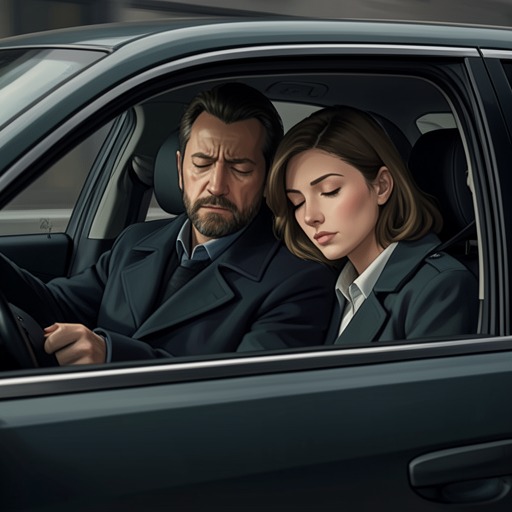
The Passenger Seat Becomes a Witness
This flow follows Kafuku from losing the right to drive to using the passenger seat as a place to revisit his past and speak more openly.
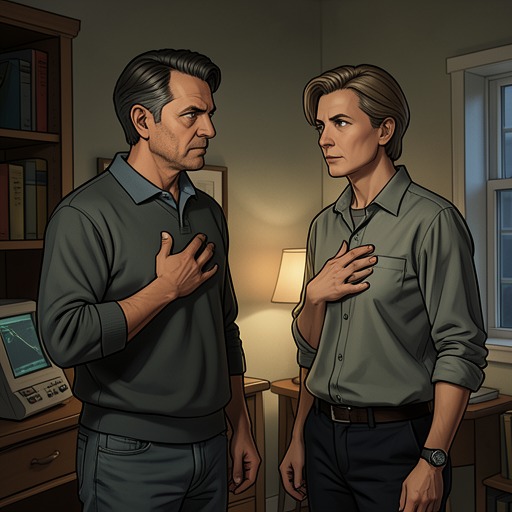
The Marriage Behind the Rehearsals
This flow traces the marriage Kafuku remembers, from deep companionship through betrayal, bereavement, and the questions that survive his wife's death.
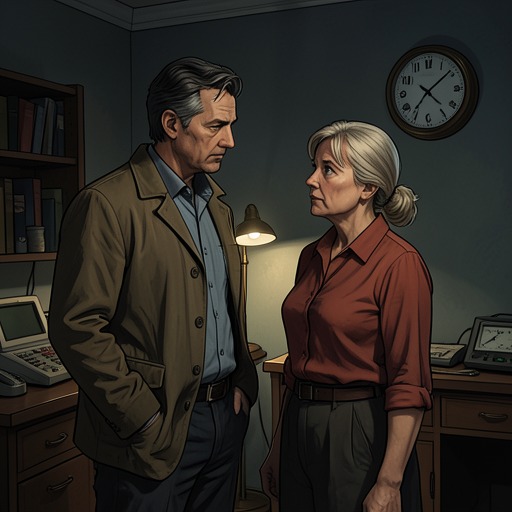
From Suspicion to Drinking Companions
This flow follows Kafuku's deliberate approach to Takatsuki, from knowledge of the affair to a real but temporary friendship.
