
Kafuku's Sight and Authority
Drive My CarThis flow follows how Kafuku's visual impairment changes his ability to drive and unsettles his accustomed control of everyday movement.
increasing Bearing strength in each event
 decreasing
Bearing strength in each eventdecreasingThe Accident
The Accident
A small crash with large consequences
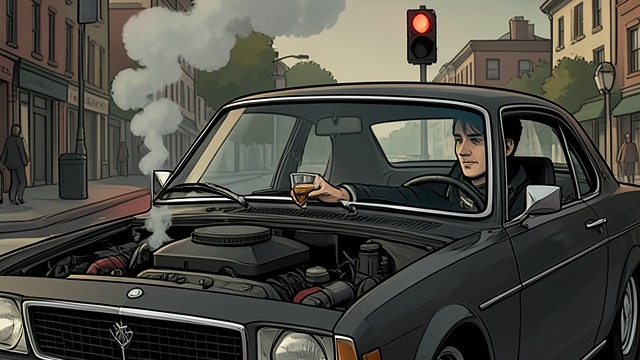
Kafuku has a minor traffic accident after drinking a little. The amount is described as negligible, and the incident does not reach the media.
The event nonetheless leads to a required eye examination, exposing a problem he did not know he had.
A concealed complication
The accident combines a private lapse with a newly discovered medical risk. His professional management cannot simply ignore the possibility that he might miss a car approaching from the right.
A routine convenience of driving becomes a matter of safety and public responsibility.
The Right-Side Blind Spot
The Right-Side Blind Spot
An unseen defect
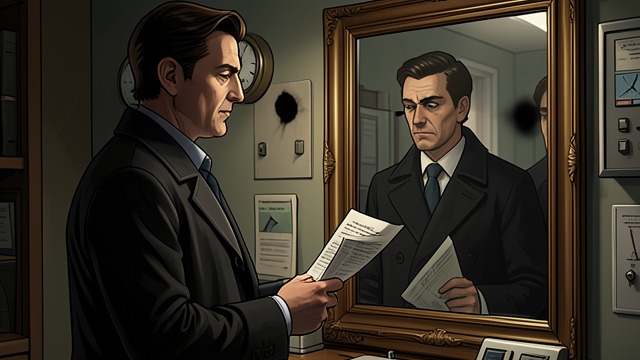
The eye examination reveals a trace of glaucoma and a blind area in Kafuku's right-side field of vision. Before the test, he has no idea that anything is wrong.
The defect is dangerous precisely because it is not obvious to him while he moves through familiar streets.
Knowledge changes the routine
Once Kafuku learns about the blind spot, the assumption that experience makes him a safe driver no longer holds. The diagnosis forces him to accept a limit he cannot solve by concentration alone.
The physical blind spot also becomes a recurring image for what he may fail to understand in another person.
Management Intervenes
Management Intervenes
A professional restriction
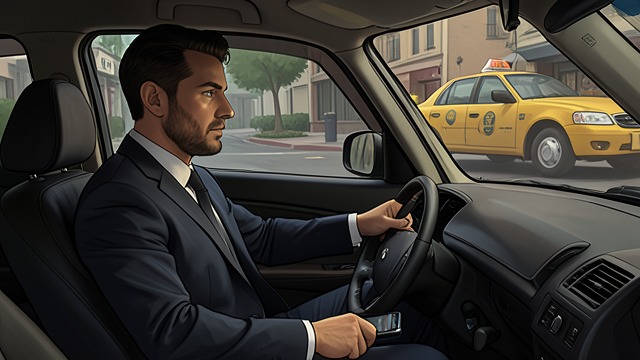
Kafuku's theater management insists that he stop driving until tests show that the problem has been addressed. His stage career continues, but the means of reaching his work is taken out of his hands.
The license restriction changes his daily life even though the accident itself has been kept quiet.
Dependence accepted
Kafuku dislikes taxis and the subway because he uses the drive to rehearse. He must find a personal driver quickly if he wants to preserve his established preparation routine.
The conflict is not merely about transport; it is about adjusting to a loss of control without abandoning his work.
Misaki Takes the Wheel

Misaki Takes the Wheel
A practical resolution
Kafuku hires Misaki after observing her smooth handling of the manual Saab. Her skill provides a direct response to his safety problem and allows him to continue his demanding schedule.
The choice also requires him to trust someone whose driving he would once have judged through a gendered expectation.
Control shifts seats
Kafuku moves into the passenger seat and watches a familiar city from a new position. Misaki's ease makes the change less stressful than he anticipated.
His dependence is practical, but it opens a space for a different kind of attention.
A New View of Driving
A New View of Driving
Learning through the ride
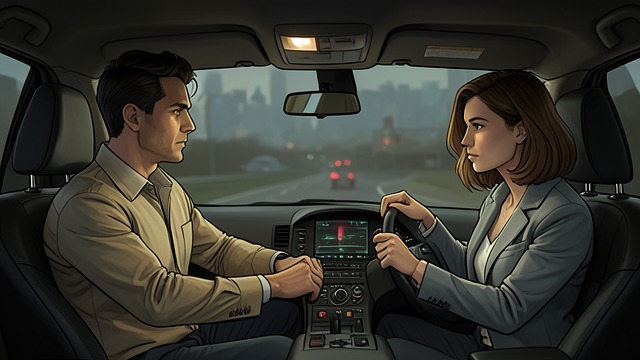
Kafuku becomes accustomed to sitting beside Misaki. Her gears shift so smoothly that he can detect them only as a slight change in the engine's sound.
He begins to experience a car ride not as the person making decisions but as the person observing another's control.
Limits beyond sight
His condition remains part of the background even as the employment arrangement works well. The account offers no cure or return to driving; it shows Kafuku accommodating a limit.
That accommodation becomes one of the conditions for the conversations that follow.
Before the opening events
During the police-required eye examination
Immediately after the eye examination
The day after the successful test drive
During the following weeks
