
Misaki's Family Wound and Her Response
Drive My CarThis flow follows the conflict between Misaki and her mother, from repeated blame through fatal drinking and the complicated relief that follows.
increasing Bearing strength in each event
 decreasing
Bearing strength in each eventdecreasingBlame for an Absent Father
Blame for an Absent Father
An accusation repeated
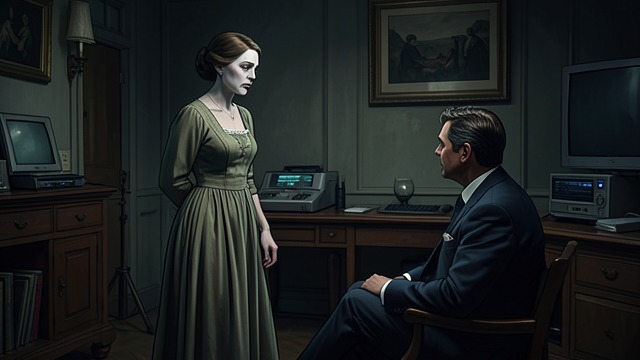
Misaki's mother tells her that her father left because she was not pretty enough. The explanation turns an adult's decision to leave into a criticism of the child left behind.
Misaki describes the words as painful, especially when her mother repeats them while drinking.
A conflict without a fair answer
Misaki cannot make her father return or prove that her appearance had nothing to do with his departure. She grows up with blame she did not earn and cannot resolve.
The accusation helps explain why she responds to pity and reassurance with reserve.
Alcohol Repeats the Harm
Alcohol Repeats the Harm
A pattern at home
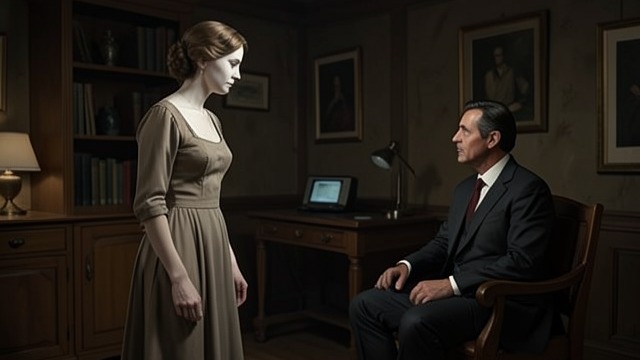
When Misaki's mother drinks, she repeats the same accusations and goes on at length. Misaki says her mother is not normally like that, but the intoxicated episodes remain emotionally damaging.
The family conflict is repetitive: the same wound is reopened rather than addressed.
A boundary formed
Misaki's later refusal to drink is linked, in her account, to her mother's problem drinking. She says her own body cannot handle alcohol and acknowledges that the family history may contribute.
Her abstinence becomes both a physical limit and a separation from her mother's behavior.
The Dangerous Drive
The Dangerous Drive
Risk becomes fatal
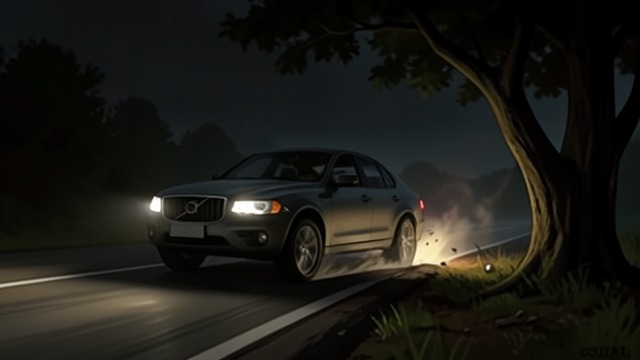
Misaki's mother drives while drunk, spins off the road, and hits a tree. She dies almost instantly.
The accident gives final consequence to a form of behavior that had already caused conflict inside the family.
Loss without idealization
Misaki does not describe her mother as a wholly good parent or ask Kafuku to pity her. She presents the death as bound to happen sooner or later.
Her bluntness holds a difficult truth: grief and relief can coexist after a relationship marked by harm.
A Daughter's Relief
A Daughter's Relief
An uneasy admission
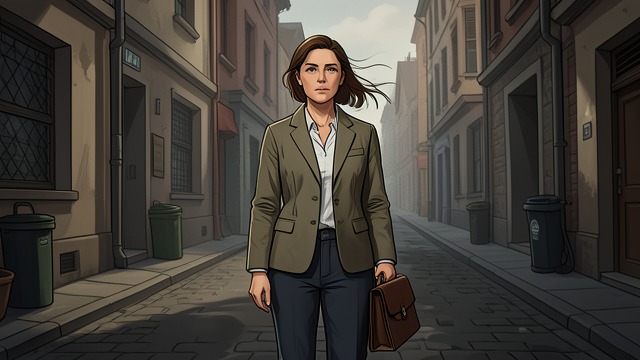
Misaki says she was relieved when her mother died. She knows the admission may sound harsh, yet speaks without disguising it to make the relationship seem easier than it was.
The feeling follows years of blame and repeated hurt, not indifference to the fact of death.
Carrying the aftermath
Misaki continues into adulthood without friends, moving through short-term jobs and relying on practical skill. The family conflict is not resolved by the crash; it becomes part of what she carries forward.
Her careful self-reliance is visible in how she works, speaks, and limits what others know.
A Conversation in Traffic
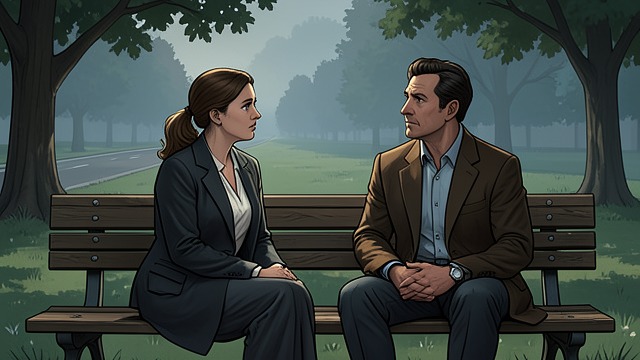
A Conversation in Traffic
A story offered plainly
Misaki tells Kafuku that her mother drank and died in a crash, then explains her father's departure and the accusations about her appearance. She does not frame the disclosure as a request for rescue.
Kafuku listens and quietly rejects the claim that she is ugly, locating the judgment in her mother's preferences instead.
A shared language of damage
Misaki later connects family harm to a kind of sickness that cannot be explained by neat logic. Her account challenges Kafuku's effort to find a fully rational cause for human behavior.
The conversation does not heal her past, but it gives her history a witness who does not dismiss it.
After Misaki's father leaves when she is eight
During Misaki's adolescence
When Misaki is seventeen
The years after the fatal crash
About two months after Misaki begins driving for Kafuku
