
Blind Spots Beyond the Road
Drive My CarThis flow connects Kafuku's literal visual blind spot to the emotional limits of knowing another person.
increasing Bearing strength in each event
 decreasing
Bearing strength in each eventdecreasingA Blind Area Discovered
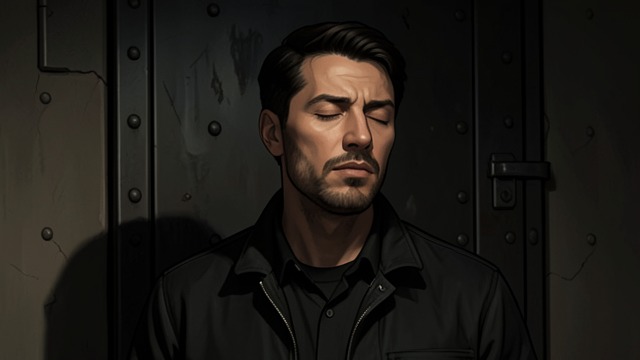
A Blind Area Discovered
The eye examination
A required test reveals a right-side visual blind spot associated with glaucoma. Kafuku had not noticed it before the exam, and his driving is restricted as a result.
The diagnosis makes a hidden limitation visible through its practical consequences.
A useful image
The defect offers a concrete counterpart to the limits of perception in Kafuku's marriage. In both cases, the problem is not simply a refusal to look; something important may remain outside a person's awareness.
The visual finding begins to resonate beyond the immediate safety issue.
The Wife's Unseen Interior
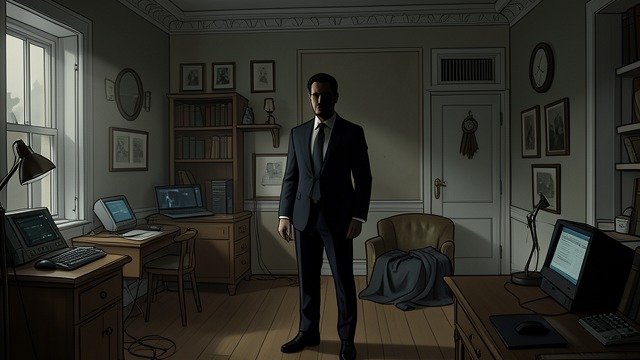
The Wife's Unseen Interior
Marriage does not guarantee access
Kafuku has lived with his wife for nearly twenty years and believed they could discuss anything. After her death, he wonders whether he missed an important part of her inner life.
The affairs make that fear concrete, but do not identify precisely what he failed to see.
An incomplete picture
He cannot ask her to explain herself. His memories remain intimate yet partial, showing that familiarity and love do not automatically provide full knowledge.
The emotional blind spot is painful because it exists inside a marriage Kafuku genuinely valued.
Takatsuki's General Answer

Takatsuki's General Answer
A consoling principle
Takatsuki argues that no one can perfectly understand another person, however much they love them. He suggests that people should begin by examining their own hearts.
His insight comforts Kafuku, but it also risks turning a particular grief into a general rule.
Kafuku insists on the particular
Kafuku resists a quick move to universal claims and asks Takatsuki to remain with his specific question about his wife. The exchange shows the tension between a useful philosophy and an individual person's need to be heard.
Their conversation offers recognition without solving the mystery.
Misaki's Counterexample
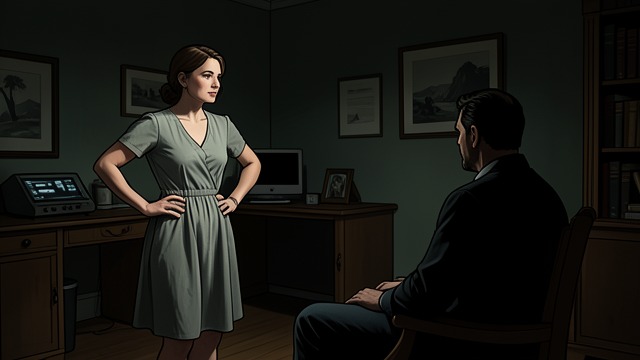
Misaki's Counterexample
Behavior without clear logic
When Kafuku asks why his wife slept with Takatsuki, Misaki proposes that she may not have fallen in love with him. She describes human harm in her own family as a kind of sickness that lacks tidy logic.
Her suggestion unsettles the expectation that every intimate act must disclose a stable motive.
Acceptance without certainty
Misaki does not claim to know Kafuku's wife's mind. Instead, she distinguishes accepting what people did from finding a perfect explanation for it.
Her perspective gives Kafuku another way to live with the possibility that the blind spot cannot be eliminated.
Looking Inward
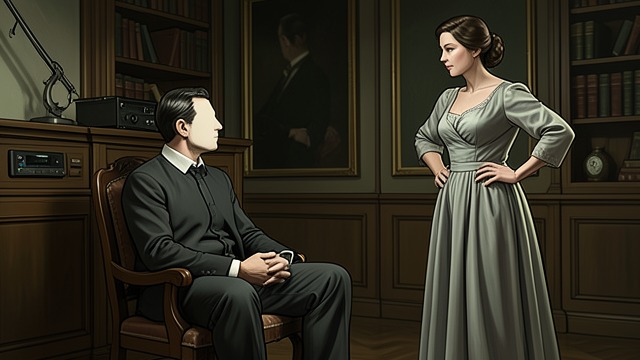
Looking Inward
The remaining task
Takatsuki's argument suggests that Kafuku may be able to examine his own heart more fully than he can inspect another person's. Kafuku's later confession to Misaki reveals motives he had not originally acknowledged, including revenge and wounded pride.
Self-knowledge does not provide access to his wife's reasons.
A more modest understanding
Kafuku begins to separate what he can know about his own anger from what he cannot know about her desire. The distinction does not remove grief, but gives him a clearer view of its boundaries.
The blind spot becomes not only a defect but a limit he must learn to recognize.
After Kafuku's traffic accident
After Kafuku's wife's death
During the rainy Aoyama conversation
During a later drive in traffic
Near the end of Kafuku's account
