
What Driving Can and Cannot Control
Drive My CarThis flow examines driving as a practice of control, skill, vulnerability, and trust in another person's judgment.
increasing Bearing strength in each event
 decreasing
Bearing strength in each eventdecreasingKafuku's Familiar Control
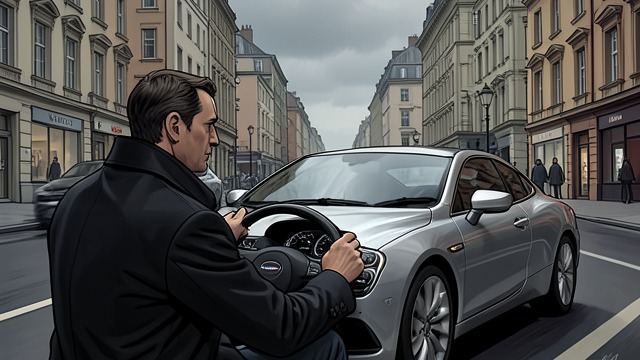
Kafuku's Familiar Control
A practiced pleasure
For years Kafuku enjoys driving the Saab through the city, changing gears and watching clouds and birds while stopped at lights. The car is a chosen space in which he can control his route and pace.
He has driven alone since his wife's death, making the habit both practical and solitary.
Control interrupted
The license suspension takes that role away. His experience and attachment to the car cannot overcome the risk created by his visual impairment.
The change exposes the difference between feeling in control and being able to see every danger.
Misaki's Mountain Skill
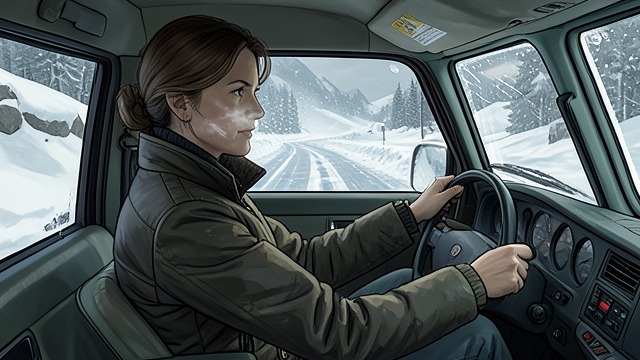
Misaki's Mountain Skill
Skill under difficult conditions
Misaki learns to drive young in a place where cars are necessary and roads are icy for much of the year. Her experience teaches her to anticipate hazards and handle a vehicle smoothly.
Kafuku initially knows little about how she acquired that skill.
A new measure of expertise
In the test drive, she changes gears without jerks and handles the city route with ease. Her performance challenges Kafuku's assumptions about who is a capable driver.
The story measures her by what she does at the wheel rather than by appearances or stereotype.
Trusting the Test Drive
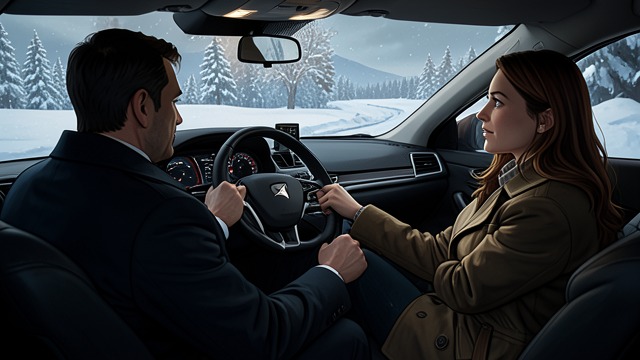
Trusting the Test Drive
Judgment based on evidence
Kafuku begins doubtful when Oba recommends Misaki, yet agrees to a test drive because he trusts the mechanic and needs help. He watches her handle gears, brakes, traffic, and parallel parking.
Her competence is direct evidence that outweighs Kafuku's unease.
The passenger's choice
By hiring her, Kafuku entrusts both his safety and his daily schedule to a driver he has only just met. The decision is practical, but it begins a longer process of trust.
Misaki earns that trust first through the precision of her driving.
The Passenger Learns to Wait
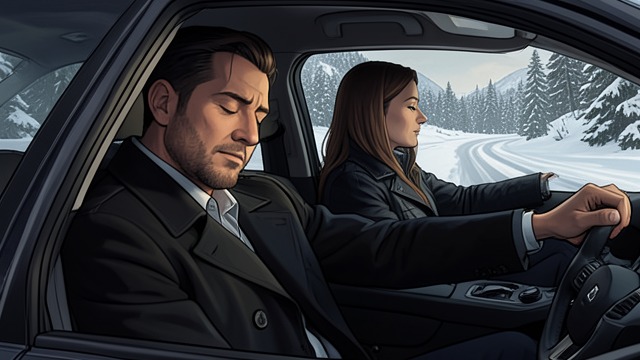
The Passenger Learns to Wait
A changed relationship to time
Kafuku sits beside Misaki as she navigates traffic. He must accept pauses, gear changes, and decisions made by another person rather than by his own hands.
Her steady manner makes waiting easier than he expected.
Silence as trust
Kafuku can close his eyes, rehearse, and sometimes fall asleep while Misaki drives. The confidence is practical and embodied, built from repeated journeys rather than declarations.
His dependence becomes a condition he can inhabit without treating it as humiliation.
The Road Opens Conversation
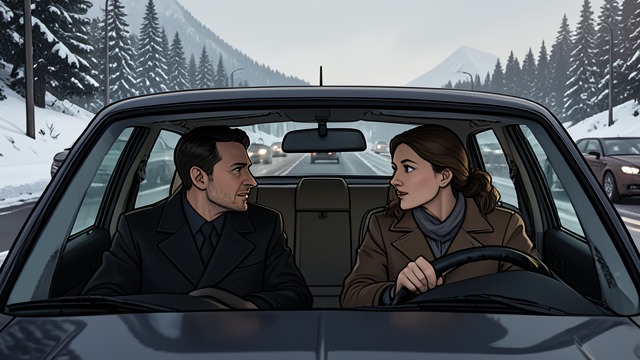
The Road Opens Conversation
Conversation within constraint
Traffic repeatedly edges forward and stops while Kafuku and Misaki talk about acting, friendship, family, and grief. The confined space limits movement but allows difficult subjects to unfold gradually.
The road's delays give them time without requiring either to arrange a formal meeting.
Control gives way to attention
Misaki remains responsible for driving while Kafuku speaks and listens. He cannot direct every aspect of the ride or of another person's story.
The shared journey suggests that trust may begin not in control, but in allowing someone else to set a safe course.
Before his license is suspended
Misaki's early driving years in Hokkaido
The afternoon Kafuku meets Misaki
During the first weeks on the road
During a later traffic jam
