
The Actor's Working Life
Drive My CarThis flow tracks how Kafuku's professional routines, especially rehearsing Uncle Vanya, shape his daily life and his understanding of performance.
increasing Bearing strength in each event
 decreasing
Bearing strength in each eventdecreasingA Character Actor
A Character Actor
A chosen profession
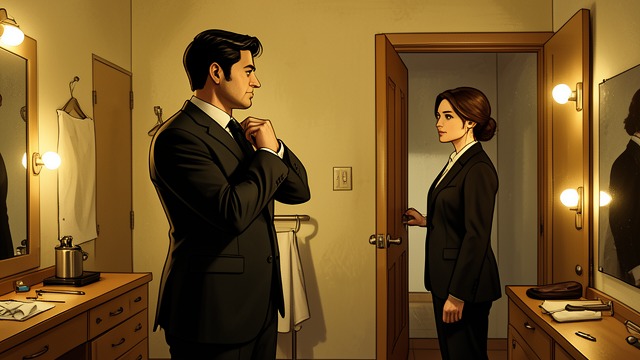
Kafuku begins acting after a college friend invites him to join a theater club. He had wanted to play baseball, but was not good enough for his college team and accepts the invitation partly to spend time with her.
He discovers that acting suits him because it allows him to become someone other than himself and then return.
A working career
Kafuku develops into a skilled character actor rather than a leading man. His long face and early baldness do not prevent him from building a distinctive stage presence.
His wife's greater success does not undermine their mutual respect. Work becomes one of the stable structures of their shared life.
Uncle Vanya in Rehearsal

Uncle Vanya in Rehearsal
A nightly preparation
Kafuku plays Uncle Vanya in a Meiji era adaptation of the play. He knows the lines by heart but rehearses them on the drive to steady himself before each performance.
The repetition is a long-standing habit, less a matter of memorization than a way to settle into the work.
A private audience
Misaki's silence allows Kafuku to roar his lines without worrying about her reaction. He values her ability to remain focused on driving while the theater occupies his attention.
The commute becomes both rehearsal space and transition into the role.
A Fortune Teller on Television
A Fortune Teller on Television
A second role
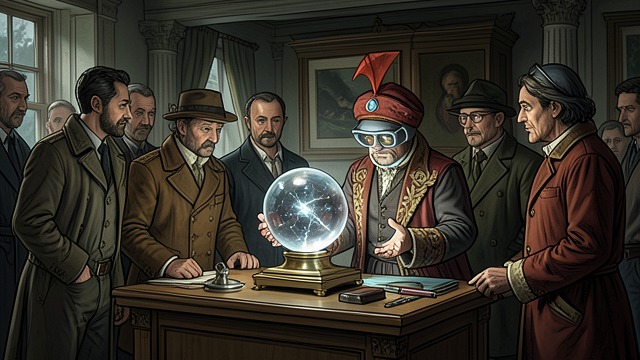
Kafuku also films a detective series, playing a fortune-teller who assists the female lead detective. Before filming, he sets up a booth and tells fortunes to passersby to prepare for the part.
He hears that several predictions prove accurate, though the work remains a conventional television job rather than the center of his identity.
The packed schedule
After shooting, Kafuku goes straight to the theater. Misaki's driving makes it possible to manage the day's demands without taking public transportation or relying on taxis.
Acting takes distinct forms across screen and stage, and Kafuku moves between them as part of his ordinary working life.
Teaching Young Actors
Teaching Young Actors
A weekly obligation
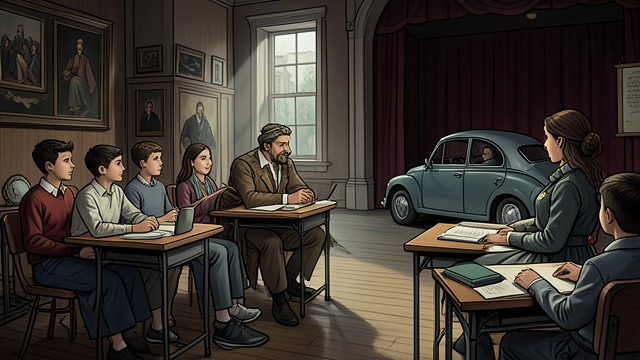
On weekends, Kafuku teaches an evening class at an acting school after performing the matinee. He enjoys working with young actors, adding teaching to his theater and television schedule.
Misaki drives him between the different commitments, keeping the transitions punctual and uneventful.
Work as continuity
The class shows that Kafuku's connection to acting extends beyond the roles he plays himself. He is also invested in passing practical knowledge to people at an earlier stage of their careers.
Teaching gives his professional life a collaborative dimension that contrasts with his private reserve.
Returning to the Stage
Returning to the Stage
An altered routine
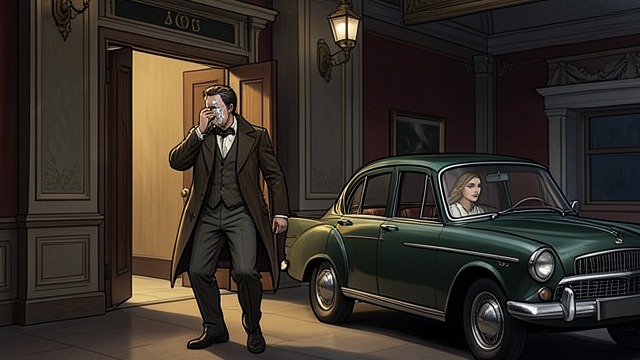
Kafuku continues to arrive at performances after the license suspension, now relying on Misaki rather than driving himself. He still rehearses, performs, washes off his makeup, and leaves the theater promptly.
The work survives the practical disruption, though his role in the car has changed.
The self after performance
Kafuku reflects on leaving himself behind for a role and returning to a self that is not exactly as before. The thought connects theatrical practice to the personal changes created by grief and conversation.
Acting remains a structure he can depend on, but it does not restore him to an untouched past.
Before the events of the story
The six-day-a-week stage run
One day each week during the stage run
Weekends after the matinee
Near the end of the narrated period
