“Jolene” as a recurring musical motif
Dumplin'“Jolene” as a recurring musical motif gathers the people and memories that shape Willowdean Dickson’s life into one familiar song. At the pageant, she performs it not as an isolated act but as a return to moments shared with family and friends, turning a song associated with private remembrance into a public expression of connection.
A Song That Holds Memories
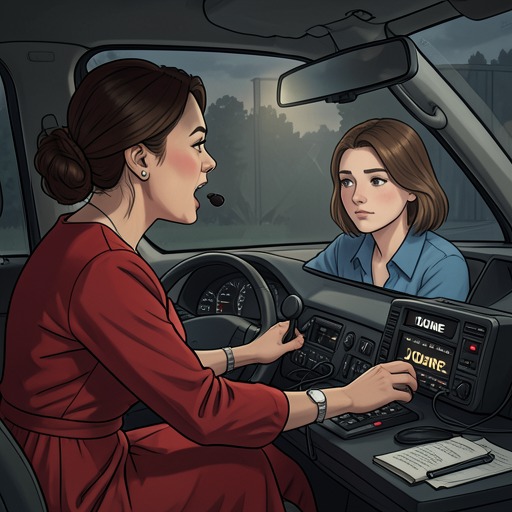
The song’s meaning accumulates through the scenes Willowdean recalls as its opening chords play. She remembers driving with her mother, Lucy, and Gram, all four dragging their hands through the wind from the car windows. She remembers sitting with Lucy in her room while the song played from Lucy’s record player. In these memories, “Jolene” belongs to ordinary, shared time as much as to any formal performance.
Other recollections give the song a wider emotional range. It was present at Lucy’s funeral, making it part of Willowdean’s memory of loss, and in Bo Larson’s truck, linking it to her romantic life. At The Hideaway, she watched Lee Wei perform it, encountering the song as part of a public show. The repeated appearances make “Jolene” a thread through family closeness, grief, romance, and performance without reducing those different experiences to one meaning.
From Recollection to Performance
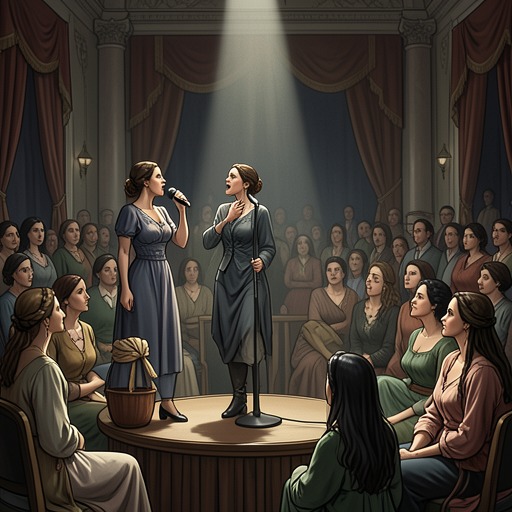
Onstage at the pageant, Willowdean holds a toy microphone to her lips as Dolly Parton’s recording begins. She first lip-syncs to the familiar words, then sings the song. The progression carries the motif from remembered sound into her own visible performance: the song that once accompanied scenes with other people now becomes something she presents before an audience.
As she sings, Willowdean imagines—or perhaps hears—some people in the auditorium singing along. She understands the song as iconic and able to cross boundaries of geography, language, and religion. Its recognition makes the performance communal: the stage does not keep the song solely hers, and the audience’s response briefly turns it into a shared refrain.
Reception and Significance
The song ends to applause. Willowdean thinks she hears an oink, but cheers soon drown it out. That moment places the performance within the judgment and ridicule surrounding the pageant while also showing that the audience’s audible response is not defined by the insult alone.
“Jolene” therefore connects the pageant’s public spectacle to the intimate history Willowdean carries into it. Its remembered settings—the open car windows, Lucy’s room, the funeral, Bo’s truck, and Lee Wei’s performance—remain present when she sings. By bringing those associations onto the stage, Willowdean makes the song a compact expression of continuity: a familiar melody can hold grief and affection, private memories and public participation, at once.