Bo Asks Willowdean to Be His Girlfriend
Dumplin'Bo’s request that Willowdean become his girlfriend turns their undefined summer connection into an explicit choice: he wants a public relationship, while she is still afraid of what being seen with him will mean. The scene makes the distance between desire and readiness concrete. Bo asks plainly for commitment; Willowdean wants him, but cannot yet separate that wish from the anticipated judgment of other people or her own painful view of her body.
The Request and Its Terms
The exchange begins with Willowdean’s observation that they are not boyfriend and girlfriend. When she points out that they had not been a couple before, Bo jerks the wheel, turns into a random alley, and parks. He unbuckles his seat belt and moves toward her, shifting the conversation from an abstract description of their status to a direct appeal for something different.
Bo explains what “more” means to him through ordinary acts of closeness: holding hands in public, driving Willowdean home from work, kissing her good night, and talking on the phone until they fall asleep. His examples are not grand gestures but recognizable routines, the visible and private habits by which a relationship could become part of daily life. The request is therefore both emotional and social: he wants intimacy with Willowdean and does not want that intimacy kept unacknowledged.
He also names the history that could make his offer difficult to trust. Bo says that he was a “dick” the previous year, that he had cared only about leaving Clover City, and that he had “fucked up” with Willowdean that summer. He does not present their past as an obstacle she must simply forget; he admits his part in it and says he will not let her go again. His specific promise to speak with Bekah and make his intentions clear addresses the possibility of misunderstanding directly, though the scene does not yet show that conversation taking place.
A Public Label, an Unequal Risk
Bo states his aim without qualification: he wants Willowdean to be his girlfriend and wants everyone to know how he feels about her. The request for a label is a request to make the relationship legible to other people, not merely to continue their private closeness. His certainty contrasts with Willowdean’s hesitation. To him, saying what he wants makes the choice seem simple; to her, the public consequences are part of the choice itself.
Her physical response registers desire before she can resolve that conflict. She moves to kiss Bo despite knowing she should not, and describes the moment as one in which her body feels both chaotic and determined. The comparison with Mitch clarifies what she experiences as missing from that earlier intimacy: with Bo, the impulse toward him is immediate and difficult to contain. But the kiss does not settle the question. Bo pulls back and asks for her answer first, insisting that desire alone is not the commitment he is seeking.
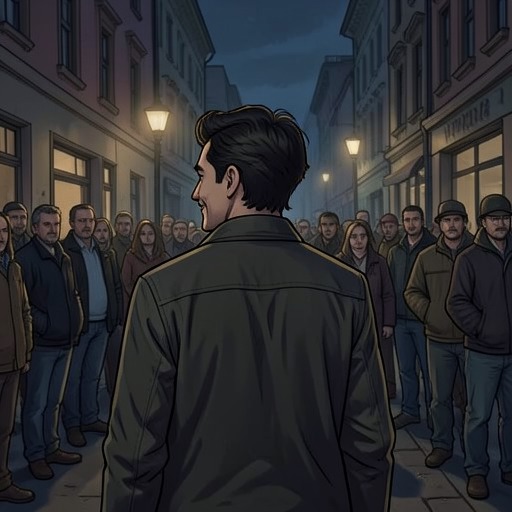
Willowdean then looks away. She fears stares and whispers, and imagines strangers reacting with astonishment to the idea of the two of them together. Her dread is not simply uncertainty about Bo’s feelings. Even as she considers whether she could endure public attention, she confronts the “total self-revulsion” she feels when he touches her intimately. The scene thus places a wanted relationship alongside the body shame that obstructs her ability to accept it: Bo’s willingness to be clear cannot, by itself, remove the judgment she has turned inward.
Lucy’s Plane and Willowdean’s Answer
Willowdean connects her hesitation to Lucy’s decision not to board a plane to Dollywood. She had once thought Lucy was only standing in her own way; now she recognizes the trap of having to choose between private misery and public humiliation. The recollection gives her refusal a painful logic. In that moment, the options do not feel like a simple choice between fear and happiness, and she cannot make herself “get on the plane.”
Her mother’s judgment that she will never be happy in her body resurfaces as an internal voice. Willowdean does not say that judgment aloud, and she wants to prove it wrong; nevertheless, the scene shows how deeply it shapes her response to Bo. The possibility of being openly loved presses directly against the belief that her body makes such happiness impossible. Her hesitation is consequently not evidence that she feels nothing for him. It is the point at which attraction, shame, and fear of public scrutiny converge.
Instead of accepting or rejecting Bo, Willowdean asks for time. She admits to herself that she cannot bear to tell him no—not yet—and wants to live for a couple of days with the possibility of what could happen. That answer preserves hope without resolving the relationship. Bo has made his desire unmistakable, but Willowdean has not yet found a way to choose it without also confronting the exposure and self-revulsion she fears. The scene ends on that suspended possibility: not a settled partnership, but a request for space in which she can consider whether wanting Bo is enough to risk being seen with him.