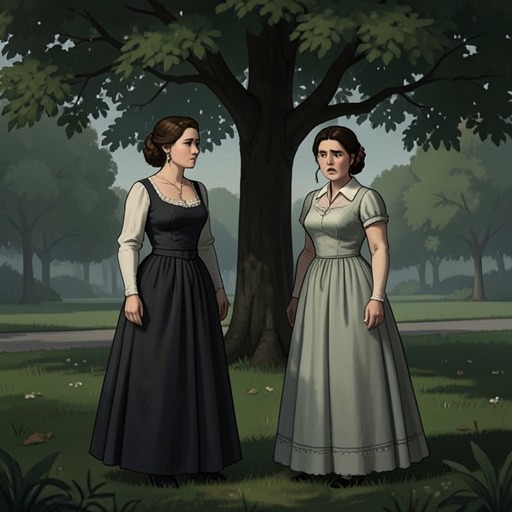
Callie
Dumplin'Callie is an ambitious Miss Teen Blue Bonnet Pageant contestant whose confidence in pageant culture makes her both an ally to Ellen Dryver and a pointed antagonist to Willowdean Dickson. She presents the competition as serious work, not a symbolic gesture, and carries its standards into her judgments of Willowdean. Their encounters reveal how pageant discipline can look like self-invention from one angle and exclusion from another.
Introduction and Pageant Ambition
Callie first enters Willowdean’s story as one of the new people Ellen Dryver has brought into their close friendship. Willowdean, still dripping after floating in a pool, finds Ellen sitting with Callie and a boy. The newcomer stares at her in a way Willowdean experiences as gawking, and Callie’s presence intensifies her unease about Ellen making room for another friend. When Ellen says Callie is entering the pageant, Callie explains that her sister was a runner-up, presenting her own participation as a kind of family inheritance. Willowdean offers a bitter-sounding congratulations, although she does not mean to let her jealousy show.
Callie’s pageant commitment is visible in her talk about her body and preparation. At Sweet 16, where she greets Ellen and gives her a white envelope, Callie boasts that pageant boot camp has nearly given her a six-pack, while insisting she does not want to become too muscular. The comment makes her investment in the contestant ideal concrete: preparation is measured through visible changes to the body, but those changes must remain within another narrow boundary. Callie treats this regimen as ordinary and desirable, a sharp contrast to Willowdean’s distrust of the social world surrounding the competition.
Social Confidence and Friction with Willowdean
At Harpy’s Burgers & Dogs, Callie appears with her boyfriend. After they kiss, he leaves to use the bathroom, and she orders food, including a children’s fry for herself. She jokes about breaking her pageant diet and calls boys a bad influence. The scene gives her a breezy, socially assured manner; she can acknowledge the rules and enjoy breaking them without appearing to regard the lapse as a crisis. She also asks whether she and Ellen might visit Willowdean’s home to talk casually with Willowdean’s mother about the year she won the pageant. The request shows Callie’s interest in the competition’s local history and makes clear that, to her, the former winner’s experience is a resource worth seeking out.
At Sweet 16, Callie’s easy familiarity with Ellen sharpens Willowdean’s sense of being displaced. She calls out to Ellen with teasing nicknames and hands her the envelope, while Willowdean watches Ellen laugh with the store manager. Willowdean interprets Callie as part of a world of pageant girls and beauty-focused retail, and resents the apparent ease with which Ellen belongs there. Callie’s behavior is presented through Willowdean’s defensive perspective, so her friendliness does not erase the tension: even a casual joke can feel like evidence that her best friend is moving into a social circle without her.
That tension becomes direct after Willowdean and Ellen fall out over entering the pageant. Callie tells Willowdean that forbidding Ellen to compete was wrong, and Willowdean responds that she does not know Callie and does not like her. Callie answers that Ellen is better off without Willowdean dragging her down. She then tells Willowdean that taking care of herself could make a difference, presenting the remark as honesty rather than insult. Her criticism turns the pageant’s body ideal into a personal accusation: she links Willowdean’s body to the possibility that her life might improve if she changed it. Willowdean is shaken enough to wonder whether losing a hundred pounds would make everything fall into place. Callie does not merely challenge Willowdean’s conduct toward Ellen; she presses on the insecurity beneath Willowdean’s stated resistance to judgment.
Ellen’s Ally and Willowdean’s Opponent
Callie’s allegiance to Ellen is clearest when the two girls cross paths with Willowdean at Harpy’s on Halloween. Ellen arrives dressed as Tinker Bell, with Tim as Captain Hook, while Callie and Bryce are also there. As Ellen prepares to leave, Willowdean protests that they have not spoken in weeks. Callie tells Ellen she owes Willowdean nothing. Ellen says she is doing well on her own, and the group leaves. Callie’s intervention makes the estrangement visible as more than a private disagreement between former best friends: she openly supports Ellen’s choice to keep her distance.
Her support is not presented as neutral mediation. Callie has already judged Willowdean’s attempt to keep Ellen out of the pageant as unfair, and here she helps Ellen hold the boundary that followed their argument. For Willowdean, Callie therefore embodies the new social world in which Ellen appears to be doing well without her. The scenes do not give Callie’s private account of the friendship, but they show the position she takes: she defends Ellen’s independence, even when doing so deepens Willowdean’s hurt.
Presence at the Pageant
Callie remains present as Willowdean advances toward the competition. During Willowdean’s magic audition, she sits beside Ellen and calls out that the quarter is on the floor after the trick goes wrong. Willowdean notices Ellen watching and is already embarrassed by the failed performance; Callie’s brief correction becomes part of a moment when the audience’s attention feels painfully exposed. Later, at rehearsal in the auditorium, Callie sits a few rows behind Willowdean and the other contestants. Her presence links the pageant’s backstage preparation to the social tensions that began outside it.
During the talent portion of the pageant, Willowdean performs a song rather than the talent approved for her. Callie warns her on the way to the fitting room that the judges will disqualify her for not performing the approved talent. Willowdean replies that the choice was worth it. The exchange distills their opposing positions without making either one an abstract symbol: Callie knows and enforces the rules of the contest, while Willowdean knowingly accepts the likely consequence of breaking them. Callie’s warning confirms that the risk is real, and Willowdean’s answer shows that she understands the cost and proceeds anyway.
Narrative Role and Significance
Callie serves as a recurring point of contact between pageant culture and Willowdean’s fear of being judged. Her family connection to a former runner-up, training, attention to diet and muscle, and familiarity with the talent rules establish her as someone who takes the competition seriously. She is not simply a promoter of the pageant: she also makes its standards intimate by directing them at Willowdean’s body and conduct.
The novel presents Callie largely through Willowdean’s wary, sometimes openly hostile viewpoint. That perspective makes Callie’s social ease seem threatening, but her actions also have a clear pattern: she encourages Ellen’s participation, criticizes Willowdean for trying to limit it, supports Ellen’s decision to withdraw from the friendship, and warns Willowdean when her unsanctioned performance puts her eligibility at risk. At the pageant, where Willowdean’s challenge to the rules becomes a deliberate act, Callie’s practical warning gives the rebellion its stakes. Their conflict therefore helps distinguish two kinds of agency within the same event: learning how to succeed by the pageant’s rules, and deciding that a personally meaningful performance is worth the penalty.