Dale
Dumplin'Dale, the bouncer and owner of The Hideaway, is both its gatekeeper and an unexpected source of help for Willowdean Dickson and her friends. He first appears to enforce the bar’s age restrictions, but his recollection of Lucy changes the encounter: he lets the girls in under clear limits, then offers support when Willowdean turns to the club for help with the pageant. Through these moments, Dale connects Lucy’s remembered life to the choices Willowdean and her friends are making now.
Identity and First Encounter
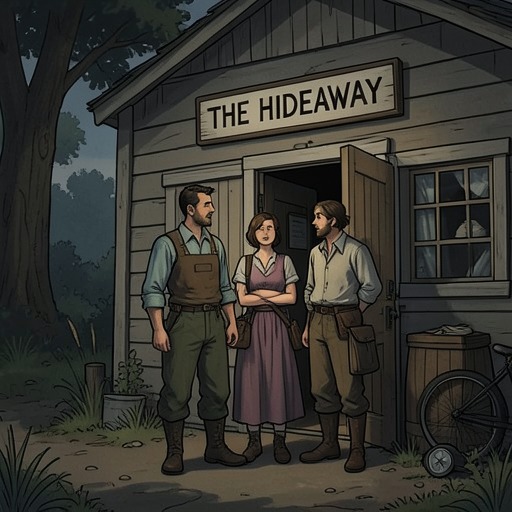
Dale first appears at the back door of The Hideaway as a large, burly man with a belly, wearing jeans and a leather vest. His brief demand for identification makes the threshold feel official rather than welcoming. When Millie Michalchuk asks what the identification is for, he states the rule: “Eighteen and up.” For Willowdean and her friends, entry is not something they can assume; Dale controls access to the club and its bar.
That authority proves flexible, but not casual. When Dale notices that the email address on Willowdean’s paper belongs to Lucy, he folds the paper carefully and returns it. He fastens fluorescent orange wristbands around the girls’ wrists, then warns them, “If any of you even look at the bar, you’re out.” The bands mark the terms of their exception, while his hand on Willowdean’s elbow as the others file inside gives the permission a protective, personal quality. He directs them away from the bar, and a waiter brings them water after seeing their wristbands. Dale has not suspended the age rule so much as created a narrow, supervised way for the girls to attend.
Lucy and the Club
Dale explains his connection to Willowdean only after the group is leaving. Sitting on a stool and holding the back door open with his back, he introduces himself by name and asks whether they enjoyed the evening. Willowdean calls it a formative experience; Dale treats that response as understandable, observing that drag shows can have that effect. His easy exchange with her makes space for the night to matter without making light of it.
He then calls Lee Wei out to the door and asks whether she remembers Lucy, who used to visit with Mrs. Dryver. Lee recognizes Lucy immediately and speaks of her affectionately. Dale’s recollection is brief, but his earlier decision to admit the girls now has a personal context: Lucy was not merely the name on an old email address but someone remembered at the club. Dale describes her as “good people,” and later presses his lips together as Lee expresses sorrow at her death. These details establish a shared memory of Lucy among people outside the Dickson family, extending the reach of Willowdean’s loss beyond home.
Dale also responds to Willowdean’s admission that she has felt lost without Lucy, whom she describes as a compass. He does not take over Lee’s answer, but offers a practical invitation: Willowdean can email the club if she ever needs anything. The offer gives her a continuing point of contact, rather than treating the night as a one-time favor. His kindness is expressed in access and availability, both modest and concrete.
Help with the Pageant
Later, Willowdean writes to Dale because she and Millie, Amanda Lumbard, and Hannah Perez do not know how to walk, pose, or present themselves for the pageant. Her message admits that she fears making a fool of herself and bringing the others down with her, while also insisting that she wants to prove she has no reason not to compete. The Hideaway becomes a place to seek a kind of instruction she cannot find in Clover City.
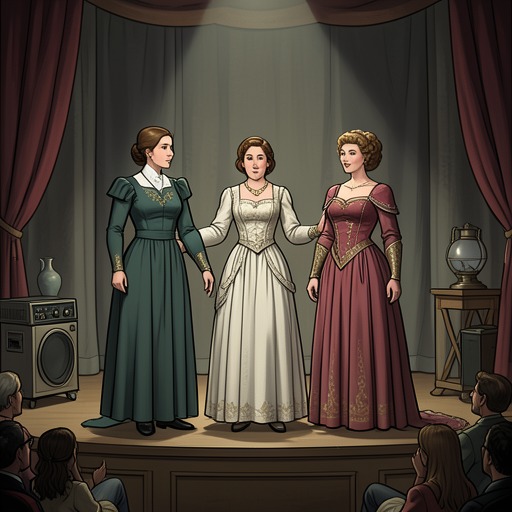
Dale is present when Lee lines the girls up onstage in high heels. He sits at the bar with a tall beer while Lee trains them, turning the earlier welcome into a more sustained connection between the group and the club. The contrast is telling: on their first visit, the girls were kept far from the bar and given water; now they are onstage, learning how to occupy space in front of an audience. Dale is not identified as their instructor, and Lee leads the training, but his presence places him within the circle of practical support that Willowdean’s email has brought into being.
When Dale comes around the bar, he says he should get the girls home before he has to open that night. His remark returns him to the ordinary work of running the venue, even as it shows that helping them has become part of the evening. His role does not change into that of a pageant mentor; rather, he helps make the club available as a resource and helps the girls leave safely.
Narrative Significance
Dale’s scenes turn The Hideaway from a place Willowdean can scarcely imagine Lucy visiting into a setting where Lucy’s past has consequences in the present. The paper bearing Lucy’s email address first secures entry; the later email asks for help with a different threshold, the pageant stage. Between those encounters, Dale recognizes the person behind the address and treats her memory as a reason for care, not as a credential to exploit.
His part in Willowdean’s story is defined by this combination of limits and welcome. He does not pretend the club’s age rule has disappeared, and he makes the conditions of entry explicit. Yet he trusts Lucy’s connection enough to admit the girls, remembers Lucy warmly, and remains available when they ask for guidance. In a novel where the girls’ ambitions meet the limits imposed by their small-town surroundings, Dale helps open a door to support beyond Clover City. His contribution is not to promise that they will win, but to help them get onto the stage prepared to try.