Jolene
Dumplin'Dolly Parton’s “Jolene” is both a song Willowdean Dickson loves and a recurring thread through which she understands beauty, heartbreak, memory, and connection. First heard as a performance at a drag show and eventually sung by Willowdean on the pageant stage, it gathers meaning from the people and places associated with it: Lucy’s room, Ellen’s family kitchen, Bo’s truck, her mother, and the audience that knows the song by heart. Its repeated appearances turn a familiar country hit into a personal record of who has shaped Willowdean’s life.
Meaning and Personal Resonance
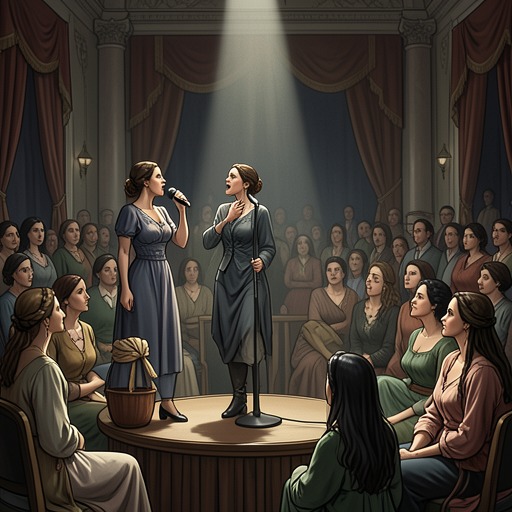
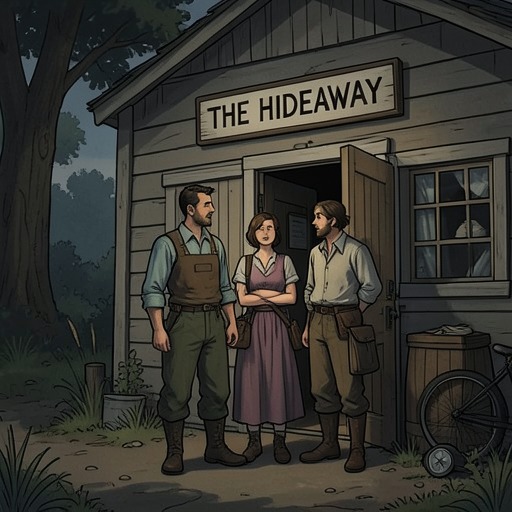
At The Hideaway, Willowdean watches Lee Wei perform the song in a baby-blue sequined minidress. Lee is a short Asian drag queen, and the spotlight, the movement of the sequins, and the audience’s immediate response make the number a vivid stage spectacle. Willowdean singles Lee out as her favorite performer. The song needs only one note to bring the bar to life, but its effect on Willowdean is more intimate: by the end, she is wiping away tears she did not realize she was shedding.
Willowdean’s attachment is not simply a matter of liking a catchy song. She describes “Jolene” as the one song she could listen to for the rest of her life, and connects its familiar story to the fear of being outshone. In Dolly Parton’s song, a woman pleads with someone she believes is more beautiful and more worthy not to take her man. Willowdean hears in that comparison a broader, persistent anxiety: whoever someone is, there will always seem to be somebody prettier, smarter, or thinner. Perfection, in her reading, is an unreachable shadow rather than a stable standard anyone can meet.
That reading gives the song a particular force in a story preoccupied with body image and the narrow ideals attached to beauty. Willowdean’s response does not mean that she has escaped insecurity; rather, the song helps her recognize how relentlessly comparison can reproduce itself. Her tears register the distance between knowing that perfection is a phantom and feeling its pressure anyway. The number becomes a way to name the judgment she fears without reducing that fear to a personal failing.
A Name That Crosses Between Car and Song
The name Jolene also belongs to Willowdean’s car, a cherry-red 1998 Pontiac Grand Prix Lucy gave her. That car is an everyday object with a personal history: it is a gift from her aunt, and Willowdean’s affectionate attachment is plain when she gets home on the last day of tenth grade and pauses in the driveway after parking it. The shared name places the song’s recurring presence beside a tangible connection to Lucy, though the book’s evidence does not make the car and the song interchangeable. One is a cherished vehicle; the other is a song whose meaning keeps changing as Willowdean hears and remembers it.
The car’s later failure makes that material association more poignant. On a Tuesday morning, Willowdean tries the ignition, strikes the steering wheel, and gets only a honking sound from the car. Her mother offers her a ride to school and says she will call Bruce to have the car looked at. The stalled car interrupts Willowdean’s routine, but the passage also returns the reader to a name that already carries Lucy’s gift and the song’s emotional weight. Jolene is not only something Willowdean listens to; it is also part of her daily life, bound up with an object she loves.
That same morning, Willowdean’s mother calls after her in the school walkway to return her forgotten phone, using her family nickname, Dumplin’. Boys laugh, and Willowdean asks her mother not to call her that outside the house. The scene does not directly mention the song, but it helps show how names can shift with context: an affectionate private address becomes uncomfortable when made public, just as “Jolene” moves between a car, a performance, and a deeply personal interpretation. These meanings coexist without collapsing into one another.
The Song Between People
“Jolene” also accrues meaning through the people who share Willowdean’s life. In Bo’s truck, he tells her that he cannot hear Dolly Parton anymore without thinking of her. Willowdean laughs nervously and recognizes the pleasure of having left a trace in his memory. Yet that pleasure is complicated: Dolly also brings Ellen and Lucy to mind. The song connects Willowdean to Bo, but it cannot belong exclusively to their romance, because it already carries other relationships and memories.
At work, Bo’s connection to the song becomes a small, revealing gesture. He usually whistles an untidy mixture of tunes when he thinks nobody is listening; one evening, he whistles “Jolene.” Willowdean’s response is physical: her knees turn to mush. Ron hums along while restocking receipt paper, and Marcus asks Bo whether he knows any other songs. Bo stops briefly as he flips a burger, then resumes whistling. The scene lets the song pass through the ordinary sounds of a restaurant, turning an otherwise routine shift into a moment Willowdean experiences as charged with attraction.
The song’s associations are not exclusively romantic. Willowdean recalls hearing it on drives with her mother, Lucy, and Gram, the four of them with the windows down and their hands moving through the wind. She remembers sitting with Lucy in her room while the record player played, lying on the cool tiles of Ellen’s kitchen while Ellen’s mother hummed and made spaghetti, and hearing the song at Lucy’s funeral. She also recalls it in Bo’s truck and at The Hideaway, watching Lee perform. These memories place the song among family, friendship, grief, performance, and desire. Its repeated appearance does not erase the differences between those experiences; it lets them accumulate in one familiar tune.
The Pageant Performance and Its Afterlife
During the pageant, Willowdean performs the song by lip-syncing to Dolly Parton’s recording with a toy microphone. Her mother stands at the edge of the stage with her own microphone, visibly tense, while the judges whisper at their illuminated table. The contrast between the carefully organized competition and Willowdean’s personal choice of song gives the performance its emotional tension: the pageant evaluates contestants, but the song she brings to its stage is about the pain of measuring oneself against someone else.
As Willowdean closes her eyes, she revisits the song’s history in her life, from drives with her family and Lucy’s record player to Ellen’s kitchen, Lucy’s funeral, Bo’s truck, and Lee’s performance. The sequence makes the pageant rendition a gathering point for earlier scenes rather than a detached talent number. When she sings along, she thinks she hears audience members singing back. The song’s familiarity allows it to cross differences of geography, language, and religion; for a moment, the crowd shares something that exceeds the judges’ evaluation.
The number ends with applause. Willowdean thinks she hears an oink, but cheers soon drown it out. Her mother pulls her aside to ask what the performance was, then has to rush out to announce the next contestant before Willowdean can answer. The response is not presented as an uncomplicated triumph: the possibility of mockery remains audible, and her mother’s surprise is immediate. Still, the cheers and the voices joining the song give the performance an audience beyond the judging panel.
Across these appearances, “Jolene” becomes a musical motif for the tension between comparison and belonging. It first makes Willowdean’s fear of never matching an ideal legible; later, it carries private associations among people who matter to her; onstage, it brings those memories into public view. The song does not resolve her insecurity or make grief disappear. Instead, it gives Willowdean a way to carry her attachments and anxieties into the same performance, where the song that once made her cry can also be heard, and answered, by others.