Lucy
Dumplin'Lucy is Willowdean Dickson’s aunt, confidante, and second parent, but she is also a person whose life was made smaller by a world that treated her body as a spectacle or a problem. Though she dies before the novel’s central events, her guidance, Dolly Parton devotion, and surviving belongings continue to shape Willowdean’s choices. Lucy’s memory becomes more than a source of grief: it is a means of understanding what she endured and of carrying forward her insistence that fear of judgment should not decide what someone gets to try.
Identity and Life
Lucy was Rosie Dickson’s older sister. She lived with the family, often occupying the living-room couch with Riot in her lap, watching television or working on crossword puzzles. Even six months after her funeral, Rosie still watched her shows in the kitchen on a portable television rather than in the living room where Lucy had usually been. The habit makes Lucy’s absence visible in the arrangement of the home: her place is empty, but the household has not yet reorganized itself around that fact.
Lucy was also a central adult in Willowdean Dickson’s childhood. Willowdean describes her as someone who took care of her like a second parent. Lucy’s care was not limited to comforting words; she noticed when Willowdean’s fear kept her from entering a room and went to meet her there. Her influence rests partly on this practical closeness: she remembered what it felt like to be held back by other people’s imagined judgments and tried to keep that experience from becoming an inheritance.
The novel gives Lucy’s death a stark physical and social context. She died at thirty-six, weighing 498 pounds, alone on the couch from a massive heart attack while watching one of her shows. No one witnessed her death, and Willowdean reflects that people outside the house had not truly witnessed Lucy’s life either. The funeral intensified the family’s exposure to public scrutiny: half of Clover City attended, while the family could not afford the wider casket Rosie wanted, and Lucy was cremated. Willowdean resists letting those circumstances become the whole story of her aunt. She remembers Lucy alive, rather than reducing her to the size of her body or the manner of her death.
Guidance and Relationships
When Willowdean was in third grade, Lucy took her to a dance class. Willowdean, distressed by her leotard, height, and body in comparison with the other girls, refused to leave the car. Lucy climbed into the backseat, tucked a loose strand of hair behind Willowdean’s ear, and offered her a tissue. She told her that fear of what people might think had cost her chances to do things that mattered, including ordinary errands and more special experiences. Willowdean could try the class and decide it was not for her; what she should not do was deny herself the chance because of other people’s judgment. Willowdean stayed only through the fall, but the lasting point was that she had been able to choose for herself.
Lucy’s bond with Willowdean is also present in the language of direction. After meeting people who knew Lucy through her Dolly Parton community, Willowdean explains that losing her has left her feeling lost, as if Lucy had been a compass she did not know she possessed. Lee Wei answers that Lucy may have been there long enough for Willowdean to learn to find her own way. The exchange does not erase grief or suggest that Lucy can simply be replaced. Instead, it gives her guidance a shape that can outlast her: a compass is useful not because it carries someone, but because it helps them orient themselves.
Lucy and Rosie’s relationship was loving as well as difficult. Willowdean remembers their arguments so strongly that she sometimes forgets how much the sisters loved each other. Rosie recalls that, when she won Miss Teen Blue Bonnet in 1997, Lucy stayed up all night sewing sequins onto her secondhand dress, unwilling to accept that missing details did not matter. Lucy had insisted on the care that Rosie herself had initially thought unnecessary. Their shared history makes the conflict over Lucy’s belongings after her death more complicated than a disagreement about tidying: the sisters had argued, but their care for one another was woven into ordinary acts of work and attention.
Dolly Parton and a Wider Community
Dolly Parton was one of Lucy’s deepest enthusiasms. Willowdean finds a box of cassette tapes in Lucy’s sock drawer and plays one quietly on the stereo beside the bed. Lucy had served as vice president of a regional Dolly Parton fan club until a few years before her death, and her connection to the music brought her into contact with Mrs. Dryver, a well-known Dolly Parton impersonator in that part of Texas. Mrs. Dryver’s daughter, Ellen Dryver, became Willowdean’s closest friend. Willowdean imagines that this friendship was somehow prepared by the older women’s shared devotion, as if Ellen had reached her through Lucy’s life before either girl could know it.
Lucy’s fandom also connected her to gay friends online. She described Dolly Parton as the patron saint of gay men, and that community helps Willowdean understand how limited her own experience of openly gay people in Clover City has been. At the Hideaway, where Willowdean and her friends encounter a drag show, Lucy’s tastes make the unfamiliar setting feel less remote. Willowdean sees performers of different shapes, colors, and styles, including Lee Wei, whose performance of Jolene moves her to tears. The show’s expansive range of beauty resonates with Lucy’s example: Dolly’s confidence, as Willowdean understands it, came from refusing to change simply because other people thought she looked ridiculous.
The song Jolene becomes one of the clearest links between Lucy’s past and Willowdean’s present. Willowdean hears it in Lucy’s room and associates it with family drives, Ellen Dryver’s home, Lucy’s funeral, Bo Larson’s truck, the Hideaway, and ultimately the pageant stage. Its plea to a woman imagined as more beautiful or worthy gives Willowdean a way to articulate the insecurity that perfection creates. Lucy’s affection for Dolly’s music thus survives not as a static collection of favorites but as a shared language that changes meaning as Willowdean carries it into new parts of her life.
Objects, Loss, and What Can Be Remembered
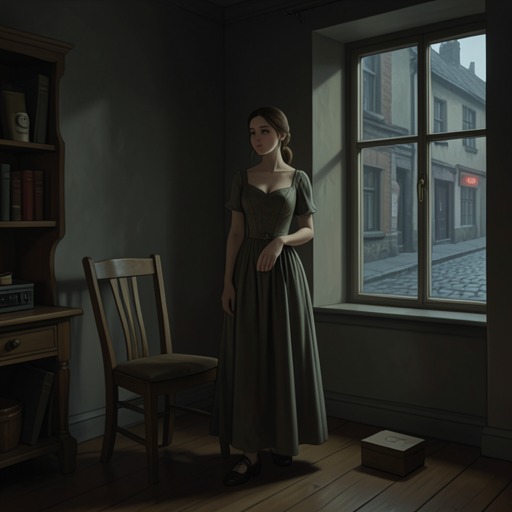
Lucy’s belongings hold a tension between preserving her and confronting what cannot be recovered. Willowdean fears that, without being able to see or hear Lucy, she will forget her. The family has no photographs of Lucy, because Lucy disliked seeing her body reflected back at her. Her absence therefore cannot be softened by a conventional visual record, and Willowdean worries that Rosie remembers chiefly how Lucy died. The objects in Lucy’s room become evidence of a life that the public gaze had too often narrowed.
Among the papers in a nightstand drawer, Willowdean discovers a blank pageant registration form dated 1994, three years before Rosie won the crown. The form raises questions rather than resolving them: Willowdean had thought Lucy regarded the pageant as a joke, and she cannot imagine her aunt entering it. Its blank spaces ask for details such as height, weight, hair and eye color, ambition, and talent. The document offers a glimpse of a possible version of Lucy’s life, but no proof of what she intended; Willowdean can only imagine her handwriting in the spaces.
A Dollywood ornament carries a more definite story of a hope that did not come to pass. Mrs. Dryver won airline tickets and offered one to Lucy so they could visit a place they had long dreamed of seeing. They planned the trip, looked at hotels and rental cars, and drove three hours to the nearest airport. There Lucy learned she would have to buy an extra seat because she would not fit in one. Although the airline was kind, the requirement mortified her, and she chose to go home. Mrs. Dryver brought back a white iridescent ornament with Dolly’s signature and a red velvet ribbon in place of a metal hook. The keepsake records both Lucy’s desire to go and the bodily exclusion that stopped her.
As Rosie begins converting Lucy’s room into a craft room and sorting belongings into boxes for donation, Willowdean experiences the clearing-out as another possible erasure. She protests that the things still belong to Lucy, while Rosie answers that they belonged to her and cannot remain as a shrine. Willowdean saves as many of Lucy’s things as she can, including Dolly collectibles and a pair of glitter-encrusted shoes Dolly wore at a Las Vegas show, signed on the soles. She also keeps Lucy’s Dolly pendant necklace. These objects do not settle the sisters’ different ways of grieving; they allow Willowdean to retain a tangible connection while the room itself changes.
Continuing Influence
Lucy’s presence reaches the pageant through memory, music, and the choices Willowdean makes under pressure. When Willowdean finds an email account still receiving messages after Lucy’s death, she first encounters junk mail from Lucy’s address. She guesses the password, DUMBBLONDE9, from one of Lucy’s favorite Dolly songs and her favorite number, and discovers a backlog of unopened messages. Among them is one with the subject line Dolly Parton Night. The account makes the persistence of digital traces part of Willowdean’s grieving: messages remain in a world that continues after the person who received them is gone.
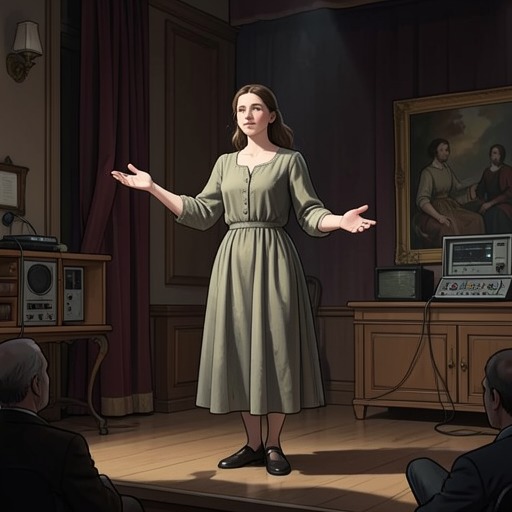
On the night of the pageant, Willowdean wishes Lucy could be there not simply to watch her compete, but to witness a moment that feels partly Lucy’s. When Willowdean performs Jolene, she sees the song’s earlier appearances in her mind, from family drives and Lucy’s room to the funeral, Bo Larson’s truck, and Lee Wei’s performance. The song gathers those places and relationships into one act onstage. Its meaning is no longer confined to Lucy’s record player or to Willowdean’s fear of comparison; it becomes something the audience can sing with her.
Lucy’s legacy is therefore neither a simple injunction to be confident nor a grief that Willowdean must finish and put away. Her advice grew out of lost opportunities, and the novel preserves the material reasons those opportunities were lost, including the airport seating requirement and the absence of photographs. At the same time, Lucy’s care gives Willowdean a model for acting despite judgment. The music, keepsakes, family stories, and unfinished form keep Lucy present without making her a fixed emblem. Her influence helps Willowdean move forward, while leaving room for the fact that she still misses the person who taught her how to find a way.