Miss Teen Blue Bonnet Pageant Registration and Information Session
Dumplin'The Miss Teen Blue Bonnet Pageant Registration and Information Session turns an application into a public test of who is allowed to belong. Willowdean Dickson arrives with friends, determined to enter a pageant her mother once seemed to imagine only for Ellen; when her mother warns that the contestants will be ridiculed, Willowdean makes her own eligibility the question. The release is signed, but the decision does not unite the girls: it begins a rupture with Ellen and brings Hannah Perez into a gathering that Willowdean had wanted to make about herself.
Causes and Stakes
The registration takes place within Clover City’s pageant culture, where former winners occupy the official positions of welcome and authority. At the table sit Judith Clawson and Mallory Buckley, both former queens and members of the planning committee; only former winners are invited to serve on it. Their glittering smiles and crown brooches make the pageant’s inherited prestige visible even before the information session begins. As Willowdean and her friends approach, the room falls almost silent, the voices around them reduced to a low buzz of questions.
For Willowdean, registering is not simply an application. Her mother has not encouraged her to compete, and Willowdean remembers a summer before freshman year when she overheard her mother suggest that Ellen consider entering when she turned fifteen. The memory sharpens the present choice: the pageant’s invitation once seemed to belong to Ellen, not to Willowdean. Now Willowdean wants to enter on her own terms, rather than have her decision dismissed as a joke, revenge, or a demonstration aimed at her mother.
The Registration Dispute
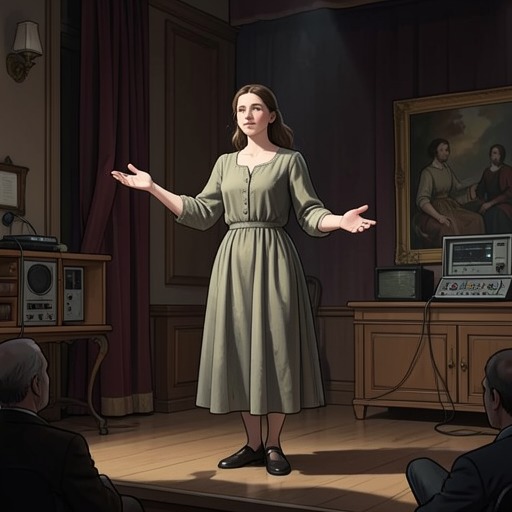
Willowdean sits with Ellen, Millie, and Amanda while her mother stands before the registration table and claps to quiet the room. She begins welcoming the contestants to a path traveled by generations of girls, but the formal opening is interrupted when the heavy door creaks and Hannah asks whether registration is already closed. The entrance makes the gathering larger than Willowdean’s original circle: Hannah, whom Willowdean knows as quiet and stubborn, has come to compete too.
Before the welcome can proceed, Willowdean’s mother draws her aside through French doors. Willowdean watches Amanda and Millie submit their applications and feels that she has left them behind. Ellen, still inside, gives her a thumbs-up. When her mother asks what she is doing, Willowdean states that she is registering as a contestant. Her mother calls the pageant no joke, then objects that Willowdean may be using the other girls to make a point about their own conflict. Willowdean rejects that assumption and asks why she cannot enter without her motive being reduced to mockery or retaliation.
The obstacle is also formal: contestants need a signed release. Willowdean’s mother says she doubts that her intentions are pure, but her more immediate fear is that Willowdean will embarrass herself and expose the other girls to ridicule. She calls Willowdean Dumplin’, a nickname that lands differently now, and warns that the contestants will be laughed at. Willowdean answers by making the implication explicit: without the signature, she hears her mother saying she is not good enough, and that nearly every girl in the room is prettier and more deserving than she is. After a long silence, her mother agrees, with the condition that Willowdean receive no special treatment or allowances. She walks to the table and signs the form.
A Welcome That Does Not Settle the Conflict
The signature lets Willowdean return to the table with Ellen, Millie, and Amanda, but it does not resolve what entering means to the people around her. Her mother resumes the welcome, describing the pageant as a path worn by those who came before and those who will follow. She invites the contestants to mingle and presents the refreshments, including her famous sweet tea. Her appeal to friendly competition offers a public ideal of fellowship just as the contestants’ private purposes begin to diverge.
Willowdean soon realizes that Ellen has entered too. She asks Ellen to back out and let her have this one thing. Ellen challenges the idea that Willowdean can choose who joins the supposed revolution, and Willowdean understands the force of the argument. But she also fears that Ellen could genuinely win, making her friend’s participation feel like a threat to the meaning Willowdean wants her own entry to have. She insists that she is not Ellen’s sidekick or chubby best friend and says the pageant is about her. Ellen calls her a bad friend, refuses to withdraw, and leaves. The next week, Ellen ignores Willowdean; the silence lasts beyond the brief anger Willowdean has learned to expect, and her anxiety grows when even Tim does not acknowledge her.
Hannah and the Wider Meaning of Entry
Hannah’s arrival also gives the registration a significance beyond Willowdean’s argument with her mother and Ellen. Willowdean’s earlier memories of Hannah include her forcefully defending her right to be asked before someone took her marker in third grade, and correcting a teacher who repeatedly called her African American when she is Dominican. At school, Willowdean hears people insult Hannah’s appearance and ask why she does not get braces. Rather than treating the remarks as a reason Hannah must change herself, Willowdean thinks that Hannah should not have to put metal in her mouth to silence cruel classmates.
In a later conversation, Willowdean asks Hannah why she has not had her teeth fixed. Hannah answers that she should not have to, and explains that the treatment is expensive: her mother is a hairdresser, her father a mechanic, and the family does not have good insurance. She says she keeps her guard up because she has no friends to walk beside her in the school hallway. She also reveals that she originally entered intending to sabotage the pageant from within, so she would be remembered as the girl who ruined it rather than the girl with buck teeth. Her mother’s pride on discovering the entry complicates that plan. The registration therefore admits not one shared motive but several: Willowdean’s insistence on claiming space, Ellen’s independent decision to compete, and Hannah’s wish to resist the pageant before finding that her participation matters to someone close to her.
Consequences
The session produces a concrete result—Willowdean’s mother signs the release—but no easy agreement about what the pageant can mean. The welcome invokes continuity and friendly competition, while the events around it expose unequal confidence, social isolation, and Willowdean’s fear that a friend’s success could eclipse her own. Her mother’s signature recognizes Willowdean’s right to enter without promising protection from judgment. Ellen’s refusal to step aside, meanwhile, forces Willowdean to confront the difference between making room for herself and deciding who else may join her. In that tension, registration becomes the first public step in a contest over belonging as much as a place in the pageant.