Relationship labels and identity
Dumplin'Relationship labels and identity become a practical dilemma for Willowdean Dickson: calling Bo Larson her boyfriend might give their relationship the security she wants, but it would also make their affection visible to people she expects to judge them. In conversations with Hannah Perez and Ellen Dryver, the label is neither a simple declaration of love nor an empty social convention. It holds together private certainty, bodily self-consciousness, public scrutiny, and the question of who gets to define a relationship.
Naming and Social Legibility
For Willowdean, the word boyfriend carries a particular charge because she already believes Bo likes her, yet fears that other people will not understand what he sees in her. She imagines an alternate plane where he could be her boyfriend and nobody else would know. The fantasy is not that the relationship would be less real in private; rather, it would be spared the social audience that makes its public naming frightening. A label offers recognition between two people while also announcing that recognition to everyone around them.
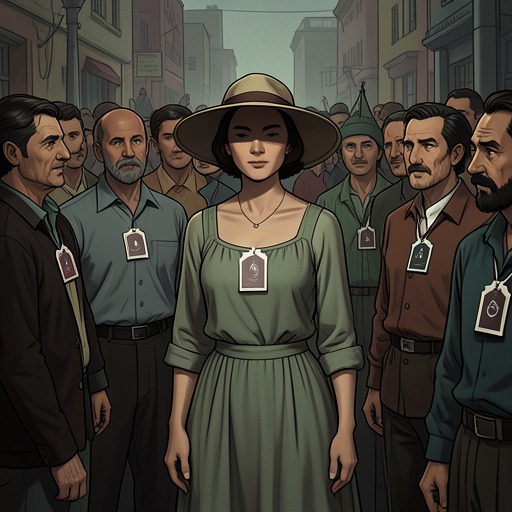
Hannah challenges the assumption that naming a relationship is automatically for the couple’s own benefit. She suggests that labels such as boyfriend and girlfriend can make things easier for other people by giving them a familiar category through which to understand a pair. Her comparison is pointed: a world of name tags might feel less frightening because everyone would know what to call everyone else, but that convenience can also make relationships seem organized for spectators. The exchange gives Willowdean’s hesitation two sides. A label could reassure her by making the relationship definite; at the same time, it could expose her to exactly the judgments she fears.
Visibility, Bodies, and Anticipated Ridicule
That fear is grounded in Willowdean’s experience of moving through a world that repeatedly makes her body conspicuous. She describes wondering whether a chair with armrests will fit, hearing a floor creak beneath her weight and feeling that people will look at her as if she might break the building, and entering a mall knowing that most of its clothes will not fit. Even the prospect of going to a buffet is burdened by the expectation that a fat person there will become a joke. These are not abstract worries about popularity: they are ordinary situations in which public space and other people’s attention can turn her body into a spectacle.
This context explains why the prospect of dating Bo feels inseparable from the prospect of being observed. Hannah recognizes that Patrick Thomas could treat the relationship as an occasion for ridicule. Later, Willowdean tells Ellen that she and Bo would not last a day at school without being mocked, and that Bo does not understand this danger. The anticipated audience therefore shapes what the label means before Willowdean has even accepted it. To call Bo her boyfriend would not simply describe her feelings; it would make their connection available to classmates who, in her view, might use it to judge both the match and her body.
Hannah’s Challenge and Willowdean’s Need for Certainty
Hannah does not respond to Willowdean’s fear with easy reassurance. She admits that she cannot know what it feels like to face the particular bodily constraints Willowdean names, and her understanding comes instead from taking the fear seriously rather than dismissing it. Her challenge about labels does not settle the question. Willowdean thinks Hannah’s argument sounds right but feels wrong: other people may rely on labels to make relationships legible, yet Willowdean herself wants the safety of knowing where she stands with Bo. Her reluctance is not simply a refusal of commitment. She has not answered him because she cannot bear to say no, while the prospect of saying yes remains frightening.
The distinction between what Willowdean knows and what she is ready to do matters. She believes that Bo genuinely likes her, but cannot extend that private belief into confidence about how others will respond. The label promises a name for the relationship, not protection from the social consequences of naming it. Hannah’s view exposes the convention behind that promise; Willowdean’s response reveals why the convention still matters to her. In this conversation, identity is both self-understanding and a question of whether that understanding can survive being publicly recognized.
Ellen’s Counterexample and the Choice to Define a Relationship
Ellen Dryver offers a different challenge when Willowdean finally recounts what has been happening. Willowdean tells her about Bo at the mall and his undisclosed school change, about Mitch Lewis, the dance, Halloween, returning to Harpy’s Burgers & Dogs, and Bo’s wish to be her boyfriend. She frames his request as putting a label on them and insists that the school would ridicule them. Ellen answers by describing her own relationship with Tim: he is much shorter than she is, and other people laugh at them too. Willowdean had not known that this was part of Ellen’s experience, which makes the comparison newly significant rather than a familiar piece of advice.
Ellen does not deny that people can be cruel. Instead, she distinguishes a relationship between its two participants from the bored spectators surrounding it. She recalls that her heart keeps choosing Tim, despite other people’s laughter, and urges Willowdean to consider the difference between loving Bo and deciding whether to date him exclusively. In Ellen’s account, the affection Willowdean and Bo have already shown one another is a matter of the heart; accepting the label and the public commitment attached to it also involves a choice. Since Bo has already made his choice, the remaining question belongs to Willowdean.
The concept remains unresolved rather than collapsing into a rule that labels are either necessary or oppressive. Hannah makes visible their function for spectators; Willowdean needs the certainty they can provide; Ellen argues that spectators do not own the meaning of a relationship. Together, the conversations clarify the stakes of naming without erasing them. For Willowdean, claiming a relationship would mean neither ceasing to fear ridicule nor proving that others understand her. It would mean deciding whether public judgment should have the final say over something she already believes is real.