Rosie Dickson
Dumplin'Rosie Dickson is Willowdean Dickson’s mother and a former Miss Teen Blue Bonnet, crowned in 1997. When she becomes a leading organizer of the eighty-first annual pageant, she appears newly authoritative in public, while at home she and Willowdean struggle over body image, grief, and what it means to take the competition seriously. Their difficult exchanges do not resolve through a single apology: the change comes through practical acts of support, culminating in Rosie’s acceptance of her daughter as both Dumplin’ and Willowdean.
Identity and Public Role
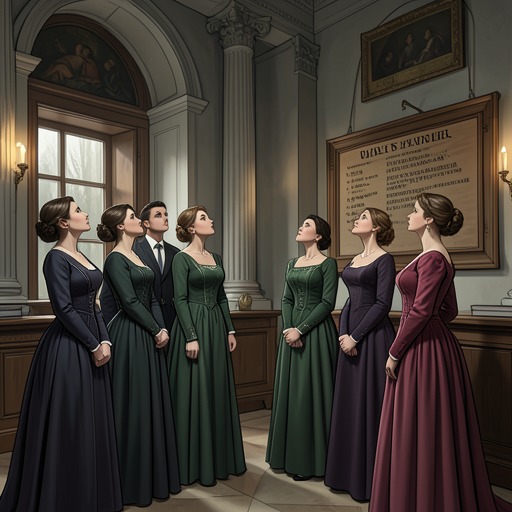
Rosie is introduced in her most visible role as a pageant organizer. At the registration session, she signs Willowdean’s application after explaining that a contestant needs her mother’s signature. She then takes command of the room, clapping to quiet the gathered girls and welcoming them to the competition. Her speech presents the pageant as a longstanding Clover City institution: she describes its former titleholders and notes that it went on hiatus during World War II and again after Kennedy was assassinated.
The narrator sees a side of her mother that does not usually dominate their relationship. Rosie stands straight and projects her voice; in the room, she seems to belong to the pageant’s history and authority rather than to the private role of mother. Willowdean understands her as a former queen who is at home in this setting, and the other girls, including those at Willowdean’s table, are captivated by her. The scene establishes that Rosie’s investment in the pageant is not merely administrative: it is a tradition she knows from within and is now responsible for carrying forward.
Her authority has both rules and limits. Rosie tells contestants that they must declare their talent by the first week of November and that the board must approve it; formalwear, swimwear, and talent costumes also require approval by the Wednesday before the pageant. She introduces Mrs. Judith Clawson, the 1979 titleholder, and Mrs. Mallory Buckley, the 2008 titleholder, as her fellow organizers, making clear that their decisions count as hers. The process she oversees therefore joins inherited pageant prestige to explicit standards and collective judgment. At the same time, the number of rules helps explain why Willowdean’s casual attitude toward preparation frustrates Rosie: for Rosie, the event is a serious responsibility, not simply a stage on which to make a point.
Mother and Daughter in Conflict
After the talent approval, Rosie makes her disappointment plain. While driving home with Willowdean, she says that approving the talent was the only favor her daughter will receive from her and challenges her to treat the pageant seriously. Willowdean recognizes that her mother has a point: her own lack of seriousness is unfair to Rosie and to the other contestants, including Amanda Lumbard, Millie Michalchuk, and Hannah Perez. The exchange shows that their disagreement is not only about whether Willowdean belongs in the competition. It is also about what participation asks of her and what Rosie believes she owes the event.
The sharper rupture comes over Willowdean’s gown. Rosie says she had expected her daughter to make an effort to slim down for the pageant and asks whether she is taking it seriously. Willowdean answers that her body is her body; the dress dispute has made her feel that her mother expected her to change it before she could be taken seriously as a contestant. Rosie insists that Willowdean has misunderstood her and says she cannot keep being treated as the villain. Their words leave the issue unsettled rather than neatly solved, and the gown becomes a concrete measure of how differently they understand preparation: Rosie treats it as part of pageant readiness, while Willowdean hears an expectation that her body should be smaller.
Rosie’s role as the person who can approve the gown intensifies the strain. Willowdean has found a dress that fits and zips, a rare and consequential success in a shopping landscape where she does not expect to find a suitable alternative easily. She is also angry that Rosie, as the person in charge, can decide whether she may wear it. When Rosie clears out Lucy’s room, Willowdean experiences the cleaning as another threat to what she wants to keep: the conflict over the dress and the handling of Lucy’s belongings overlap in a house where both women have been occupied by the pageant and their own reactions. The evidence does not make Rosie’s cleaning a deliberate rejection of Lucy; it shows how her habit of cleaning when frustrated collides with Willowdean’s continuing grief and makes their already tense relationship more precarious.
Care, Expectations, and Shared Responsibility
The relationship also contains care that does not erase the conflict. Before the pageant interviews at the Silver Dollar Banquet Hall, Rosie suggests that Willowdean add the teal blazer she bought her for her birthday. As they arrive, Rosie tells her daughter she loves her and hopes she will make her proud, then explains that she must avoid giving anyone the impression that Willowdean receives special treatment. Until Saturday night after the pageant, she says, they will be all business. Her affection and her insistence on impartiality arrive in the same conversation: she wants Willowdean to succeed, but she also knows that her public position makes favoritism a visible concern.
Rosie’s authority is tested when Millie Michalchuk admits that she forged her mother’s signature to enter the pageant. Rosie is onstage with a clipboard when she asks whether the admission is true, and, after Millie says that her parents should support her, Rosie directs the family to continue the discussion in the foyer. The moment shows her having to handle the pageant’s parental-consent dispute in public while moving a painful family confrontation out of the room. The evidence establishes that she intervenes and manages the situation, not how the dispute is ultimately settled.
Later, she joins Willowdean in preparing for the Cadillac Ranch talent. Rosie sits beside her, agrees that they can do it, looks at the assignment, and pours a little champagne into a plastic tumbler for her daughter. The gesture is small, but it marks a shift from policing Willowdean’s seriousness to taking part in the work at hand. When the pageant gown proves difficult, Rosie is likewise vulnerable to the event’s pressures: she has tried it on earlier in the week and has been exercising, yet the zipper still will not close. Willowdean tells her they will make it work; after they address the problem, Rosie notices the difference in the mirror. Their roles briefly reverse. The daughter who felt judged over her own dress becomes the one helping her mother through a last-minute gown crisis.
Change and Ending
The most direct change between them is expressed through Rosie’s familiar nickname for Willowdean. Before going onstage, Rosie asks whether her daughter hates being called Dumplin’ and offers to stop. Willowdean says she does not hate it as much as she used to and explains that she has begun to embrace it. She understands herself as a mixture of names and experiences: Dumplin’, Will, and Willowdean, as well as someone who can be fat, happy, insecure, and bold. Rosie’s question gives her daughter room to define the nickname for herself instead of assuming that its meaning is settled.
Rosie answers with affection, thanking Willowdean and telling her she loves her, then kisses her forehead and calls her Dumplin’ again. The moment does not undo their earlier disagreement about weight, the gown, or the pageant. Instead, it places tenderness alongside those unresolved tensions. Rosie can be the queen who enforces pageant procedure, the mother whose expectations hurt her daughter, and the person who asks whether a cherished nickname still feels welcome. As she leaves to announce contestants and escorts, Willowdean takes the red gown Rosie bought her from a duffel bag and hurries to join the lineup. The two dresses frame the ending: Rosie’s gown has required last-minute help, while Willowdean chooses to wear her own. Their movement toward the stage is not a complete reconciliation through words, but it is a shared passage into the pageant, made possible by the practical assistance and renewed affection they have exchanged.