Send in the Clowns
Dumplin'Send in the Clowns is the song Hannah Perez performs at the pageant talent show, where it turns public attention away from the ridicule attached to her appearance and toward the feeling in her voice. Remembered from Lucy’s record player, the song brings a subdued sadness into the auditorium; Hannah’s performance makes that sadness visible to the people watching her.
Earlier Echoes of Ridicule
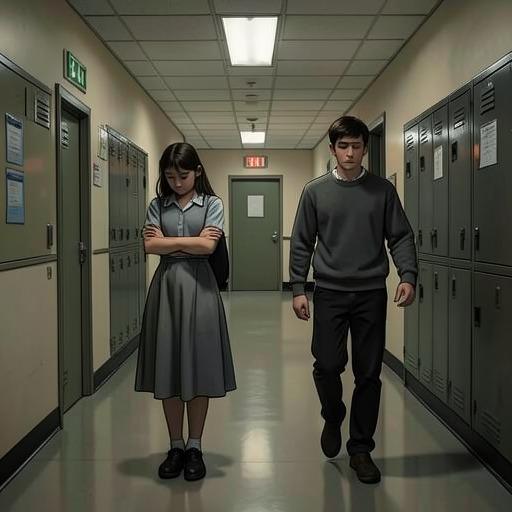
The song’s performance follows a school culture in which names and images can reduce a person to a target. Patrick Thomas gives Hannah a cruel nickname based on her teeth, and an image pairing her school photograph with a horse circulates among students with the nickname as its caption. The laughter around the image makes Hannah’s appearance a public joke before the pageant gives her a public stage of another kind.
The book also establishes that naming can carry different meanings depending on who uses it and where. Willowdean Dickson describes herself as fat without treating the word as an insult, but she asks her mother not to call her Dumplin’ in public after boys laugh when the nickname is shouted across the school walkway. That contrast helps frame Hannah’s performance: the humiliation is not simply a matter of words or looks, but of how an audience receives and fixes a person in a role.
Hannah’s Performance
Hannah crosses the stage in army-navy surplus boots, and the sound-booth operator starts Send in the Clowns, a song Willowdean remembers hearing on Lucy’s record player. Its mood settles into the room with a sadness whose source is difficult to name. Hannah’s voice is not technically extraordinary, but she sings with such conviction that the music and her voice rise together.
As the song builds, Willowdean’s view of Hannah changes. The familiar image of a sour expression, prominent teeth, and fading black clothes gives way to the image of a girl singing a heartbreaking song because she understands its feeling, even when others do not. The shift does not depend on Hannah becoming someone else; the song allows the audience, and Willowdean in particular, to see beyond the features and labels that had seemed to define her.
Reception and Significance
The music cuts off before its fading finish is complete. A brief silence follows, then the entire auditorium applauds. The response marks a sharp reversal from the school’s laughter at Hannah’s image: for this moment, she is heard as a performer rather than displayed as a punch line. Her exit is still guarded—she nods, takes the steps two at a time, collects her backpack, and leaves without thanking the audience—but the applause confirms that her performance has reached them.
Willowdean’s mother calls the performance lovely, in a tone Willowdean understands as an implicit comparison with her own talent-show effort. The song therefore has two effects in the scene: it gives Hannah a moment of recognition, and it makes the standards by which performances are judged newly felt. Its importance lies not in a claim that applause ends the cruelty surrounding Hannah, but in the temporary change of attention it creates: the girl who had been made into an image becomes, through singing, someone the room listens to.