The 81st Clover City Miss Teen Blue Bonnet Pageant
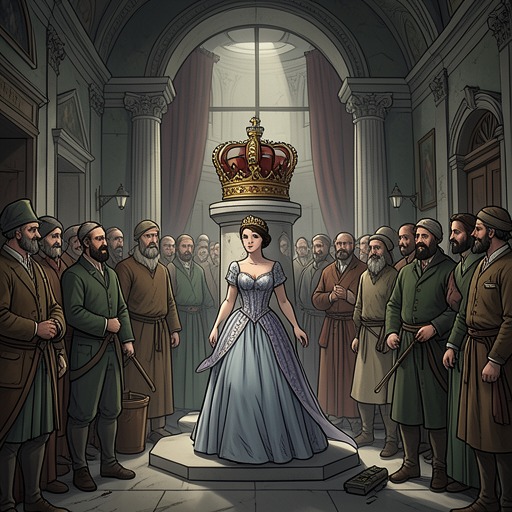
Dumplin'The 81st Clover City Miss Teen Blue Bonnet Pageant is both a long-established Clover City tradition and a tightly regulated public performance. Its ceremonies promise a single crown, but its course gives Willowdean Dickson and her friends something more consequential: a chance to enter a space shaped by narrow expectations without first making themselves fit those expectations. From the formal registration meeting to the evening-gown procession, the pageant’s rules expose its exclusions even as its participants build a bond the competition cannot contain.
Tradition, Authority, and Rules
At the registration meeting, the community center is crowded with girls seated at round tables covered in white tablecloths. The contestants sort themselves into recognizable groups: legacy families with crowned relatives, athletes building college résumés, cheerleaders, and theater and choir students. Their Easter-style dresses and matching cardigans contrast with the jeans and T-shirts worn by Willowdean, Ellen Dryver, Millie Michalchuk, and Amanda Lumbard. Before the competition begins, the room already displays the social distinctions the pageant inherits.
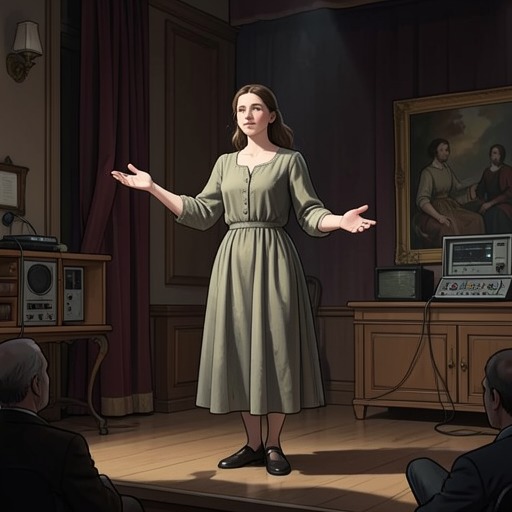
Rosie Dickson, once Clover City’s Miss Teen Blue Bonnet in 1997, takes command of the meeting. She introduces the pageant as a treasured tradition whose former titleholders have become business owners, physicians, mothers, wives, and even a mayor. Its history includes suspensions during World War II and after the assassination of Kennedy. Willowdean is struck by the difference between Rosie in this setting and the mother she knows at home: standing straight and projecting her voice, Rosie appears entirely at ease as the pageant’s former queen and present authority.
The rules make that authority concrete. Contestants who have not declared a talent must notify the committee by the first week of November, and the board must approve each act as appropriate. Formalwear, swimwear, and talent costumes all require approval by the Wednesday before the pageant. Rosie also introduces two fellow committee members, Judith Clawson, the 1979 titleholder, and Mallory Buckley, the 2008 titleholder, explaining that their approval counts as her approval. The hot-pink folders bearing the Eighty-First Annual Clover City Miss Teen Blue Bonnet logo turn the tradition into paperwork, deadlines, and decisions controlled by former winners.
Contestants and the Cost of Belonging
The meeting places very different reasons for entering under one pageant banner. Willowdean arrives with her friends and little sense of what to expect; the registration fee is two hundred dollars, and she jokes about the cost as if joining the pageant were joining a revolution. Hannah Perez arrives late and takes a seat alone. Willowdean remembers Hannah as quiet but stubborn: in third grade she fiercely defended her right to be asked before someone took her marker, and in fifth grade she corrected a teacher who kept calling her African American, because she is Dominican.
At school, people mock Hannah’s appearance and ask why she does not get braces. Willowdean’s response is shaped by the possibility that Hannah cannot afford them or is afraid of them: she should not have to put metal in her mouth to stop other people’s cruelty. Later, when Willowdean asks Hannah directly about her teeth, Hannah answers that she should not have to change them and explains that her mother is a hairdresser, her father a mechanic, and the family lacks good insurance. Her resistance to the pageant’s beauty expectations is therefore neither a simple pose nor a matter of taste; it sits alongside the material limits on the treatment others expect her to obtain.
Hannah eventually tells Willowdean that she entered intending to sabotage the competition from within. She had expected that ruining the pageant would let her be known as the girl who disrupted it rather than as the girl with buckteeth. But her mother found the welcome packet and was proud that Hannah had entered. That pride complicates Hannah’s original plan: participating now carries a family meaning as well as the possibility of defiance. She also admits that she keeps her claws out because she does not have the friends Willowdean has or someone to walk the school hallway beside her.
The pageant’s social world also brings Willowdean into unfamiliar territory. On the way to the Hideaway, she and her friends queue behind a group she assumes to be gay men. She recognizes how small her experience of Clover City has been: openly gay people have seemed to her more like urban legends or cautionary tales, although Lucy had many gay friends online and called Dolly Parton the patron saint of gay men. Amanda Lumbard wonders aloud how the men get their eyebrows so perfect, while Hannah answers with dry impatience. The moment links the pageant’s circle of contestants to a wider world of people whose presence in Clover City has been obscured or treated as extraordinary.
Training and the Work of Performing
Willowdean seeks help because she fears that she and the other girls do not know how to walk, pose, or present themselves. In an email to Dale, the Hideaway’s owner and bouncer, she explains that she found Lucy’s old registration form in Lucy’s dresser and describes the girls she has drawn into the competition: Millie, Amanda, and Hannah. Willowdean worries that she is taking them down with her, that she will make a fool of herself, and that she will be the fat girl who falls and fumbles through magic tricks. She does not expect to win. What she wants is the chance to show that her body is no reason she cannot enter or should not be there.
At the Hideaway, Lee Wei lines the girls up onstage in high heels while Dale watches from the bar. The place looks less glamorous in daylight, with peeling paint and sticky floors, and Hannah teeters in three-inch heels, already certain she will not wear them in the pageant. Lee begins with the walk, treating it as the contestants’ first impression and the basis of their queenly presentation. She demonstrates a hip-swinging stride, then shows them how to put one foot in front of the other. The lesson translates the pageant’s abstract demand to look like a queen into a repeated, teachable movement; when Lee walks the stage, her heels make a distinct thwack with each step.
The training does not erase the girls’ unease. Willowdean has asked Lee and Dale to give up their Friday afternoon, and she has to urge the group onward. Hannah wants to get the exercise over with, while Millie silently chews her nails and locks her knees in place. Their awkwardness matters because the pageant does not simply invite them to appear; it requires them to learn and perform its codes in public. The walk becomes a skill they can claim together rather than a quality the contestants must already possess.
From Competition to Solidarity onstage
The pageant’s most decisive reversal comes when Millie’s opportunity to compete is threatened by her mother’s refusal. Millie makes clear that she has dreamed of entering for as long as she can remember and that the rules do not say that fat girls cannot apply. Her mother flinches at Millie’s blunt word for her body and wipes away a tear. Millie tells her that her mother is the only thing keeping her from competing. Faced with the pageant banner and Rosie’s faint encouragement, Mrs. Michalchuk eventually nods, while Millie’s father holds her hand.
The girls return to the auditorium together, aware that the other contestants have been listening. Some offer Millie smiles. Ellen takes Willowdean’s hand; Millie takes Ellen’s, then links her fingers with Amanda’s. Willowdean turns to Hannah with her palm open, and Hannah takes her hand after a breath. Their joined hands make visible a form of belonging different from the crown promised to one winner. For Willowdean, the gesture marks a shift in how she understands her position: alongside the others, she feels she has the upper hand for the first time since the pageant began.
The rehearsal that follows is disorderly rather than triumphant. There is no time for the contestants to perform their talents. Callie slips on the ramp during the opening number, cues go wrong, and the rehearsal ends amid spills, tears, and blood. The pageant’s careful preparation cannot guarantee a smooth spectacle; the mess reveals the costs and vulnerabilities behind its polished presentation.
During the evening-gown round, Willowdean becomes Ellen’s escort. When Mallory looks startled, Willowdean loops Ellen’s arm through hers and walks her across the stage. The two sashay down the ramp, Willowdean placing one foot precisely in front of the other as Lee taught her. She releases Ellen at the edge of the stage so Ellen can turn, then accompanies her backstage. The walk is not merely practice repeated for an audience: Willowdean uses the pageant’s formal choreography to stand publicly beside her friend.
The other escorts and contestants also make room for a wider range of presentation. Amanda walks with her older brother, wearing clunky shoes whose laces match her dress, an idea from Millie. Malik escorts Millie with careful courtesy. Hannah appears in a black slip dress and combat boots, without makeup, and walks with Courtney Gans, whose fitted tuxedo and slicked-back blond hair complement Hannah’s look. Hannah follows the pageant’s rules without adopting its conventional feminine styling. After Hannah exits, Courtney kisses her cheek and says she will meet her outside later; Ellen laughs and calls Hannah the devil once Courtney is out of earshot.
As the contestants walk with their escorts, all of them follow the stride Lee taught them, heels leading their hips from side to side. The pageant remains a contest governed by approval and presentation, but its stage also holds gestures that unsettle a single prescribed image of a contestant: Willowdean publicly escorts Ellen, and Hannah enters in a look that is unmistakably her own while remaining within the rules. In the scenes the narrative shows, the crown is not the only measure of what the pageant produces. Its preparation has made visible a group of girls who can steady, accompany, and claim space for one another.