Willowdean Argues with Her Mother About the Pageant Gown
Dumplin'Willowdean Argues with Her Mother About the Pageant Gown is a confrontation in which a fitting becomes a test of whose judgment defines Willowdean’s body and her seriousness about competing. Her mother has adjusted the gown for the Miss Teen Blue Bonnet Pageant, but when Willowdean tries it on, the garment’s tightness brings an unspoken expectation into the open: her mother had hoped she would slim down. Willowdean answers not by apologizing for the fit, but by defending both her body and the confidence the dress gives her.
The fitting and the point of tension
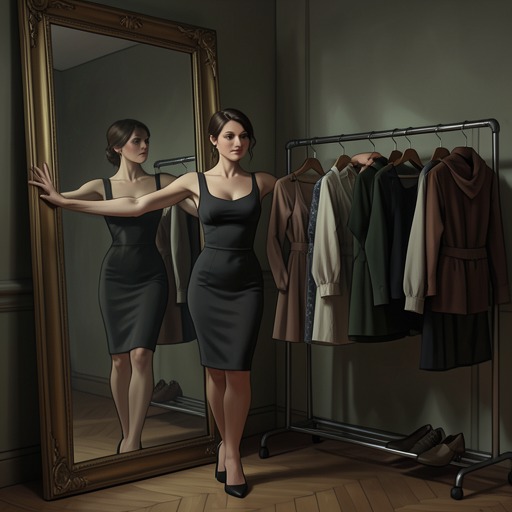
The argument begins the night after Willowdean picks her mother up from work. Her mother says she has made adjustments and asks her to try on the dress. Once again, she leaves Willowdean alone in her room to change. The top fits perfectly; Willowdean recognizes that getting its darts right must have taken considerable work. The bottom is different. Her mother has let it out as far as she can, but it remains snug. Willowdean says she feels fine in it and is not embarrassed. What changes the fitting is not a new problem with the dress but the expression on her mother’s face: Willowdean sees a frown, then hears a tsk of disappointment that she describes as needles under her fingernails.
At first Willowdean tries to contain the disagreement within practical limits. She tells her mother that the top is perfect, that she loves the dress, and that she will only have to wear it for about ten minutes. Her mother’s lips twitch, but Willowdean turns to face her directly rather than continuing to speak through their reflections. That physical change makes the exchange less like commentary on a garment and more like a confrontation between the two of them. Willowdean asks her mother to say what she is thinking instead of leaving it in her expression.
The expectation behind the dress
Her mother puts away her sewing box before explaining that she thought Willowdean might make an effort to slim down for the pageant. She also asks whether Willowdean is taking the competition seriously, saying that she allowed her to register because she expected her to do so. The claim connects the gown’s fit to a judgment about Willowdean’s commitment: in her mother’s account, losing weight would have demonstrated that she took the pageant seriously.
Willowdean hears that implication plainly. She asks whether the dress does not fit because her mother expected her to lose weight, then gestures along the length of her form and names the issue directly: this is her body. Her mother says Willowdean has taken her words the wrong way and insists that she is not the bad guy. The exchange leaves the original question of fit behind. Their disagreement is now about whether the mother’s expectation can be separated from the body it asks Willowdean to change, and whether Willowdean’s objection is a misunderstanding or a necessary response to what she has heard.
Approval, dignity, and the decision to leave
After a silence, her mother returns to the gown’s tightness as the reason she will not approve it for the pageant. She says the dress is inappropriate and insists the decision is not personal: she would make the same judgment about anyone. The statement offers a rule-based explanation, but it comes after her admission that she expected Willowdean to slim down. For Willowdean, the two explanations cannot be kept apart. The garment may be snug, but the mother’s earlier expectation has made approval feel bound up with whether she considers Willowdean’s body acceptable onstage.
Willowdean answers that she feels good. She explains that the dress makes her feel like someone she did not know she could be and that she has never owned anything like it. Her defense is therefore not simply that the gown can be worn for a short time, or that its top fits well. She is defending an experience of possibility: the dress lets her imagine herself differently without requiring her to become thinner first. She tells her mother that if seeing her in it inspires pity or regret that she did not lose weight, her mother needs to try harder. The words turn the fitting into a demand for a different kind of recognition: not approval conditional on changing her body, but an effort to see her as she is.
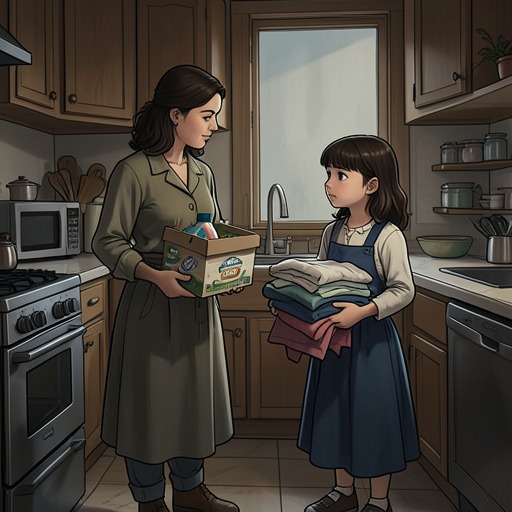
The confrontation ends without a reconciliation. Willowdean waits for her mother to leave, then realizes that she is the one standing in her mother’s room. She gathers the dress so she will not trip on its hem and leaves her mother there, surrounded by her sash, crown, and sea-foam dress. The departure reverses the scene’s arrangement: her mother had left Willowdean alone to change, but now Willowdean leaves the room herself, carrying the gown and ending the exchange on her own terms. The mother’s pageant keepsakes remain behind as a visual counterpoint to the new dress that has made Willowdean feel able to become someone she had not imagined.
Significance
The scene makes the gown both a concrete object and the means through which the conflict becomes visible. Its upper half records the care involved in the alterations; its snug lower half exposes the limit of that work and the expectation that Willowdean should have changed her body to meet the pageant’s demands. Neither detail cancels the other. Her mother has worked on the dress, yet also hoped Willowdean would lose weight; Willowdean appreciates the fit at the top, yet refuses to treat the rest of her body as a mistake.
The decisive shift is from asking whether the dress fits to asking what approval would mean. Willowdean does not deny that the gown is snug. She contests the shame attached to that fact and insists that feeling good in it matters. By leaving her mother’s room with the dress, she does not resolve their disagreement or secure permission; she makes her own response clear. The pageant gown becomes a point of conflict precisely because it offers her confidence while placing her body under judgment.