Willowdean and Lucy’s bond sustained through remembrance
Dumplin'Willowdean and Lucy’s bond is a central emotional relationship in Willowdean’s life, surviving Lucy’s death through remembered care, shared music, and the objects that remain in her room. Lucy was more than an aunt: she helped raise Willowdean, offered counsel when fear kept her from taking a chance, and became a source of direction whose absence makes both grief and family tensions harder to navigate.
Identity and Background
Lucy was Willowdean’s aunt and, as Willowdean later explains to Bo, a second parent who took care of her. Lucy’s life was shaped by the limitations and judgments attached to her body. At thirty-six, weighing 498 pounds, she died alone of a massive heart attack while watching television on the couch. No one witnessed her death; Willowdean reflects that few people outside the household had truly witnessed Lucy’s life, either. The account makes the circumstances of her death inseparable from the question of how she will be remembered.
Lucy’s discomfort with having her body reflected in photographs left the family without pictures of her. Six months after her death, Willowdean still expects to find her on the couch with Riot in her lap or working on crossword puzzles in the kitchen. The ordinary habits remain vivid, but the absence of photographs makes Willowdean fear that, without seeing or hearing Lucy, she may eventually forget her. Her grief is therefore not only longing for someone lost; it is anxiety about losing the evidence of who that person was.
Care and Guidance
One of Lucy’s most consequential acts of care comes when Willowdean refuses to get out of the car. Lucy joins her in the back seat, comforts her with a tissue, and tells her how fear of other people’s judgment has kept her from doing things that mattered. Lucy does not insist that Willowdean must continue if the experience proves wrong for her. Instead, she urges her to give herself the chance to try. Willowdean participates only through the fall, but recognizes that trying was the point. Lucy’s advice gives her a model for acting without treating other people’s scrutiny as the final authority.
That guidance is especially resonant because Lucy’s own life included occasions when anticipated judgment and practical barriers narrowed what she could do. Her story is not presented as a simple lesson that courage overcomes every obstacle: her experience also shows the costs of exclusion. The tenderness of her encouragement comes from that history. She wants Willowdean to have the opportunity to decide for herself, rather than let fear decide in advance.
Objects, Music, and Shared Memory
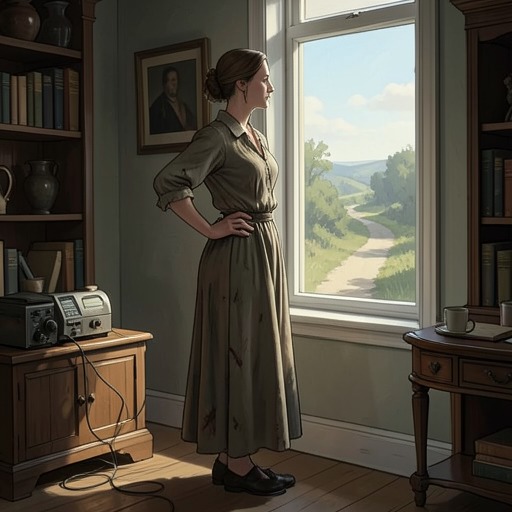
Lucy’s room becomes a contested space after her death. Willowdean asks to keep some of Lucy’s clothes, not to wear them, but her mother dismisses the old muumuus and the other contents as underwear, slips, and newspaper clippings. For Willowdean, clearing the room risks turning Lucy into a collection of things to sort and remove. When her mother begins dividing papers into piles, Willowdean wonders, painfully, which pile she herself would belong in. The room’s contents carry an emotional weight that her mother’s practical process does not acknowledge in the same way.
The objects also reveal parts of Lucy’s life that Willowdean did not fully understand. In Lucy’s nightstand she finds newspaper clippings, many showing her mother in her Miss Teen Blue Bonnet crown and dress. Among the papers is a blank pageant registration form dated 1994, three years before her mother won in 1997. Willowdean had thought Lucy considered the pageant a joke, and cannot reconcile that impression with the form. It gives her no answer, but opens a question about Lucy’s hopes and history that Willowdean had not known to ask while she was alive.
A red velvet box holds another kind of unfinished memory: a Dollywood Christmas ornament, a white iridescent globe marked with red lips and Dolly Parton’s signature. Lucy had hoped to visit Dollywood with Mrs. Dryver, who offered her a second airline ticket after winning tickets at work. They planned the trip, but at the airport learned Lucy would need to buy an additional plane seat because she would not fit in one. Too mortified to continue, Lucy went home; Mrs. Dryver later brought her the ornament. The keepsake records both the shared dream and the physical exclusion that prevented it from happening.
Music offers Willowdean a less static form of remembrance. In Lucy’s sock drawer she finds Dolly Parton cassette tapes and listens quietly to one beside Lucy’s bed. Lucy had been a vice president of a regional Dolly Parton fan club, and her friendship with Mrs. Dryver—one of the region’s best-known Dolly Parton impersonators—had helped connect their families. Willowdean sees her own friendship with Ellen as part of that longer connection. For Willowdean and Ellen, Dolly’s appeal lies not only in the music but in her refusal to change herself because others find her appearance ridiculous; that example makes her seem invincible.
The song “Jolene” gives Willowdean’s attachment to Dolly’s music a more personal edge. She hears the song as an account of fearing that someone else is prettier, smarter, or thinner, and as a reminder that perfection is an unreachable shadow. At a drag show, Lee Wei performs it, and Willowdean cries before the song ends. She imagines that, if she could sing well, this is the song she would perform in the pageant. The response connects Lucy’s musical inheritance to Willowdean’s own body image and ambitions without reducing Lucy’s influence to a single lesson.
Grief and a Changing Family
Willowdean’s mother and Willowdean remember Lucy differently. Willowdean fears her mother remembers chiefly how Lucy died, while Willowdean wants the person who lived to remain visible. This difference sharpens when her mother starts transforming Lucy’s room into a craft room and later returns with boxes marked for donation. Willowdean reads the clearing-out as an attempt to get rid of Lucy, while her mother’s habits of cleaning when frustrated make the change difficult to discuss. Their conflict over the room belongs to a larger struggle over grief: what should be preserved, what can be changed, and whose account of Lucy will shape the household.
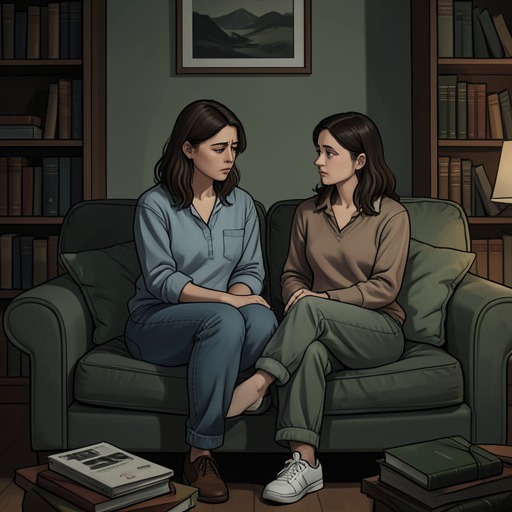
Lucy’s absence also exposes the gap between Willowdean and her mother. When they discuss clothing for the pageant, Willowdean says that each new occasion reminds her of what Lucy will not be there to see. Her mother falls silent. Willowdean realizes that Lucy had filled some of the spaces in her relationship with her mother; without her, the two of them are left trying to find their way together. The loss therefore alters a living relationship as well as removing a loved one.
Willowdean also discovers that Lucy’s memory extends beyond the family. At the drag show, Lee Wei recognizes Willowdean as Lucy’s niece, offers condolences, and remembers Lucy as kind and open-hearted. Dale invites Willowdean to contact the club if she needs anything. Their response gives Willowdean a form of recognition she has feared was missing: other people remember Lucy as a person, not only as the circumstances of her death. When Willowdean describes Lucy as a compass she had not known she possessed, Lee suggests that Lucy may have been there long enough to help her learn to find her own way. The encounter does not lessen the loss, but it turns remembrance toward a future in which Lucy’s influence can continue without requiring her presence.
Enduring Significance
Lucy remains difficult for Willowdean to categorize, and that difficulty matters. While studying with Bo, Willowdean hears him describe a person in his life who is neither a friend nor a mother, and recognizes the same uncertainty in her relationship with Lucy. There is no simple label for a bond that combines aunt, caregiver, confidante, and second parent. The absence of a name for that intimacy makes the loss harder to reconcile, even as the relationship’s many forms explain why it remains so powerful.
By the time Willowdean considers how she has felt around Bo, she recognizes the importance of being able to exist simply as herself, rather than only as someone’s daughter or niece, or as a token fat girl. She is tired of relying on other people to make that feeling possible and wants to make it for herself. This movement toward self-definition does not erase Lucy’s place in her life. Rather, it gives shape to Lee’s compass image: Lucy’s care persists not as a substitute for Willowdean’s own direction, but as part of what enables her to seek it. Memory in their relationship is carried by rooms, songs, keepsakes, and other people’s stories—and by the choices Willowdean is still learning to make.