Willowdean’s home
Dumplin'Willowdean’s home is the Dickson family’s intimate, imperfect refuge, where everyday routines preserve the traces of Lucy and where grief becomes a conflict over what should happen to her room. The house’s back entrance, the kitchen television, and the records gathered in Lucy’s room make it a place shaped as much by memory as by the people still living there.
Setting and Household Routines
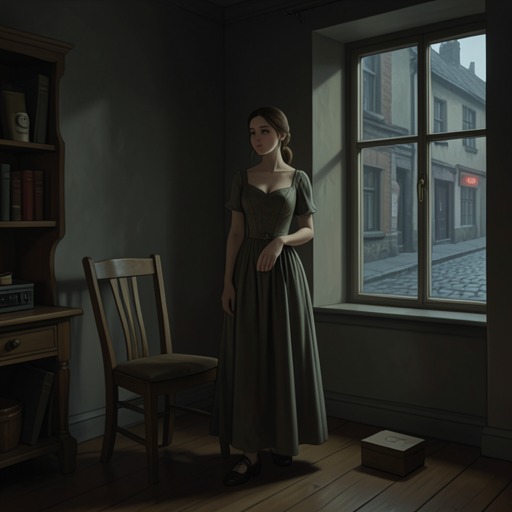
The house is entered through a sliding glass door at the back. Its front door has been jammed for years, a practical inconvenience that Lucy had reframed as a useful excuse not to answer it; Willowdean agreed with her. This small domestic workaround conveys the family’s familiar, informal way of inhabiting the house, in which a persistent fault can become part of a shared routine rather than an urgent problem to solve.
The kitchen carries another lasting habit. Willowdean’s mother sits at the table in her work scrubs, her blond hair piled high, watching the news on a portable television. She has watched her shows there for as long as Willowdean can remember because Lucy was usually on the living-room couch. Even six months after Lucy’s funeral, Willowdean’s mother still watches in the kitchen. The arrangement outlasts its original circumstance: Lucy is no longer occupying the couch, but the household has not simply returned to its earlier shape.
Lucy’s Room and the Work of Remembering
Lucy’s room holds the material traces through which Willowdean tries to keep her aunt present. She remembers Lucy on the couch with Riot in her lap or doing crossword puzzles in the kitchen, and she fears that without seeing or hearing her she will forget her. That fear is sharpened by the absence of photographs. Lucy disliked having her body reflected back at her in pictures, so the family has no photographs of her to serve as an uncomplicated record of her life.
The absence of images also exposes a difference in how Lucy is remembered. Lucy died at thirty-six, weighing 498 pounds, alone on the couch while watching one of her shows. Willowdean reflects that people outside the house had scarcely seen Lucy live, while her mother remembers most vividly how she died. The room therefore matters as more than stored furniture: it is part of Willowdean’s effort to preserve a fuller memory of Lucy than the circumstances of her death alone can provide.
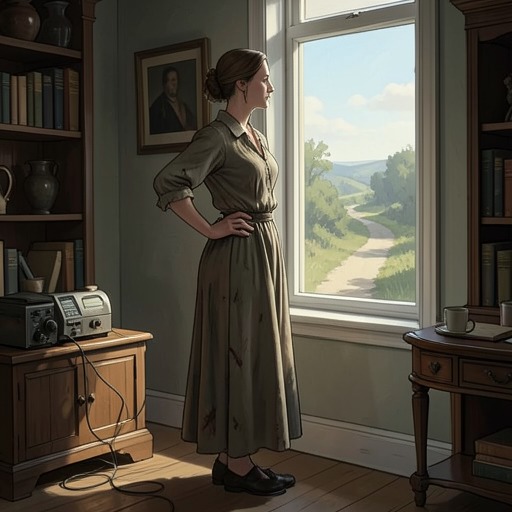
That effort has concrete objects to hold onto. The framed Dolly Parton records that had lined the room’s walls are stacked by the dresser, and Lucy’s pastel-pink record player remains there. When Willowdean returns home and sees light glowing from Lucy’s room, she finds her mother seated at a card table with the furniture pushed against the walls and her own iPod resting on the record player. The familiar arrangement has been disrupted, making the room’s changed purpose visible before Willowdean knows what her mother intends.
Conflict Over the Room’s Future
Willowdean objects when her mother begins sorting papers from the nightstand into piles. Her mother sees an unused room collecting dust and a practical need: pageant season is approaching, and she expects to spend the summer sewing costumes and making set pieces. A craft room would let her work without taking over the rest of the house. The disagreement is not simply over tidiness or furniture. To Willowdean, dismantling the room threatens the physical space that still connects her to Lucy; to her mother, keeping it untouched prevents the house from serving the family’s present needs.
When Willowdean later finds the furniture pushed aside, she reacts by pulling out a dresser drawer and filling it with records she can reach. Her mother warns her about damaging the drawer’s track, but Willowdean’s anger is directed at what she sees as the erasure of Lucy: she accuses her mother of acting as if Lucy’s death were not enough and of wanting to fill the room with everything Lucy was not. The halted sewing machine and her mother’s silence leave the argument without an easy resolution. Willowdean carries the drawer into her bedroom and shuts the door, turning the records into something she can keep close even as the room itself is being rearranged.
Domestic Space, Absence, and Change
The house’s significance lies in the way its ordinary rooms register incompatible responses to loss. The kitchen preserves the old viewing routine; the couch recalls Lucy’s daily presence and the place where she died; the bedroom becomes the site where memory meets the demands of work and pageant preparation. These spaces do not provide a single, settled way to mourn. They show how an unchanged habit can honor someone, while an untouched room can also become difficult for the surviving household to use.
Willowdean’s home thus makes remembrance physical and contested. Her mother’s sewing plans belong to the family’s ongoing life, while Willowdean’s attachment to the records and furnishings protects a version of Lucy that she fears will disappear. The room’s rearrangement does not erase Lucy from the house, but it exposes how differently mother and daughter understand what keeping Lucy present requires. Through these domestic details, the home becomes the setting where grief is expressed not only in recollection, but in routines, objects, and the struggle over who controls the space left behind.