Willowdean’s mother
Dumplin'Rosie Dickson, known chiefly as Willowdean’s mother, is a former Miss Teen Blue Bonnet whose enduring attachment to the pageant makes her both its public face and a source of pressure at home. Her history of dieting and her pride in still fitting her pageant dress place her in uneasy contrast with Willowdean Dickson’s insistence that fatness is not an insult; their conflict is sharpened by grief for Lucy, Rosie’s older sister.
Identity and Background
Rosie’s own childhood gives her views on weight a personal history. She was a large girl before losing what she called her baby fat the summer before ninth grade. Lucy, then in eleventh grade, did not lose weight in the same way. Willowdean Dickson remembers that Rosie rarely discussed life before high school and was not proud of having been big. The family’s dieting stopped when Willowdean reached middle school; Willowdean suspects Lucy may have been the reason, though she does not know exactly what changed.
That history complicates Rosie’s concern for her daughter. In an argument with Lucy about a weight-loss television program, Rosie said she wanted Willowdean to be healthy and began to voice a fear that she might grow up like her sister. Lucy answered by naming the implication directly: Rosie did not want her daughter to become like Lucy. The exchange exposes a family tension in which concern framed as health is inseparable from Rosie’s experience of weight and from the example Lucy presents simply by living as herself.
The Pageant and Public Identity
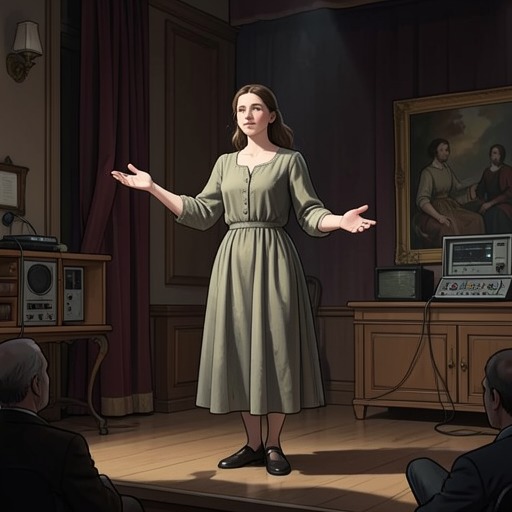
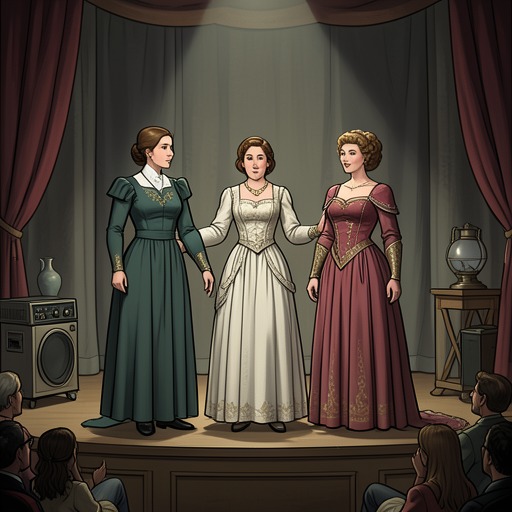
The Miss Teen Blue Bonnet Pageant is Rosie’s greatest accomplishment, and her connection to it has become a public ritual. As head of the pageant committee and its official hostess, she puts on the dress she still fits and wears it for a yearly encore before the audience. She also recalls that boys in Clover City had crushes on her in high school, telling the story as part of her account of what it meant to be the town’s pageant winner. Her continuing place in the event gives her both institutional authority and a visible reminder of a standard she herself once embodied.
Pageant season also reaches into the household. When preparation begins, Rosie diets, and the diet extends to everyone at home: dinner becomes grilled chicken salad. Her former title is therefore more than a memory or a public honor; it helps organize family routines and brings the pageant’s emphasis on appearance into Willowdean Dickson’s daily life.
Grief and Domestic Life
Six months after Lucy’s funeral, Rosie is still watching the news from the kitchen table on a portable television rather than in the living room. She had long watched her programs in the kitchen because Lucy was usually on the living-room couch. The old arrangement persists after Lucy’s death, leaving grief legible in the placement of Rosie’s television and in the room she continues to avoid for her shows.
Rosie remains at home in her scrubs, her blond hair piled high, when Willowdean returns through the sliding glass door. The front door has been jammed for years; Rosie says a man needs to come fix it, while Lucy had treated the malfunction as a useful excuse not to answer. Even this ordinary detail preserves the sisters’ different voices in the house. Rosie greets her daughter with the familiar nickname Dumplin’ and offers dinner, a small gesture of routine amid the household’s unresolved loss.
Conflict with Willowdean Dickson
Rosie’s dieting and pageant identity meet Willowdean Dickson’s body acceptance most sharply when Willowdean challenges the family’s language about her body. After a man uses a degrading nickname for her, Willowdean confronts Rosie over the nickname Rosie has used throughout her life and says the issue is larger than that single insult: she believes her mother cannot stand the way her daughter looks. Rosie responds that Willowdean is being too sensitive. The exchange shows how an affectionate family nickname can become painful when it sits alongside a history of dieting and an unspoken judgment about weight.
Rosie’s influence is not limited to conflict. During the swimsuit round of the pageant, Willowdean Dickson remembers her mother’s instruction to smile. Willowdean is acutely aware of her thighs and the scrutiny she expects, yet she refuses to be ashamed and remains onstage. The moment does not erase the tension between them, but it shows Rosie’s voice accompanying her daughter into the public display of a body that the pageant’s conventions do not readily celebrate.
Narrative Significance
Rosie occupies two positions at once: she is an authority within Clover City’s pageant culture and a mother whose own history of weight loss shapes what she regards as health, beauty, and success. Her annual appearance in the dress she still fits makes the pageant’s standards personal, while the shared diet at home shows how those standards travel beyond the stage. Against that pressure, Willowdean Dickson’s refusal to treat fat as a cuss word or an insult marks a challenge to the meanings Rosie’s past has helped carry into the family. Rosie’s portrait remains unresolved: pride, care, dieting, grief, and hurtful language coexist, without the evidence reducing her either to a villain or to a figure of easy reconciliation.