
What a Crown Can and Cannot Prove
Dumplin'The crown begins as a symbol of local prestige but gradually loses its power to define who deserves confidence, visibility, or a meaningful life.
increasing Bearing strength in each event
 decreasing
Bearing strength in each eventdecreasingA Crown as Civic Property
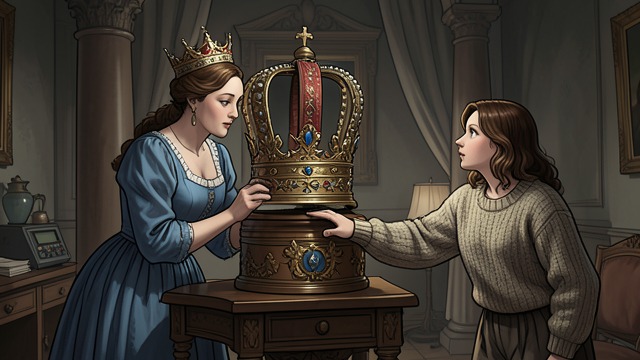
A Crown as Civic Property
The town’s prized object
The original crown is guarded and associated with Clover City’s pageant history. Its presence gives the competition an aura that exceeds its costume jewelry.
A private permission
Donna lets Willowdean try it on and says a crown need not be won. The gesture separates the object’s symbolic power from the judges’ authority to award it.
Rosie’s Crowned Past
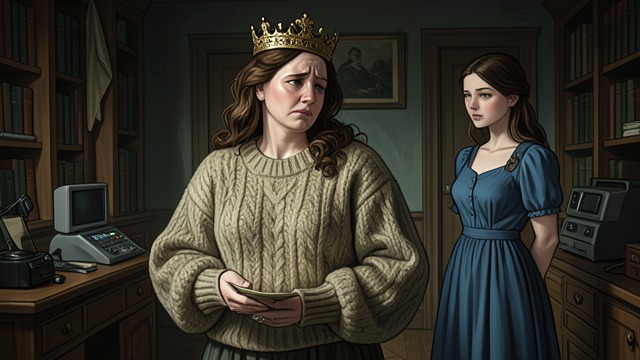
Rosie’s Crowned Past
A remembered achievement
Rosie’s pageant victory remains a source of pride and a defining story in her life. The dress and crown preserve a version of herself that the town continues to celebrate.
A legacy felt by her daughter
Willowdean sees the crown as an expectation she has never been invited to meet. The same object that gives Rosie a sense of accomplishment can make Willowdean feel excluded from her mother’s story.
A Room Full of Eligible Girls
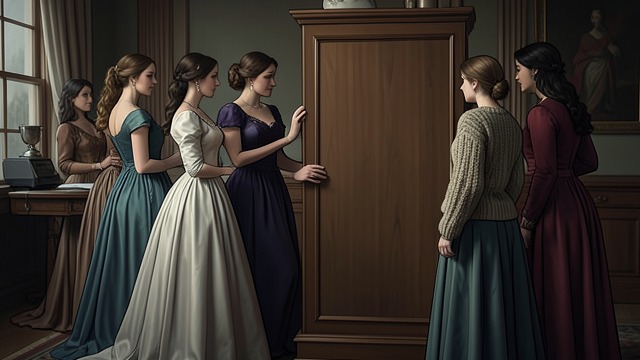
A Room Full of Eligible Girls
Rules are broader than assumptions
Willowdean learns that the formal eligibility requirements are simple: age and parental consent. The many limits she imagined about who could compete were not all written in the rules.
The question becomes cultural
Even when the official door is open, the room’s social expectations remain narrow. The contrast between rules and assumptions makes entering an act of challenge rather than merely paperwork.
Millie’s Place onstage

Millie’s Place onstage
Recognition earned in public
Millie becomes second runner-up after competing in a pageant her parents once feared would humiliate her. Her placement offers visible recognition within an institution that has not historically centered girls like her.
The crown is not the whole story
The award does not certify Millie’s worth; her participation already demonstrated it. The crown can acknowledge effort, but it cannot create the dignity she brought to the stage.
Leaving Before the Winner
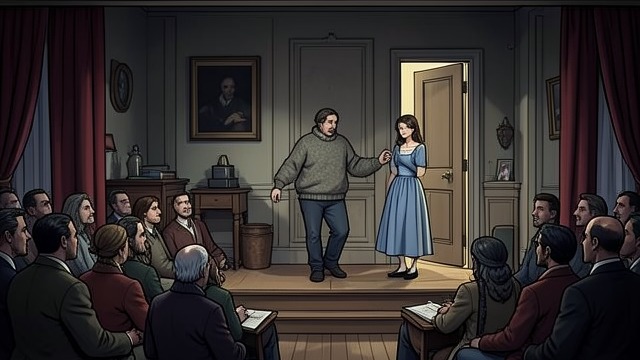
Leaving Before the Winner
No need to wait for judgment
Willowdean leaves before the pageant announces its winner. Her participation has already answered the question that brought her there: whether she was allowed to enter and be seen.
A crown loses its monopoly
The evening does not abolish competition or its rankings. It does, however, make the crown only one measure among many, while friendship, courage, and self-recognition remain outside the scoring system.
Early summer, during Willowdean’s visit to Donna’s store
Early summer, during a discussion of Rosie’s pageant history
Pageant registration day
Pageant night, during the awards
The final moments of pageant night
