
Jolene as a Song of Comparison
Dumplin'The song “Jolene” begins as beloved family music, becomes a mirror for Willowdean’s insecurity, and ends as a public expression she chooses for herself.
increasing Bearing strength in each event
 decreasing
Bearing strength in each eventdecreasingA Song in the Car
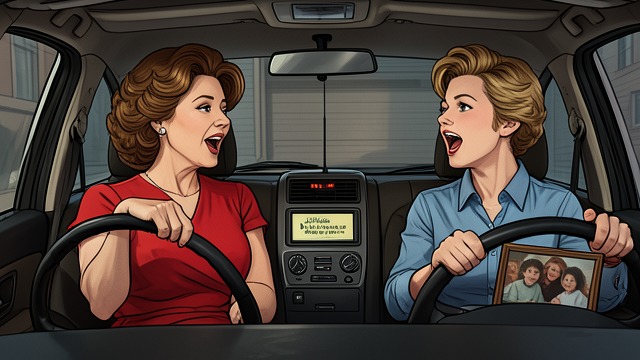
A Song in the Car
Music joins generations
Dolly Parton songs accompany family drives with Willowdean, Lucy, and Rosie. The music creates a shared space where different generations can sing together without resolving their disagreements.
A portable memory
Willowdean later hears the songs as reminders of people and places. Their familiarity makes music a form of connection that can travel beyond the family home.
Lee’s Rendition

Lee’s Rendition
A familiar song in a new setting
Lee Wei performs “Jolene” at Dolly Parton Night, surrounded by an audience that responds with recognition. The song travels from Willowdean’s private world into a wider community.
Comparison becomes explicit
Willowdean hears the lyric as a fear that another woman will always be more beautiful or worthy. She recognizes how closely the song’s plea resembles her own imagined competition with other girls.
A Talent Imagined
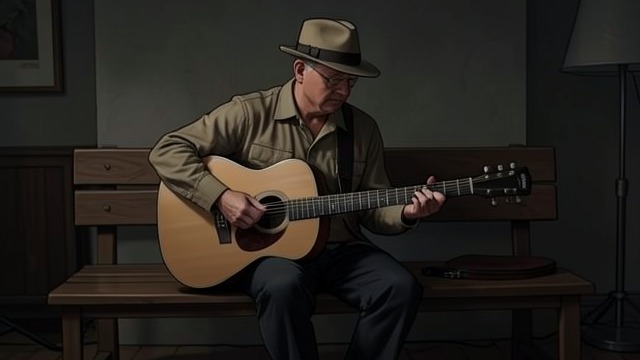
A Talent Imagined
A song could carry her story
Willowdean thinks that if she could sing, “Jolene” would be the song she performed. The idea joins her love of Dolly to feelings she has not spoken aloud about Bo and body image.
From fantasy to possibility
The performance remains only an idea until Ellen suggests it near the pageant. The song’s importance lies partly in its ability to make a public act feel personally meaningful.
A Song Against the Rules
A Song Against the Rules
Choosing the meaningful act
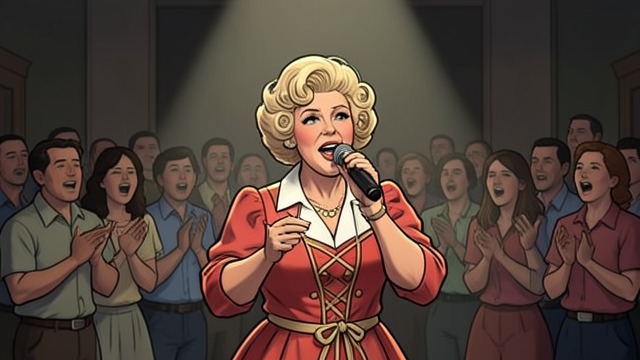
Willowdean lip-syncs “Jolene” in a Dolly-inspired costume instead of performing the approved magic trick. She accepts the risk because the song belongs more fully to her than the trick does.
A chorus joins in
She recalls hearing the song with Lucy, Ellen, and others, and imagines voices singing back. The performance turns the fear of comparison into a moment of collective participation.
A Refrain After the Stage
A Refrain After the Stage
The song outlives the score
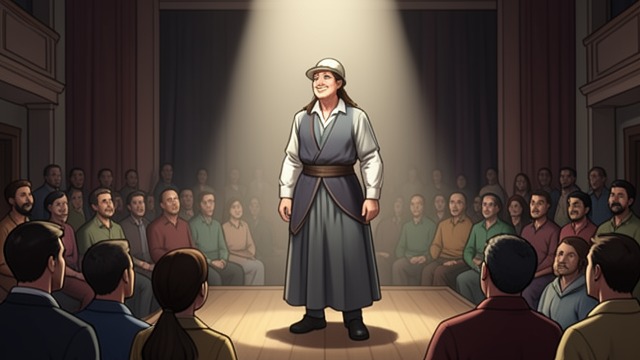
The pageant disqualifies Willowdean, but cannot take the emotional meaning of her performance away. Her act connects grief, friendship, and self-expression in a way the judges’ score cannot capture.
Comparison is not destiny
The song still contains fear that someone else may be more beautiful, but Willowdean no longer treats that fear as a reason not to appear. “Jolene” becomes both a reminder of comparison and a choice to sing through it.
Childhood, during family drives
Several weeks before the pageant, at The Hideaway
After The Hideaway, during the remaining pageant preparations
Pageant night, during the talent round
Near the ending, after the pageant closes
