“Dumb Blonde”
Dumplin'“Dumb Blonde” is the Dolly Parton song that transforms Willowdean Dickson and Ellen Dryver’s uncertain childhood acquaintance into friendship. Its decisive moment is brief—a song coming over a stereo, a foot tapping, and two children singing together—but the bond it begins outlasts the music, establishing shared delight as an early counterpoint to the judgments that shape their world.
The song that begins a friendship
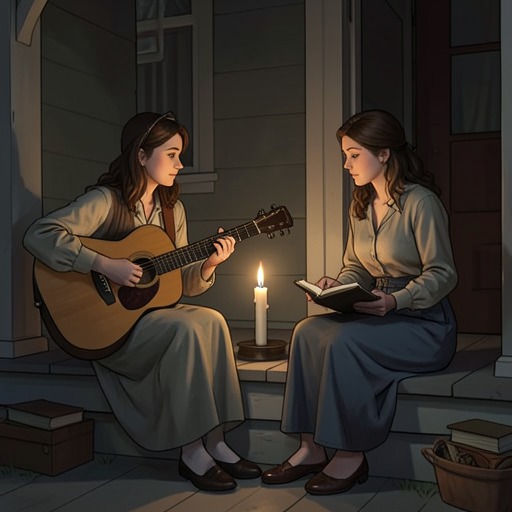
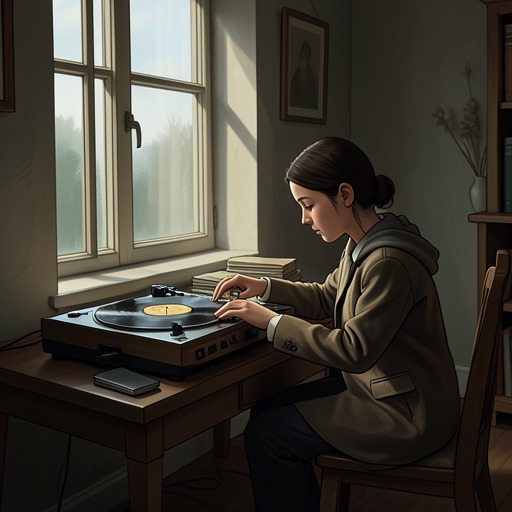
The song comes from Dolly Parton’s 1967 debut album, Hello, I’m Dolly. During the summer before first grade, Willowdean’s aunt Lucy and Ellen’s mother, Mrs. Dryver, grow close over their shared devotion to Parton, while the girls sit together watching cartoons, unsure what to make of one another. When “Dumb Blonde” plays on Mrs. Dryver’s stereo, Ellen taps her foot as Willowdean hums. Before the chorus arrives, they are spinning in circles and singing at the top of their lungs.
The scene makes music a means of approach before the girls have found anything to say to each other. Their friendship does not remain dependent on that first shared song: the narration stresses that their affection for one another, like their affection for Parton, runs deeper than a single track. The song marks an origin, not the limit, of the relationship.
Dolly Parton as a shared language
The song’s beginning sits within a larger network of affection for Parton. Lucy and Mrs. Dryver’s devotion brings the adults together, while their daughters’ spontaneous singing makes that enthusiasm part of the next generation’s friendship. Later, Willowdean recalls that Lucy had many gay friends online and described Parton as the patron saint of gay men. At the entrance to a drag show, Willowdean realizes that she has barely encountered anyone openly gay and recognizes how small her experience of the world has been. The connection to Parton thus reaches beyond the childhood scene: her music and public image are associated with community, even as Willowdean is still learning who belongs to the communities around her.
That later encounter also includes a small, revealing exchange. After a group enters ahead of the girls, Amanda Lumbard wonders how the men get their eyebrows so perfect, while Hannah Perez answers with an eye roll. The moment shows the friends meeting an unfamiliar social world with different reactions, and places Lucy’s enthusiasm for Parton among the clues that help Willowdean imagine a broader life for her aunt.
Difference, appearance, and judgment
The story’s other scenes of friendship make the contrast between shared pleasure and social scrutiny more pointed. Willowdean remembers Hannah Perez as a quiet, stubborn classmate who once slapped away a marker taken without permission and later corrected a teacher who kept calling her African American: Hannah is Dominican. These memories present her as someone who objects when others presume to define her, rather than as a silent figure in Willowdean’s account of school.
When classmates criticize Hannah’s teeth, Willowdean objects to the expectation that Hannah should get braces simply to make other people stop mocking her. In a later conversation, Willowdean asks why Hannah has not had her teeth fixed. Hannah immediately challenges the premise that she should have to, then explains that orthodontic care is expensive: her mother is a hairdresser, her father a mechanic, and the family does not have good insurance. Willowdean agrees that Hannah should not have to change her teeth for others. The exchange makes visible how appearance-based judgment intersects with access to care, rather than treating the issue as a matter of personal choice alone.
Hannah also explains that she has no friends to walk the school hallway with her and that she entered the pageant intending to sabotage it from within, so that she would be known as the girl who ruined it rather than as the girl with buckteeth. That intention changes when her mother discovers the welcome packet and feels proud of her for entering. The song itself does not recur in these exchanges, but the broader pattern they establish echoes the friendship’s beginning: recognition and companionship offer a counterweight to being reduced to appearance.
Significance
“Dumb Blonde” matters as a specific remembered sound and as the opening gesture in Willowdean and Ellen’s friendship. The story links it to an intergenerational circle—Lucy and Mrs. Dryver’s devotion to Parton, followed by the girls’ shared singing—without suggesting that one song explains the whole relationship. Its placement also gives the friendship an early shape: before the girls understand one another, they can already meet in a moment of unguarded joy. Later encounters with Dolly Parton’s cultural associations, and with the everyday costs of appearance-based judgment, widen the significance of that beginning while leaving the song’s role precise: it is the spark, not a repeated refrain.