Cleaning Lucy's Room
Dumplin'Cleaning Lucy's Room is the moment when Willowdean Dickson’s mother begins clearing Lucy’s belongings for donation and Willowdean confronts what that decision means to her. The scene brings two pressures into the same room: the practical need to decide what will happen to the possessions left behind, and Willowdean’s still-raw grief at the approach of the first anniversary of Lucy’s death. Its consequence is not a resolution between mother and daughter, but Willowdean’s effort to preserve a personal selection of Lucy’s things.
The room and its unfinished purpose
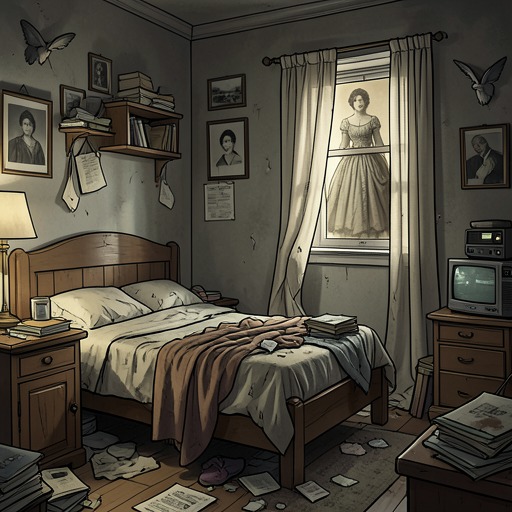
The confrontation takes place the morning after Willowdean has returned home. Neither she nor her mother has spent much time in Lucy’s room since her mother began transforming it into a craft room. Her mother has been occupied with pageant preparations, while Willowdean acknowledges being wrapped up in herself; in the meantime, the room has remained largely as it was. That pause has left its purpose unsettled: it is at once a space being converted for use and a place where Lucy’s presence can still be felt.
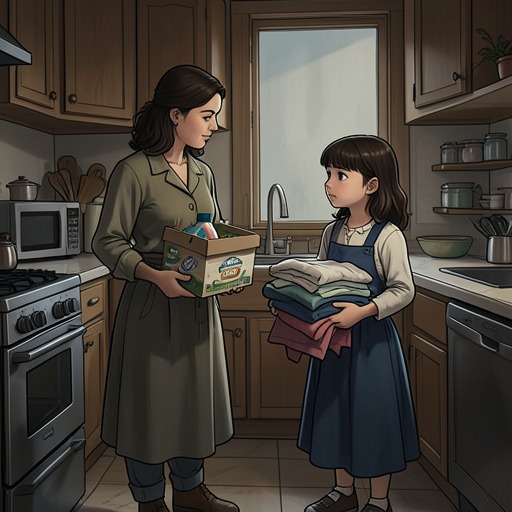
At first, Willowdean wonders whether her mother has come into the room privately to be near Lucy, as Willowdean might do herself. The boxes marked DONATE overturn that possibility. The mother is not there simply to visit or remember Lucy; she is sorting possessions to get rid of them. The distinction matters because Willowdean enters the scene hoping, if only briefly, that the room still serves as a shared refuge. Instead, she finds her mother acting on a timeline that she cannot accept.
The argument over Lucy’s belongings
The immediate confrontation is intensified by an existing strain between them. Willowdean and her mother are already on eggshells over the pageant dress. Willowdean feels dependent on her mother’s permission to wear it and fears having no suitable alternative: finding clothes that fit her is difficult, and a dress that both fits and does not look hideous feels like a rare discovery. Her insistence that the dress zips gives the dispute a concrete urgency. The disagreement in Lucy’s room therefore does not begin on emotionally neutral ground; frustration about the dress has already made the mother’s authority and Willowdean’s limited choices especially sharp.
The sight of her mother digging through Lucy’s possessions feels, to Willowdean, like contact with something painfully exposed. She asks, “What are you even doing in here?” Her mother explains that the belongings cannot stay there forever and says she hopes Willowdean will not leave her own possessions gathering dust after she dies. Willowdean answers by insisting on the present-tense ownership of Lucy’s things: “These are Lucy’s things, Mom. This stuff belongs to her.” Her mother corrects the tense: “Belonged.” She says that December will mark nearly a year and that she will not let the room remain “like some kind of shrine.”
That exchange makes time itself part of the conflict. To Willowdean, the things still belong to Lucy, so removing them risks making the loss more final. Her mother’s use of the past tense treats Lucy’s death as a fact that the family must live with, while the approaching anniversary supplies a reason to stop leaving everything untouched. Neither view erases the other. Willowdean’s tears and request that her mother stop show how little the anniversary’s passing has eased her grief; her mother’s decision shows that she cannot leave the room unchanged indefinitely.
A failed expectation of comfort
When her mother turns toward her, panic crosses her face. Willowdean recognizes that they do not usually have the kind of relationship in which she cries on her mother’s shoulder: they tend to circle one another without meeting. Nonetheless, she leans forward expecting a real embrace, one she can sink into. That expectation is the scene’s sharpest reversal. Her mother does not hug her. She says she will take the belongings to the shelter that weekend, tells Willowdean to pull out anything she wants to keep, pats her shoulder, and leaves to make lunch before Willowdean goes to work.
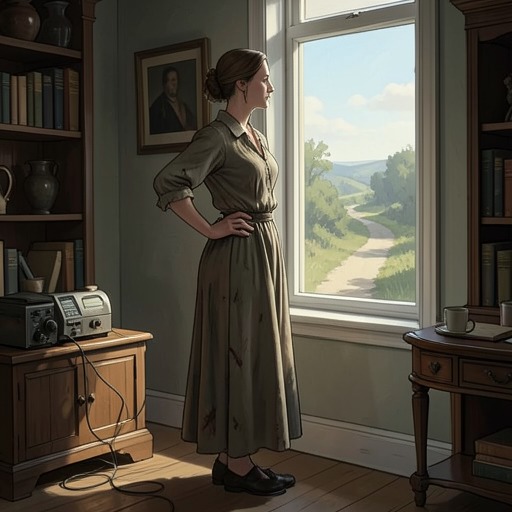
The offer gives Willowdean a practical choice, but not the comfort she had silently anticipated. Her mother’s announcement that the donation is imminent turns the decision into a deadline: Willowdean must choose what to save before the weekend. The shoulder pat acknowledges her distress without closing the emotional distance between them. After the door shuts, Willowdean sinks onto Lucy’s bed. From there, the scene moves from an argument about the room to a reckoning with the other losses and unsettled relationships pressing on her: no dress, an undefined relationship with Bo Larson that she cannot bear to make public, her treatment of Mitch, and the distance from her mother and Ellen. She thinks that she needs Lucy to tell her what to do, imagining the advice she can no longer receive.
What Willowdean keeps
Later that night, in the break room at work, Willowdean examines a green ring around her neck in a compact mirror, snaps the mirror shut, and removes a fake-gold necklace. Its charm spells Dolly in bubbly cursive. The small, ordinary object links the immediate aftermath of the room-clearing to the more deliberate work of keeping Lucy’s belongings: it is something Willowdean can hold and identify as her aunt’s, even when the room itself is being emptied.
Willowdean says she has fitted as much of Lucy’s things as she could into her closet. She tried to save all of Lucy’s Dolly Parton collectibles, including a pair of glitter-encrusted shoes Dolly wore to a show in Vegas. The soles bear Dolly’s large, looping signature, which proves the shoes’ authenticity. These details make the preservation more than a general refusal to let go. Faced with the prospect of a donation, Willowdean selects specific objects and gives them space in her own closet; the signed shoes carry the unusual material evidence of Lucy’s collection, while the necklace remains an intimate keepsake she can wear.
Significance
The event does not settle whether Lucy’s room should remain a memorial or become a craft room. Instead, it stages the difference between clearing a space and relinquishing a person. Willowdean’s mother speaks of belongings that belonged to Lucy and sets a date for taking them to the shelter; Willowdean responds by preserving the objects that matter most to her. The scene also exposes the limits of their comfort with one another: Willowdean expects a hug but receives a shoulder pat and a practical instruction, even as both are confronting Lucy’s absence in different ways.
The aftermath carries that conflict into the break room, where the necklace and the saved collectibles become a portable remainder of Lucy’s room. Willowdean cannot obtain the solution she longs for from Lucy, but she can keep pieces of Lucy’s life close. In that movement—from boxes marked for donation, to the closed bedroom door, to objects stored in a closet and a charm held at work—the event turns grief into a concrete choice about remembrance without suggesting that any choice can undo the loss.