Clover City
Dumplin'Clover City is a small Texas town that makes a stage of its limited public life: football and the Miss Teen Blue Bonnet Pageant are its most powerful shared institutions, offering residents a way to see the community as larger and more vivid than its everyday scale. The town’s pageant culture reaches back to the 1930s, while its square, football field, and community center anchor the scenes in which local identity is rehearsed and contested. Clover City is at once a place people imagine leaving and a place whose rituals can make them feel, briefly, like the best versions of themselves.
Setting and Local Identity
The town’s reputation is modest by its own account. Its football team is good enough to reach the playoffs only every few years, and only occasionally does someone leave Clover City and do something notable. Against that limited record, the pageant stands out as the distinction that puts the town on the map. The Miss Teen Blue Bonnet Pageant began in the 1930s and has grown larger over time; its reach is also visible in the fact that Willowdean Dickson’s mother has led its planning committee for fifteen years.
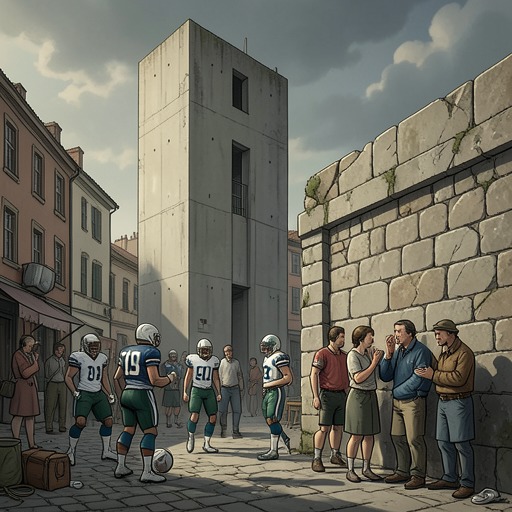
The pageant is woven into ordinary local space rather than kept apart from it. During the summer, girls in matching pink shorts and tank tops run on the track surrounding the football field as part of pageant boot camp. The sight places preparation for the town’s beauty contest beside the field associated with its other major public spectacle. The pageant is not merely a yearly event held somewhere in Clover City: its training, planning, and anticipation occupy familiar civic places and extend across the season.
Clover City’s residents also understand the town through the question of departure. It is described as a place people leave, though only a few manage to make a life elsewhere and stay away. Love can either draw someone into the town or push them out; for many who remain, drinking, having children, and going to church form an ordinary pattern that seems sufficient to keep the community afloat. This tension gives Clover City a double character: it can feel constraining to those who cannot picture a future there, yet it remains the setting in which local attachments and ambitions take shape.
Football and the Pageant as Civic Stages
Football and the pageant are presented as Clover City’s two leading institutions, the closest things the town has to a lifeblood. The story links their appeal not simply to competition but to transformation. When the stadium lights come on or the pageant curtain opens, the town sees itself at its best. Each event briefly enlarges the community’s sense of what it is: football offers the possibility of a team worth following, while the pageant turns local attention toward performance, recognition, and a carefully staged public occasion.
Their prominence does not mean the narrator dismisses them as meaningless distractions. The pageant and football are described as pulling the town out of itself and making it into something more. That formulation captures both the limitation and the value of these rituals. Clover City has few widely recognized claims to distinction, but its residents can gather around competitions that create shared anticipation and a common audience. Their importance lies partly in the interval they open between everyday life and the town’s more hopeful public image.
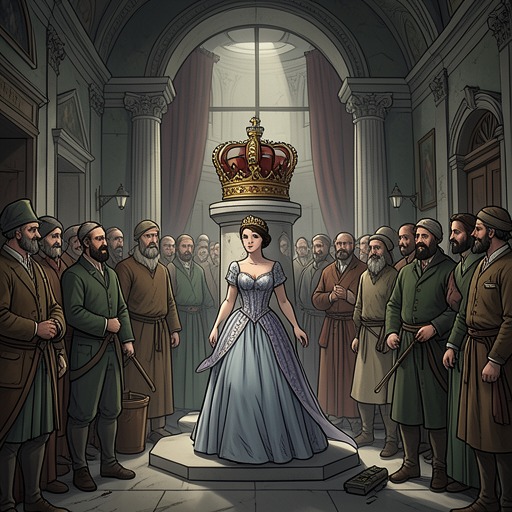
The town’s pageant culture also has a history that predates the current contestants by generations. When the planning committee chair welcomes entrants, she describes them as joining a path worn by those who came before and those who will follow. That language makes participation part of an inherited civic tradition, even for a contestant to whom the pageant had previously been background noise. The long history can give the event authority and continuity, while its entrenched presence makes it difficult for young people to regard it as merely someone else’s concern.
Downtown and the Pageant’s Physical Setting
Downtown Clover City is arranged around a picturesque square with a gazebo at its center. One of its defining sensory details is the persistent smell of fried chicken from Frenchy’s Fried ’n’ Such, a diner presented as an institution in its own right. The square’s gazebo and the diner’s familiar presence make downtown feel like a concentrated version of local life: a recognizable center, with civic scenery and everyday food sharing the same few blocks.
Pageant registration takes place at the Clover City Community Center, where Willowdean counts out the two-hundred-dollar fee before going inside. The amount gives participation a concrete cost, while the crowded room shows the event’s social scale. Voices bounce off the ceiling until the conversations of twenty girls seem to multiply into the noise of a hundred. The gathering is organized into cliques at round tables covered with white cloths that Willowdean’s mother ironed at home the previous night, connecting the committee’s behind-the-scenes labor to the formal scene awaiting the contestants.
The girls’ tables reflect different routes into the pageant: some come from families with a history of crowns, some are athletes hoping to strengthen college applications, and others belong to cheer, theater, or choir circles. Their Easter dresses and matching cardigans sharply contrast with the jeans and T-shirts worn by Willowdean and her friends. The room therefore makes the pageant’s social codes visible before the formal welcome begins. It is a local tradition, but entry into it does not erase differences in preparation, affiliation, or ease; the contestants arrive already sorted, in appearance and in groups, into distinct positions.
A Town Measured by Who Leaves
The perspective on Clover City is shaped by the difficulty of imagining life beyond it. A conversation about college plans reaches toward an uncertain future, but the narrator cannot picture herself in college or plan for a life she cannot envision. Elsewhere, a young man expresses his own plan in relation to his girlfriend’s departure: if she gets out of town, he intends to go with her. These moments make leaving more than a general description of the town. It is a practical question attached to school, work, and relationships, and people imagine their futures in different ways—alone, together, or without a clear picture at all.
The size of Texas intensifies that sense of distance. During pageant rehearsal, Willowdean draws Cadillac Ranch as the landmark she must represent, though she has seen it only in pictures. The thought that some Texans can drive for a day and still remain inside the state underlines how much distance the word elsewhere can contain. A person need not leave Texas to travel a long way, and some residents never leave the state at all. The town’s inward social orbit thus exists within a much larger geography that is familiar in scale but not necessarily in experience.
Narrative Significance
Clover City’s public center is built from repeated gatherings: girls train on the track, contestants collect at the community center, and a crowd assembles for the pageant. Yet the town is also shown in the quieter spaces between these events, through uncertainty about college, the scarcity of people who leave and remain away, and the ordinary habits said to keep the community afloat. The contrast prevents the town from becoming only a picturesque backdrop or only a trap. Its rituals can bind people together and give them a heightened sense of possibility, even as the limited range of local prospects makes departure seem like the clearest route to a different life.
The pageant’s importance is especially clear in the contrast between the theater and Harpy’s Burgers & Dogs on the night of the event. After leaving the theater in her dress and heels, Willowdean walks three blocks to the restaurant, where all ten people in Clover City who did not attend the pageant seem to be gathered. That small count turns the pageant’s claim on the town into a tangible image: most of the community has been drawn to the theater, while the restaurant holds the handful outside its audience. Clover City’s civic life may be narrow in scale, but on pageant night its shared attention fills the space between those two places.