Clover City Community Theater
Dumplin'Clover City Community Theater is the downtown stage on which the Miss Teen Blue Bonnet pageant moves from preparation into public performance. Designed with the pageant in mind, its auditorium, ramp, and dressing rooms accommodate the contest’s choreography while also exposing the rules and tensions that surround it. The venue is more than a backdrop: it is where contestants rehearse how to be seen, support one another, and finally appear before an audience.
Setting and Design
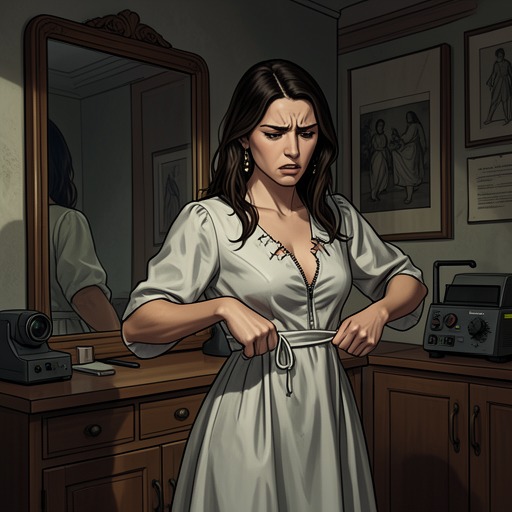
The theater’s design makes the pageant an expected use of the building. Its women’s dressing room is four times the size of the men’s, an architectural imbalance that reflects the pageant’s large cast of contestants and its elaborate preparations. The space is organized down to assigned seats: each contestant finds her name on paper taped to a small stretch of mirror. Willowdean Dickson discovers that someone has written an all-caps insult above her name. The culprit is not identified, but the incident brings the judgment of the public contest into the private backstage area.
The arrangement also places friends beside one another. Ellen Dryver’s mirror is next to Willowdean’s, and their names appear in alphabetical order. That small coincidence gives their shared dressing space a practical closeness at a moment when their friendship has been strained. The theater therefore houses both the pageant’s sorting system, which assigns each girl a place, and relationships that do not fit neatly within its competitive logic.
From Registration to Rehearsal
The contestants first gather for registration and an information session at the community center, a different venue from the theater. There, girls sit in cliques at round tables covered with white tablecloths that Rosie Dickson has ironed. Contestants arrive in dresses and cardigans, while Willowdean, Ellen, Millie Michalchuk, and Amanda Lumbard wear jeans and T-shirts. When Rosie addresses the room, the setting feels formal and intimidating to the newcomers. The later move to the theater marks a shift from entering the pageant to learning how its performances work.
At the theater, rehearsal makes that work visible. The contestants wait in the auditorium while the lighting is adjusted, and the delay is treated as a routine part of final rehearsals. Lee Wei teaches the girls to walk with one foot in front of the other, swinging their hips; she presents the walk as a crucial first impression. The instruction turns movement into a learned pageant skill, rather than something the contestants can simply assume they know. The auditorium is thus a classroom as well as a performance space, where bodies and gestures are trained for an audience.
A later rehearsal is far less orderly. There is no time for the contestants to run their talent acts, Callie slips on the ramp during the opening number, and cues go wrong amid a string of mishaps. The sequence undercuts the polished appearance the pageant is meant to project: the theater’s technical and physical demands cannot be made invisible simply because the contestants are expected to look composed. The ramp is both part of the show’s staging and a source of practical uncertainty.
Backstage Community and Public Performance
The auditorium also becomes a place where contestants form a bond across the divisions that initially separate them. After Millie’s mother agrees to let her compete, Willowdean, Ellen, Millie, Amanda, and Hannah Perez return to the auditorium together. Ellen takes Willowdean’s hand; Millie joins them, then Amanda, and Hannah takes Willowdean’s offered hand after a pause. Their linked hands make a brief, collective gesture inside a competition structured around individual placement. The shared support does not erase the pageant’s hierarchy, but it gives the contestants another way to stand together within it.
On performance night, the theater’s stage turns preparation into a public test. Rosie introduces Ellen and then announces Willowdean’s magic act. Willowdean walks into the spotlight in boots, with her shadow extending beyond its pool of light. The act’s formal introduction contrasts with the backstage labor and rehearsal confusion that preceded it; the audience sees the arranged performance, while the theater’s spaces have held the waiting, practice, and uncertainty behind it.
The stage is also where Willowdean becomes Ellen’s escort for the evening-gown round. She loops Ellen’s arm through hers and walks her across the stage, then releases her so Ellen can take a circle at its edge. When the contestants take their turns, they use the walk Lee taught them, placing one foot in front of the other and moving their hips. Hannah appears in a black slip dress and combat boots, without makeup, and is accompanied by an escort who wears a tuxedo. Her presentation remains within the pageant’s rules even as it departs from the conventional polished look associated with the other contestants.
Narrative Significance
The theater gathers the pageant’s competing pressures into one building. Its size and arrangements enable a large women’s contest; its instruction and staging make appearance a rehearsed performance; and its backstage labels expose the insults that can follow contestants into spaces meant for preparation. At the same time, the auditorium holds gestures of solidarity, and the stage gives contestants room to present themselves in distinct ways. Clover City Community Theater is therefore both an instrument of the pageant’s expectations and the setting where those expectations are tested in rehearsal and performance.