Dolly Parton as a role model
Dumplin'Dolly Parton is a role model for Willowdean Dickson because she joins music that speaks to insecurity with a public identity that appears deliberately chosen. For Willowdean, Parton is not merely a singer: her songs give voice to the pressure of comparison, while her conspicuous appearance offers an image of self-invention that does not ask permission to be taken seriously.
Music and the fear of comparison
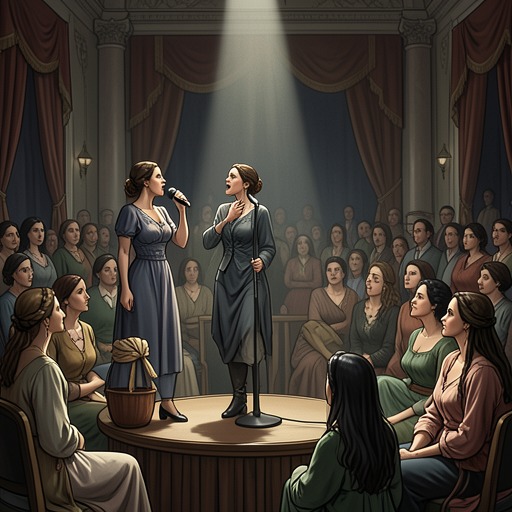
At a drag show, Willowdean watches Lee Wei perform Jolene. The song’s opening note electrifies the bar, and its familiar story of a woman pleading with a more beautiful rival lands with a private force for Willowdean. She reads the song as a reminder that someone can always seem prettier, smarter, or thinner, and that perfection is a phantom people chase. It is the song she would choose for the pageant if she could sing; by the end of Lee Wei’s performance, Willowdean is wiping away tears she had not noticed falling. Parton’s music gives the abstract threat of comparison a form that Willowdean can recognize and feel.
A life deliberately chosen
Willowdean’s view of Parton also rests on the contrast between an appearance that might be dismissed as artificial and a life that seems fully claimed. When Bo Larson calls Parton fake, Willowdean readily concedes that her breasts are artificial, but rejects the implication that this makes the whole persona insincere. She describes Parton as someone who seems never to have had a bad day and calls her a kind of guru, pointing to her big hair and fake breasts alongside the music. What matters is that Parton appears to be living the life she set out to live.
Willowdean sharpens that idea by likening Parton’s everyday appearance to Halloween, then distinguishing it from mere dress-up: for Parton, the look is not make-believe but the life she chose. Bo, who had regarded her as a cartoon character, pauses over the explanation and allows that his judgment may be wrong. The exchange presents Parton’s image not as proof of falseness but as a visible form of agency: the constructed appearance and the person’s chosen life are not opposites.
Memory and connection
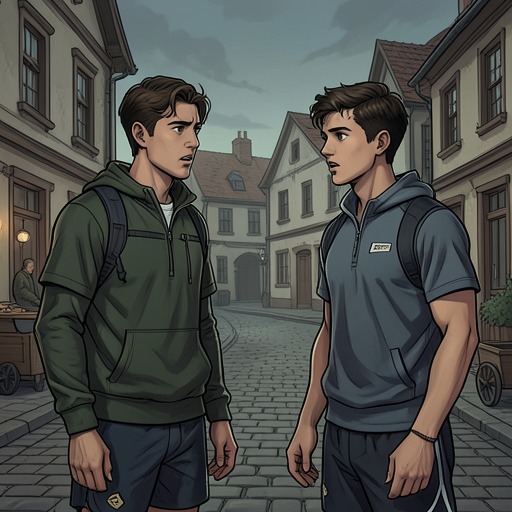
Parton also becomes a point of connection between Willowdean and Bo. In his truck, after a period apart, Bo tells her that he cannot hear Parton without thinking of her. Willowdean laughs nervously and recognizes the intimacy of having become part of his memory, even as Parton also calls up Ellen and Lucy for her. The association is therefore shared but not exclusive: the music carries different attachments at once, joining romance to friendship and grief.
The conversation ends with the Harpy’s light above them going out while the radio continues. In that quiet, Parton’s significance is less a simple lesson than a way Willowdean makes meaning: a song can hold the sting of comparison, and an unapologetically fashioned public self can suggest that being visibly constructed does not make a life less authentic.