Ellen Dryver
Dumplin'Ellen Dryver is Willowdean Dickson’s longtime best friend, a relationship that begins with a Dolly Parton song and is tested when adolescence pulls the girls in different directions. Ellen’s ease in her own skin contrasts with Willowdean’s struggles with how others see her, but their eventual reconciliation shows that intimacy need not depend on having identical experiences or doing everything together.
Identity and Early Friendship
The girls’ friendship takes shape during the summer before first grade, when Willowdean’s aunt Lucy and Ellen’s mother, Mrs. Dryver, bond over their devotion to Dolly Parton. While the adults drink sweet tea and talk in the dining room, the girls sit together watching cartoons, initially unsure of one another. Their connection clicks when Dumb Blonde, from Parton’s debut album Hello, I’m Dolly, comes on Mrs. Dryver’s stereo. Ellen taps her foot as Willowdean hums; soon they are spinning and singing together. The scene gives their friendship a musical beginning, but its durability rests on more than a shared favorite song.
As a teenager, Ellen appears to Willowdean as tall and blond, with a combination of goofiness and attractiveness that seems to belong in a romantic comedy. More important to their differences is Ellen’s apparent comfort in her own skin. Willowdean sees her as someone who inhabits herself without the same self-consciousness that shadows Willowdean, a contrast that can make their closeness feel reassuring and, at times, painful.
Growing Apart
Ellen has a boyfriend, Tim, and for about a year she repeatedly considers whether she is ready to become more intimate with him. Their recurring conversations about the decision occur so regularly that Willowdean is tired of revisiting them, especially when she is preoccupied with schoolwork. Their different levels of investment in the conversation hint at a wider change: Ellen’s life is opening into experiences that Willowdean does not necessarily share.
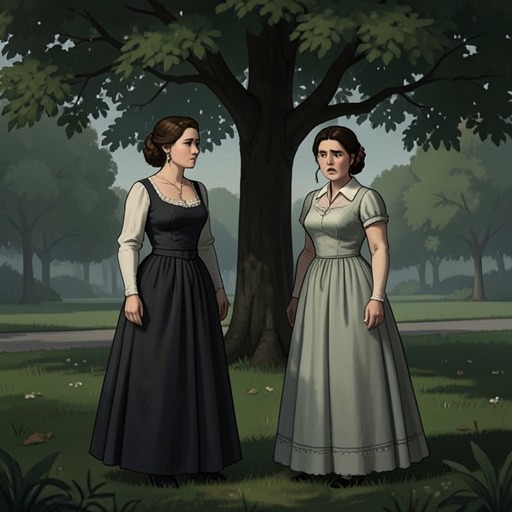
That distance becomes harder for Willowdean to ignore over the summer. She feels that the two friends, always different in some ways, are now being pulled in separate directions, though she believes she is the one noticing it. In one confrontation, Willowdean accuses Ellen of leaving her alone in a pool and calls another girl a disparaging name based on her thinness. Willowdean regrets the remark as soon as she makes it. Her own experience of living in a body that people feel entitled to comment on has taught her that bodies are not other people’s property to judge. The outburst therefore exposes a contradiction: hurt and jealousy lead Willowdean to repeat the kind of body-based judgment she rejects.
Ellen responds by questioning why being left alone in the pool should make her a bad friend, and by pointing out that Willowdean is sixteen. Her way of narrowing an argument to its immediate facts can leave the other person feeling foolish; Willowdean has seen this skill in Ellen’s disputes with Tim as well. The exchange does not settle what lies beneath their quarrel. Instead, it makes visible how a friendship can be injured when one person experiences a change as abandonment and the other treats it as an ordinary moment.
Estrangement and Reconciliation
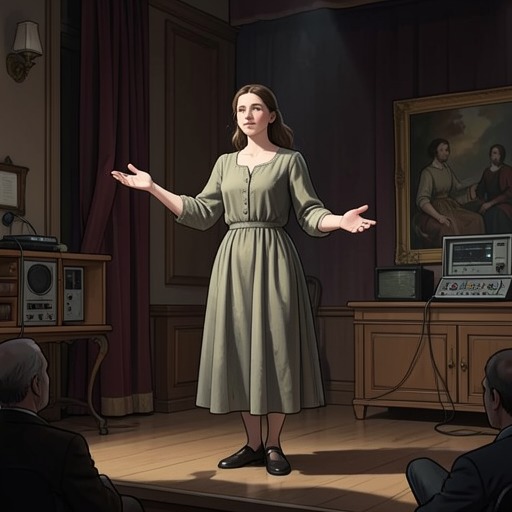
By the time the girls sit beside each other at the pageant interviews, their conflict has become physical distance as well as silence. They are seated together because their surnames place them next to each other alphabetically, but whenever their shoulders touch, Ellen shifts away. Even so, when Willowdean is called, Ellen catches her eye and smiles before looking away. The brief expression complicates the display of estrangement: the connection is strained, not erased.
Willowdean begins repairing the relationship while they wait in the interview queue. As they move forward one chair at a time, she tells Ellen that she does not want them to remain angry. She admits that she was wrong and that she cannot bear the idea of going without talking to her every day. The gradual movement through the line gives the apology room to develop; reconciliation happens not in a single dramatic gesture but through words offered and received while the girls wait.
Ellen also changes Willowdean’s name on a sign, removing the nickname that has hurt her. She explains that the word itself has no meaning unless Willowdean lets it, but that Willowdean’s pain matters to her. The small act turns their renewed closeness into practical care: Ellen does not simply argue that Willowdean should feel differently, but acknowledges that the hurt has consequences for both of them.
On a battered leather seat near the stage manager’s desk, Ellen and Willowdean finally talk through the causes of their falling-out. Ellen says that their drift scares her, while also wondering whether they may need space rather than a shared response to everything. Willowdean struggles to accept that possibility. She wants Ellen to be happy and to make new friends, including people Willowdean does not feel close to, but admits that she envies Ellen’s apparent progress and fears being left behind.
Ellen’s reply makes the imbalance more mutual. She says she is not about to leave Willowdean behind and admits that she, too, sometimes feels jealous. Unlike Willowdean, Ellen worries about whether other people like her; she keeps an internal tally of approval, even from people she does not particularly admire. Their exchange revises the earlier image of Ellen as effortlessly secure. Her confidence in her appearance does not mean she is free of insecurity; the friends are vulnerable in different ways, and each has mistaken the other’s visible qualities for a complete account of her inner life.
Renewed Trust and the Pageant Night
Willowdean tells Ellen that she remains her best friend and that Ellen has never treated her differently from other people. She describes the strength she finds in openly being herself, then confesses what she has withheld: she met Bo at work over the summer, kissed him, and continued seeing him. She also recounts her experiences involving Mitch and the dance, Halloween, and her return to work. Ellen’s surprise that Willowdean never told her underscores how far their silence had extended; the fuller account gives their repaired friendship access to parts of Willowdean’s life that had been kept separate from it.
The confession also clarifies Willowdean’s fear about Bo wanting to define their relationship. She expects ridicule if they become a public couple and feels angry that her feelings about her body have become entangled with a boy. Ellen does not dismiss the possibility that people can be cruel, but points to her relationship with Tim as evidence that other people’s reactions need not determine whether a couple can be together. Their discussion is not a simple resolution of Willowdean’s uncertainty; it is an instance of the restored trust that lets her tell Ellen what she has been afraid to say.
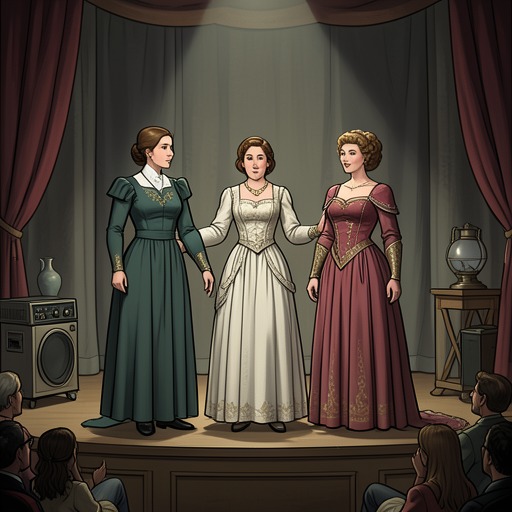
On pageant night, Tim becomes ill with food poisoning, leaving Ellen without an escort. Willowdean has no escort either, and initially has not treated that absence as a problem. When the pageant staff asks Ellen where her escort is and begins to address Willowdean’s status, Willowdean steps in and says that she is Ellen’s escort. She links her arm through Ellen’s, and the two cross the stage together. The gesture gives the reconciliation a public consequence: after months of fearing that they were separating, they meet one another’s immediate need without requiring their lives to be identical. Ellen’s role in Willowdean’s story is thus not simply that of the friend who knew her first, but of a person with whom closeness can survive confession, disagreement, and change.