Lee Wei
Dumplin'Lee Wei is a drag queen whose dazzling performance of Jolene gives Willowdean Dickson a new way to understand beauty, longing, and the courage to be seen. First encountered onstage at the Hideaway, Lee later becomes a pageant mentor: she teaches Willowdean and her friends how to walk and present themselves, while explaining that she once feared the very ambitions they are now pursuing. Her movement from performer to teacher links the expressive world of drag with the girls’ effort to enter a contest that does not readily make room for them.
Identity and Introduction
Lee appears among a varied group of drag queens performing in a small, dingy bar in West Texas. The performers wear elaborate, sparkling costumes, high heels, and striking wigs; the range of their bodies and appearances makes each performer’s beauty distinct rather than uniform. One act pairs a woman dressed as Kenny Rogers with another performer for Islands in the Stream. The show presents femininity as something carefully made and confidently performed, without reducing its performers to a single model of glamour.
Lee is introduced as a short Asian queen in a baby-blue minidress covered in sequins. As she moves, the dress turns her into a blur beneath the spotlight. Her performance begins with Jolene, and the crowd responds immediately, erupting after the first note. She is Willowdean’s favorite performer that night. Lee’s striking stage presence rests not only on costume but on command: she can hold the room through the song and draw its audience into a shared response.
Performance and Lucy’s Memory
The Hideaway also unsettles Willowdean’s assumptions about the small town around her. Before entering, Willowdean recognizes that she has never knowingly met someone who was openly gay, despite knowing that Lucy had many gay friends online. Lucy had described Dolly Parton as a patron saint to gay men. The show makes those connections tangible for Willowdean: Dolly Parton’s music is not merely a private inheritance from Lucy but part of a wider culture of affection and recognition.
Jolene carries particular weight for Willowdean. She loves the song and reads its plea to a more beautiful rival as an expression of the fear that someone will always be prettier, smarter, or thinner. Perfection, in this reading, is a phantom that people keep chasing. Watching Lee perform, Willowdean feels for the first time since the meteor shower in Bo Larson’s truck that her life is happening; by the end of the song, she is wiping away tears. Lee does not explain the song’s meaning to her, but the force of the performance gives Willowdean’s private thoughts a public setting and helps make singing Jolene for the pageant imaginable.
After the show, the bouncer and owner, Dale, calls Lee outside and reminds her that Lucy used to come to the club with Mrs. Dryver. Lee remembers Lucy warmly, describing her as generous-hearted and expressing sorrow at her death. She reaches for Willowdean’s hand and offers condolences. Willowdean tells her that she feels lost without Lucy, who had been a compass she did not know she possessed. Dale then offers the club’s email address in case Willowdean needs anything. This brief exchange connects Lee to Lucy’s past and gives Willowdean a compassionate welcome into a place she had entered as a stranger.
Training the Pageant Entrants
Willowdean later writes to Dale because she has found Lucy’s old pageant registration form and has drawn Millie Michalchuk, Amanda Lumbard, and Hannah Perez into the attempt to compete. She admits that they do not know how to walk, pose, or present themselves, and worries that they will make fools of themselves. She does not expect to win; she wants to show that there is no reason she should be unable to take part. Lee and Dale respond by giving up a Friday afternoon to help the girls prepare.
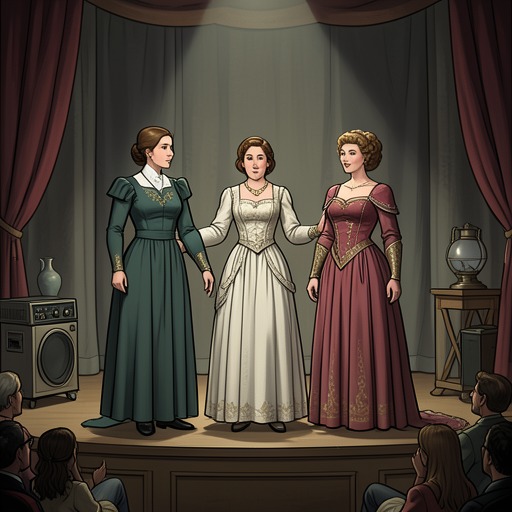
At the Hideaway, Lee lines the group up onstage in high heels while Dale watches from the bar. Lee begins with the walk, teaching that a contestant’s first impression comes through movement. She demonstrates by swinging her hips and then models the walk herself, placing one foot in front of the other as her heels strike the stage. The instruction is physical and specific: the girls must learn the technique through demonstration, not simply be told to appear confident. Hannah doubts that she will wear the heels in the pageant, while Millie nervously chews her nails; the lesson begins from their visible unease rather than assuming it away.
Lee also discusses stage makeup and clothing that makes a statement. Her guidance addresses the performance the pageant demands, but her own example suggests that presentation can be a chosen art rather than surrender to a single standard. The girls are not given a promise that the contest will reward them. Instead, Lee helps them acquire practical skills for occupying its stage.
Fear, Ambition, and Mentorship
During the training, Lee wishes she had known girls like these when she was in high school. She explains that she had been scared of herself and feared that the large things she wanted would remain only wants. Her account gives the lesson a personal history: Lee is not simply an expert in theatrical presentation but someone who remembers holding back from her own desires.
Lee says that things improved, that she is living her dream, in love, and happy, but that she waited for this life to happen. By contrast, she sees the girls making their opportunity themselves. The distinction between waiting and acting makes her encouragement more than a general expression of support. Her presence at the Hideaway demonstrates one form of self-created possibility; her pageant coaching helps the girls attempt another, in a town where the contest’s expectations can make participation feel forbidden.
Lee’s role therefore bridges the pageant and the drag show without treating them as identical. At the Hideaway she is the artist who commands a stage through costume, movement, and song; during the coaching session she converts that experience into instruction for newcomers. Her practical mentorship and candid account of past fear reinforce the significance of the girls’ decision to try, even without any assurance of victory. Through Lee, performance becomes both a craft that can be learned and a way to make a desire visible before the surrounding world has approved it.