Rosie’s Miss Teen pageant dress
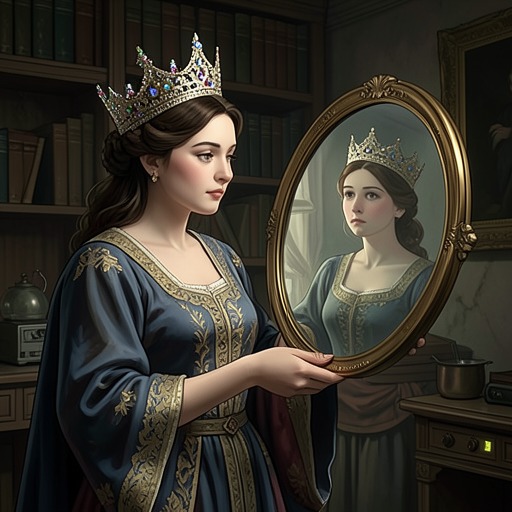
Dumplin'Rosie’s Miss Teen pageant dress is both a garment and a pageant ritual: Rosie Dickson has worn it every year since she won, and she expects to wear it again before the crowd. When its zipper will not close, Willowdean Dickson improvises a way to hold the dress in place. The workaround lets Rosie take her place in the spotlight, while the dress’s visible failure to fasten unsettles the perfection its tradition seems to promise.
A garment bound to pageant tradition
Rosie’s Miss Teen pageant dress carries the history of Rosie’s own victory. In the dressing room, she explains that she has worn it every year since winning and that people expect her to appear in it; for her, wearing it is not simply a matter of choosing a familiar outfit, but an established part of the pageant’s ritual. The expectation gives the garment a public life as well as a personal one: it is recognized through repetition, attached to the role Rosie has played at the pageant, and bound up with the audience’s anticipation.
That attachment makes the dress’s practical problem feel larger than a failed fastening. Rosie is holding the unzipped dress around her chest when she tells Willowdean that she has been disqualified and will not finish the competition. The two disappointments sit close together: Willowdean cannot continue in the pageant, and Rosie may not be able to appear in the dress she regards as part of its tradition. The scene does not present the dress as an abstract symbol detached from use. Its importance is expressed through the concrete expectation that Rosie will put it on and be seen in it.
The zipper that will not close
After the disqualification, Rosie turns and asks Willowdean to zip her up. The zipper moves more easily than it did on an earlier occasion, but it still stops with about four inches left. Willowdean tells her plainly that she cannot pull it any farther. The unfastened gap makes the garment’s material limit impossible to ignore: no amount of effort in that moment will make the zipper travel the rest of the way.
Rosie resists what she is seeing. She says she tried the dress on earlier that week and mentions her Pee-lates and spin classes, then looks over her shoulder in the mirror as if the result cannot be right. Her response links the dress to an effort to meet an expected fit, but the scene does not resolve that tension by making the garment fit after all. Instead, Willowdean recognizes that Rosie is close to falling apart and that her mother’s distress could affect the pageant, too. She shifts from trying to close the zipper to finding another way for Rosie to wear the dress.
A backstage solution
Willowdean runs to the woodshop where the sets are made and gathers whatever tools seem useful, including clamps. When she returns, Rosie is near hysterics. She fears that everyone will know the dress does not fit and returns to the importance of wearing it: people are expecting her in it, and it is tradition. Willowdean does not promise to make the zipper work. Instead, she separates the appearance of a finished, wearable dress from the impossible task of fastening it as usual.
Her solution is improvised rather than permanent. She slides two large alligator clamps behind Rosie’s strapless bra and tucks the dress beneath them, one on either side. She also tells Rosie she must stay in one place and not turn around onstage. The clamps, ordinarily used backstage to hold wires or wood, become temporary supports for the gown. Rosie checks their effect in the mirror, and her breathing eases when she sees the difference. The arrangement does not erase the problem; it manages what the audience will see from the front while leaving hardware holding the dress together at the back.
The episode changes the terms of the rescue. Willowdean cannot restore the dress to its expected condition, but she can help Rosie appear in it. Rosie’s anxiety gives way to gratitude: she thanks Willowdean, kisses her forehead, and calls her Dumplin’ before hurrying out to announce contestants and escorts. The familiar nickname and affectionate gesture make the practical repair an act of care between mother and daughter, not merely a backstage trick.
Imperfection in the spotlight
Willowdean watches the pageant from the sidelines and sees Rosie standing in her small spotlight, still and beautiful despite the hardware at the back of her dress. The contrast is central to the garment’s meaning in this scene. From the front, Rosie can take part in the pageant tradition she values; from behind, the clamps reveal the workaround that tradition’s polished appearance conceals. Her beauty does not depend on the dress being flawlessly fastened.
Willowdean understands this moment as the truest representation of her mother she has seen. What she takes from it is not that the dress has secretly become perfect, but that the perfection perceived in others is made up of small imperfections. The zipper’s refusal to move supplies the scene’s most literal instance of that idea: a public image can endure without every seam and fastening cooperating. The dress remains visibly imperfect in its construction, yet Rosie stands beneath the spotlight and looks lovely.
The episode also places Willowdean’s response to her own disqualification beside her response to Rosie. Although she is upset that she will not finish the pageant, she sets that disappointment aside long enough to solve the immediate problem in the dressing room. Once Rosie has gone out, Willowdean changes into the red gown her mother bought for her and hurries to join the line with Ellen Dryver. The two gowns therefore occupy different roles in the same pageant night: Rosie’s carries a repeated family tradition, while Willowdean’s is the dress she chooses to wear as she takes her own place beside Ellen. The improvised fastening allows the older ritual to continue, but it also leaves its backstage imperfections in view.