Willowdean Dickson and Ellen Dryver’s lifelong friendship
Dumplin'Willowdean Dickson and Ellen Dryver’s lifelong friendship is a bond formed through Dolly Parton, sustained by shared memory, and strained when the girls begin moving through adolescence at different speeds. Its history is interwoven with the friendship between their mothers and Lucy: what starts as a song heard across a living room becomes a family inheritance, then a touchstone Willowdean returns to when grief and insecurity unsettle her sense of connection.
A friendship begun in song
Before the girls knew what to make of one another, their mothers were already close through their devotion to Dolly Parton. During the summer before first grade, Willowdean and Ellen sat together watching cartoons while Lucy and Mrs. Dryver drank sweet tea nearby. The decisive moment arrived when Mrs. Dryver’s stereo played Dumb Blonde. Ellen tapped her foot as Willowdean hummed; before the chorus, the girls were spinning and singing together. In Willowdean’s account, their friendship begins not with an introduction or a shared explanation of themselves, but with a response they discover they can make together.
The connection had roots older than that afternoon. Mrs. Dryver was a Dolly Parton impersonator known in that part of Texas, while Lucy had served as vice president of a regional Dolly Parton fan club. Their paths crossed regularly, and Willowdean imagines that this earlier bond somehow prepared the way for Ellen to become her friend. That sense of fate is her own interpretation, but the underlying link is concrete: the girls’ closeness grows within a network of shared enthusiasm already connecting the adults around them.
Dolly Parton as shared language
The girls’ attachment to Dolly Parton is more than a common musical preference. They disagree over which Dolly look is best, but even those arguments belong to a safe, familiar kind of friction. Willowdean understands Dolly’s appeal as inseparable from her unapologetic self-presentation: people may find her appearance ridiculous, yet she does not change it when she feels good about herself. The singer therefore offers the girls a model of confidence that is especially resonant in a world where appearance is constantly judged.
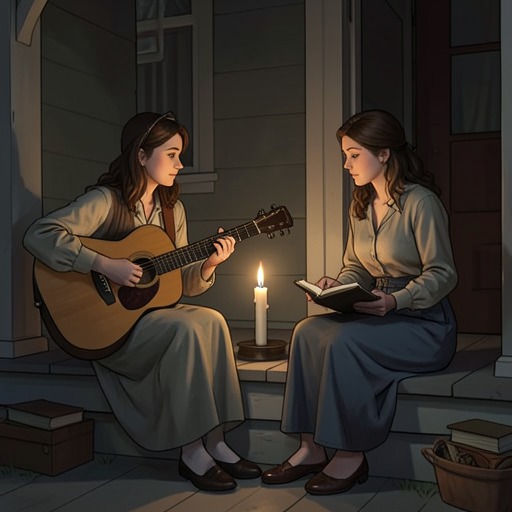
Music also gives their friendship a history that can be revisited. In Lucy’s sock drawer, Willowdean finds cassette tapes devoted to Dolly Parton and listens to one quietly on the stereo beside her aunt’s bed. The music connects her not only to Lucy, who loved the singer intensely, but also to Ellen, whose family shares the same devotion. For Willowdean, the friendship and the music are difficult to separate: both are part of a life built through repeated family visits, familiar songs, and memories whose meanings deepen over time.
The adults’ shared affection also produced a tangible reminder of what they hoped to do together. When Mrs. Dryver won airline tickets, she offered Lucy the second so they could visit Dollywood, a trip they had long anticipated. They planned it, drove three hours to the nearest airport, and then learned Lucy would need to purchase an extra seat because she could not fit in one. Mortified, Lucy went home; Mrs. Dryver returned with a Dollywood ornament for her. The missed trip makes the families’ closeness visible while exposing the humiliating barriers imposed on Lucy by her body. Their shared Dolly Parton world holds joy, but it also preserves the limits that kept Lucy from taking part in an ordinary journey.
Adolescence and the first serious strain
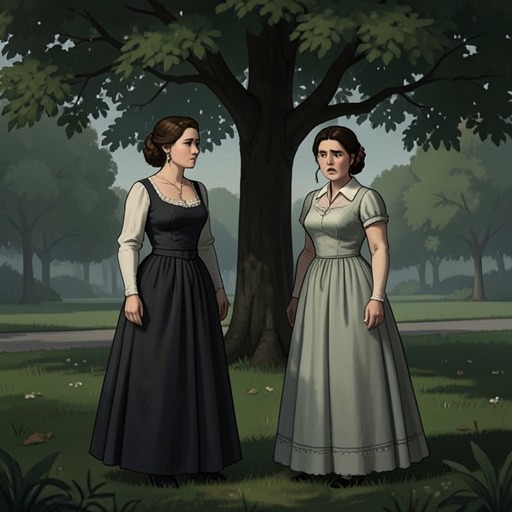
As the girls grow older, their friendship enters unfamiliar territory. Willowdean senses that the summer is pulling them in different directions, though she initially feels alone in noticing it. Their relationship had allowed disagreements about television and Dolly’s appearance without becoming a real fight; now a poolside incident involving Callie leaves Willowdean angry that Ellen has left her feeling exposed and unsupported. Ellen runs after her carrying Willowdean’s dress and bag, but Willowdean keeps walking. The episode matters partly because it is so unlike their usual pattern: the hurt is serious to Willowdean even as she wonders whether she is making too much of it.
The distance also takes the form of withheld information. Willowdean is involved with Bo but has not told Ellen. She knows Ellen loves Tim, yet jealousy still rises when she sees Ellen with him, and she recognizes that keeping her own relationship secret can feel like a lie to her best friend. Her silence is not evidence that the friendship no longer matters; it shows how much the possibility of disappointing Ellen weighs on her. But the omission leaves Willowdean carrying a private life that she cannot easily bring into their shared one.
Loss, memory, and continued attachment
Lucy’s death gives the friendship’s shared history a new weight. Six months after her aunt’s death, Willowdean still expects to see her on the couch or working on a crossword in the kitchen. The family has few pictures of Lucy, because Lucy disliked seeing her body reflected in photographs, and Willowdean fears that losing sight and sound of her will mean forgetting her. She also understands that her mother remembers Lucy chiefly through the circumstances of her death, while Willowdean wants Lucy remembered as someone who lived. Ellen’s family belongs to the history that can help preserve that fuller life: Mrs. Dryver and Lucy shared their Dolly Parton devotion, and their daughters’ friendship grew from it.
The relationship is not presented as untouched by conflict or as conclusively restored by a single scene. At a moment of acute fear, Willowdean stops typing and calls Ellen because what she wants is her best friend; Ellen answers before the phone has completed a ring. Later, Willowdean acknowledges that she misses Ellen and expects she will never stop missing her, even as she finds another friend, Hannah, with whom she can talk in the dark. That admission holds two truths together: Ellen remains irreplaceable, and Willowdean’s life is changing enough to make room for other connections.
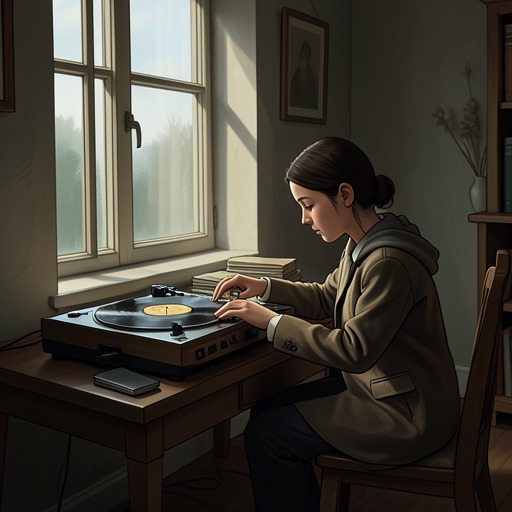
At the pageant, Dolly Parton’s music gathers the friendship’s history into the present. As the opening chords of Jolene sound, Willowdean remembers family drives with her mother, Lucy, and Gram; Lucy’s record player; and Ellen’s mother humming in Ellen’s kitchen. The song also recalls the drag performance by Lee Wei that made Willowdean think about beauty as an impossible standard and imagine performing the song herself. Onstage, these memories are not separate from her bond with Ellen: they are part of the same musical and familial web through which Willowdean has understood belonging. The friendship’s decisive significance lies in that continuity. Even when the girls are distant, the songs and scenes they share remain available to Willowdean as a form of attachment, carrying the living friendship alongside the memory of Lucy.