Willowdean and Ellen Fall Out Over Entering the Pageant
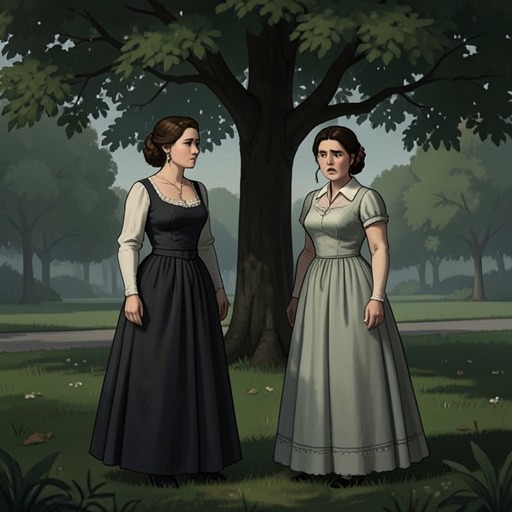
Dumplin'Willowdean and Ellen’s falling-out over the pageant begins when Willowdean discovers that her best friend has entered too. What Willowdean had imagined as a personal challenge becomes a conflict over who is entitled to claim the competition as her own: she asks Ellen to withdraw, Ellen refuses, and their familiar pattern of quick anger followed by forgiveness breaks down into days of silence.
The unexpected entry
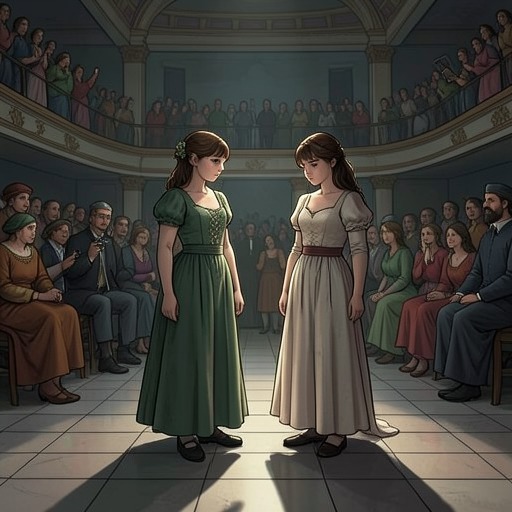
At the pageant gathering, Mallory makes the rounds of the table, handing folders to the girls, including Ellen. Willowdean assumes the folder is a mistake: Ellen is there for moral support, not as a contestant. When Ellen looks through the papers, Willowdean realizes that her friend has entered. Her startled response, “You entered the pageant,” meets Ellen’s matter-of-fact question, “Isn’t that what we came here to do?” The exchange exposes how differently the two girls have understood their shared plans.
The meeting is framed as friendly competition. Willowdean’s mother welcomes the girls, points them toward refreshments, and reminds them that they can “put the friend in friendly competition.” Applause and the movement of the crowd toward the refreshments table make the gathering feel like a public occasion, but Willowdean experiences Ellen’s entry as a breach of a private understanding. She protests that this was not part of the plan and insists that Ellen cannot do the pageant. Ellen, no longer keeping her voice low, counters that competing is what they have been discussing for days. The same activity has meant companionship to one girl and a chance to make something about herself to the other.
A competition becomes a test of friendship
Willowdean asks Ellen to back out “for me,” explicitly treating Ellen’s withdrawal as something she owes her. She says she needs to be allowed “this one thing.” Ellen challenges both the request and its implied limits: Willowdean cannot choose who gets to join what she calls a “revolution.” Willowdean recognizes the logic of Ellen’s objection, yet also sees Ellen as a real threat to her own chance because Ellen could win. The tension is not simply that they both want to compete; Willowdean’s wish to claim the pageant for herself collides with the fairness she knows Ellen is invoking.
The argument sharpens when Willowdean lists what she believes Ellen already has: perfect parents, a perfect job, and a perfect boyfriend. Those advantages, in Willowdean’s account, make the pageant one more thing she should be allowed to keep for herself. Ellen rejects the burden of that accounting. She says that the request is unfair, suggests that perhaps Callie was right that the two friends are outgrowing and holding each other back, and says she misses out on many things because of Willowdean. The revelation shifts the quarrel beyond the contest: Ellen has been considering the cost of their friendship, while Willowdean has assumed that their closeness is secure.
Willowdean answers with anger at the idea that she is the one holding Ellen back. She objects to being treated as a “mindless friend” who only praises Ellen, and rejects the role of sidekick or chubby best friend. Her declaration that the pageant is about her makes her need for individual recognition unmistakable, but it also shows how completely she reads Ellen’s participation as a threat to that need. Ellen calls her a bad friend, says she is done wasting her time, and refuses to withdraw. Then she leaves. The decision is clear; the friendship is left without a reconciliation.
From expected forgiveness to estrangement
On Monday, Ellen ignores Willowdean. Willowdean believes she deserves the silence and initially expects the familiar cycle to resolve the quarrel: both girls are quick to anger, but Ellen is usually ready to forgive. That expectation gives their history a particular weight. Willowdean has come to count on forgiveness, and the absence of even a text over the weekend unsettles her more than the original argument alone.
By Tuesday, Tim does not acknowledge her either. Willowdean’s stomach tightens into panic, and she decides that she has to speak to Ellen. In the hallway after second period, she tries to restart their connection by acting as though the fight has passed, comparing them to an old married couple who can no longer remember what they were arguing about. Instead of apologizing directly, she asks what she is supposed to do for her talent. The question reaches toward their shared pageant plans, but Ellen opens her mouth, shakes her head, and walks away without answering. Callie gives Willowdean a dirty look and runs after Ellen, making the separation visible in the hallway as well as in the silence between the two former confidantes.
The cost of making the pageant personal
The failed hallway approach turns Willowdean’s expectation of easy repair into an unmistakable break. She spends the day close to tears and leaves school quickly. Her mother has let her use the car to travel to and from school on the condition that she drop her off at work each morning; once Willowdean is outside the parking lot, she lets herself cry. The tears, described as heavy drops striking a windshield, give physical force to a loss that has so far been expressed through arguments, unanswered words, and withdrawal.
The episode complicates the pageant’s promise of self-assertion. Willowdean wants the competition to be about her, but tries to secure that space by excluding a friend whose reasons for entering are not dismissed as illegitimate. Ellen’s refusal makes the conflict consequential: the price of claiming the event as personal territory is the loss, at least for now, of the friendship Willowdean expected to accompany her into it. The public language of friendly competition thus stands in sharp contrast to the private demand that one friend step aside for the other.