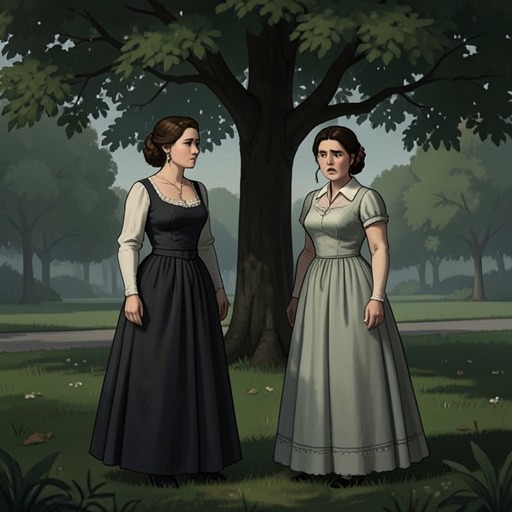
Willowdean and Ellen’s friendship broken by their pageant disagreement
Dumplin'Willowdean and Ellen’s friendship broken by their pageant disagreement marks a painful change in a bond that had once made separation difficult to bear. The Miss Teen Blue Bonnet Pageant becomes more than a shared activity: for Willowdean, it is something she wants to claim for herself, while Ellen’s decision to compete exposes how differently each of them understands their friendship. Their argument turns on whether closeness has become a form of constraint. The silence that follows gives that disagreement a daily presence, and a later encounter shows how little either girl can yet say to the other.
The Pageant as a Test of the Friendship
Willowdean tells Ellen that she deserves to be selfish and to make something about herself. She points to what she sees as Ellen’s already fortunate life—her parents, job, and boyfriend—and asks her to let Willowdean have this. The appeal makes the pageant feel, to Willowdean, like a rare claim to personal space. But Ellen hears the request as an attempt to control her own decision. She insists that Willowdean cannot put that burden on her and raises the possibility that Callie was right: perhaps the two friends are outgrowing each other and holding each other back. Ellen adds that she misses out on many things because of Willowdean, then says she cannot believe Willowdean would ask her not to enter.
That answer converts a dispute over who may compete into a question about the friendship’s underlying terms. Willowdean has treated Ellen’s entry as a choice against her, describing it as though Ellen were scoring points for the other team. Ellen, by contrast, sees her participation as her own choice and Willowdean’s request as an effort to limit it. Neither account leaves much room for the other: Willowdean wants this pageant experience to belong to her, while Ellen refuses to make her own ambitions subordinate to that desire.
The Argument and the Break
Willowdean’s accumulated sorrow and bitterness over the preceding months gather into anger when Ellen says they may be holding each other back. Willowdean seizes on the fact that Ellen has discussed their relationship with Callie and rejects the idea that she should serve as an uncritical admirer. She frames the conflict in especially personal terms: she is not Ellen’s sidekick or chubby best friend, and the pageant is about her. The statement insists on Willowdean’s right to make the decision personally meaningful, but it also makes the disagreement harder to contain. What Ellen has described as a shared pattern of missed opportunities, Willowdean hears as a judgment on her place in Ellen’s life.
Ellen’s face turns red. She calls Willowdean a bad friend, says she is done wasting her time, and makes clear that she will not withdraw from the pageant. Then she leaves. The exit gives the quarrel an immediate consequence: Ellen does not simply disagree and stay to negotiate; she ends the conversation by walking away, while refusing the concession Willowdean had asked for. Willowdean’s demand for a moment that could be hers therefore coincides with the loss of the easy access to Ellen that she had taken for granted.
Silence and the Experience of Distance
At first, Willowdean expects Ellen’s anger to pass. On Monday, Ellen ignores her, and Willowdean thinks she deserves it. She has come to count on Ellen being ready to forgive, however, so the weekend passes without a text and changes what the silence means. When Tim also does not acknowledge her on Tuesday, Willowdean’s stomach tightens into panic. The estrangement is no longer only the pause after a fight; it is a break in the social habits through which Willowdean had expected the friendship to resume.
Two weeks later, the distance is made especially difficult by Ellen’s physical presence at pageant rehearsal. Ellen sits in the front row with Callie, and both wear matching workout gear stamped with Sweet 16. Willowdean recalls that the last time they had gone two weeks without speaking, Ellen had been away on a family trip along the West Coast. Then Willowdean had written her a letter every day and left the letters in Ellen’s mailbox; she remembers going mad without her, and remembers that, on Ellen’s return, their mothers let Ellen stay over for two nights in a row. The contrast sharpens the current silence: the earlier separation had a clear external cause and an anticipated reunion, but now Ellen is across the room and, Willowdean believes, will not answer if called.
Willowdean has almost apologized, yet believes she has waited too long. More importantly, she still thinks—and even tells herself she knows—that she was right. The hesitation is not simple uncertainty about whether she regrets the fight. She can recognize her own foolishness elsewhere, but the pageant argument remains tied to her conviction that she needed to make the experience her own. At one point she runs to the bathroom, turns the faucet high, and lets hot water rush over her hands until they redden. In the same moment, she thinks about how foolish she was to ask Mitch to an event and admits that the distance from Ellen began months earlier. The pageant has become the visible flashpoint for a separation Willowdean suspects had already been developing.
An Attempt at Contact, Not Yet Reconciliation
When Willowdean returns to work at Harpy’s, she encounters Ellen with Callie and Tim. Ellen says only that she had not thought Willowdean worked there anymore. Willowdean answers that she has come back and greets Tim, but his restrained acknowledgment makes clear that the old ease has not returned. The exchange occurs in front of other people, yet Willowdean experiences it as starkly personal: after weeks of silence, Ellen’s practical observation is all she offers.
Willowdean presses her, asking whether that is all Ellen has to say after they have not spoken for weeks. Callie tells Ellen that she owes Willowdean nothing. Ellen’s response—that she is doing pretty well on her own—confirms the separation rather than reopening the conversation. She and the others leave, and Tim gives Willowdean a shrug. The scene repeats the essential imbalance of the earlier argument: Willowdean seeks acknowledgment, but Ellen does not accept that she must provide it. Their friendship is therefore shown not as erased, but as inaccessible in the immediate aftermath. Its history remains vivid to Willowdean, while the present offers no quick return to the letters, sleepovers, or expected forgiveness that once made closeness seem secure.