Willowdean and Rosie's strained mother-daughter relationship
Dumplin'Willowdean and Rosie Dickson’s strained mother-daughter relationship is shaped by grief over Lucy, tension about Willowdean’s body and pageant dress, and a shared difficulty expressing affection. Its gradual change is measured less by a single reconciliation than by acts of practical care: Rosie’s hands helping build a pageant prop, Willowdean’s helping Rosie through a dress crisis, and a nickname that becomes easier to accept.
Grief, Lucy’s Room, and the Dress
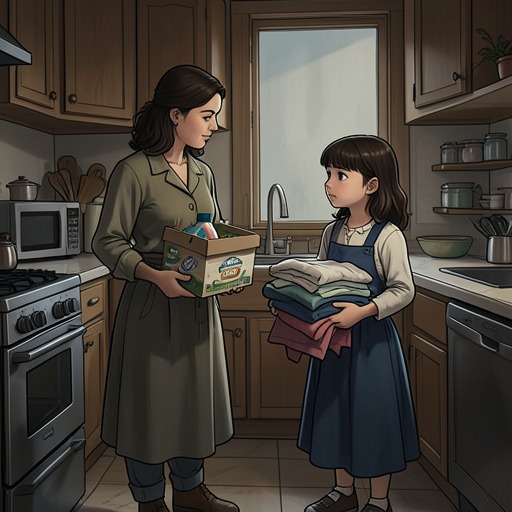
The distance between them is especially visible when Willowdean comes home to find Rosie sorting Lucy’s belongings. Rosie has been transforming the room into a craft space, but now she has boxes marked for donation. Willowdean recognizes that her mother cleans when frustrated, and the scene lands amid their unresolved disagreement over the pageant dress. For Willowdean, the dress is not an interchangeable outfit: finding clothes that fit her body is difficult, and this particular dress zips. Rosie’s power to approve or refuse it therefore feels consequential, not merely parental oversight.
The argument over Lucy’s things makes their different ways of living with loss collide. Rosie says the belongings cannot remain untouched forever and points to the approaching December anniversary of Lucy’s death; Willowdean insists that they still belong to Lucy. When Rosie corrects her from the present tense to the past, Willowdean breaks down and asks her to stop. The boxes turn an abstract disagreement about moving on into a visible decision about what will remain in the room and what will leave the house for a shelter.
Willowdean expects Rosie to come close when she cries, and leans forward anticipating a real embrace. Instead, Rosie pats her shoulder, explains that the belongings will be taken away that weekend, and offers Willowdean the chance to keep anything she wants before leaving to make lunch. The gesture is not an embrace, and Willowdean’s reaction makes the gap plain: she and her mother do not ordinarily share this kind of vulnerability. The scene connects the practical dispute over the room to a deeper wish for comfort that neither quite knows how to give or ask for.
Support with Conditions
Their relationship is not defined by conflict alone. Before Willowdean’s pageant interview, Rosie notices her outfit and suggests adding a teal blazer she had given her for her birthday. On the drive to the Silver Dollar Banquet Hall, Rosie tells Willowdean that she loves her and hopes she will make her proud. The declaration offers direct reassurance, but Rosie immediately qualifies the moment: because she cannot appear to give her daughter special treatment, they must conduct themselves as contestants and pageant officials until Saturday night. Her support is genuine, yet bound up with the public rules of the pageant and Rosie’s concern about fairness.
That combination—affection alongside formality—echoes the distance in the scene at Lucy’s room. Rosie can speak of pride and love, but she also sets a boundary around how openly she can act as a mother during the competition. Willowdean answers with agreement rather than pushing against the condition. Their care for one another often takes this indirect form: practical suggestions, rules, and tasks stand in for the ease of an unguarded conversation.
Making the Cadillac Ranch Prop Together
As the opening number approaches, Willowdean has not worked out how to represent her assigned landmark, Cadillac Ranch. She understands it as an unusual Texas attraction: old Cadillacs buried nose-first in a row near the highway, their faded paint renewed by visitors. When Rosie finds her working late, she first mistakes the project for schoolwork and tells Willowdean she needs sleep. Once she learns it is a pageant prop, she does not leave her daughter to solve the problem alone. She agrees that they can do it and begins working on a cardboard box.
Rosie brings the task into the shared space of the kitchen and garage. She sends Willowdean for wide elastic, a glue gun, and spray paints, then cuts the box with an X-ACTO knife. She promises that the prop will be the best one in the opening number. The details matter to their relationship: Rosie is not merely approving Willowdean’s participation but lending her own skill and attention to an assignment Willowdean had been dreading. Willowdean takes champagne from her mother and feels satisfaction as the project takes shape.
While they paint the cardboard, Willowdean thanks Rosie for letting Millie compete despite Millie’s lie. Rosie answers by praising Millie’s sweetness and smile; she does not describe Millie’s size as a disadvantage. Willowdean had anticipated just such a comment, so her mother’s response provides a specific contrast to the body-based judgments that surround the pageant. It also gives the conversation a point of connection beyond their own disagreement: they can talk about another contestant’s chance to participate.
The work turns playful when a fleck of paint lands on Willowdean’s cheek and she flicks paint back onto Rosie’s nose. They laugh together, unable to stop, as they finish the prop late at night. At one in the morning, the kitchen is cluttered with painted newspaper and cardboard, and the finished Cadillac hangs from elastic around Willowdean’s shoulders. The ridiculousness of the object is also its success. For a few hours, their closeness is not negotiated through a serious conversation; it is made through shared labor, champagne, and an escalating joke.
The Dress Crisis and a Change in Intimacy
On pageant night, the mother-daughter roles reverse. Rosie asks Willowdean to zip up a dress, but the zipper stops with about four inches still to go. Rosie says she had tried it on earlier in the week and had been exercising; she is on the verge of falling apart. Willowdean, who has been so distressed by whether her own dress will fit, responds firmly that Rosie will not fit into this one but that they can make it look as though she does. Her practical reassurance recognizes the problem without treating it as the end of Rosie’s ability to appear onstage.
As Rosie sees the difference in the mirror, she puts her crown into her styled hair and asks whether Willowdean hates being called Dumplin’. Willowdean says she dislikes the nickname less than she once did and has come to embrace it as one part of herself, alongside other names and seemingly opposing qualities: fat and happy, insecure and bold. Rosie’s use of the nickname thus becomes something Willowdean can accept without allowing it to define her completely. The exchange is an intimate one because it addresses not just a word but the changing relationship between the person who gave it and the person who bears it.
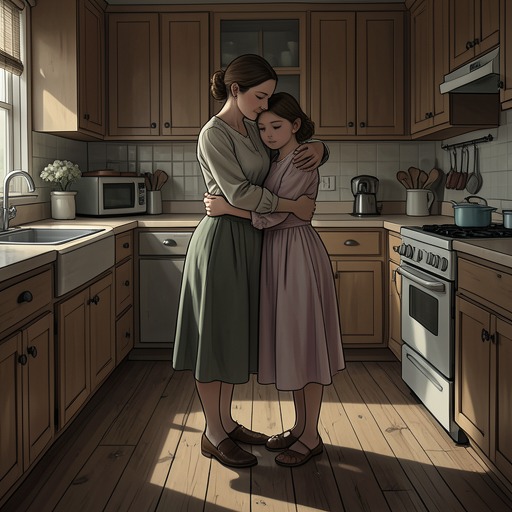
Before leaving to announce the contestants and escorts, Rosie thanks Willowdean repeatedly, tells her she loves her, and kisses her forehead. The affection is direct, unlike the shoulder pat in Lucy’s room, and it follows Willowdean’s care during Rosie’s moment of vulnerability. Willowdean then retrieves her own red gown from a duffel bag beneath the counter and hurries to join Ellen’s line. Their relationship has not become free of strain, but the pageant’s final preparations show a new reciprocity: Rosie has helped Willowdean make her way onto the stage, and Willowdean has helped Rosie face the stage herself.