
The Tribe Learns to Remember
Earth AbidesThis flow follows the emotional and communal work of remembering births, deaths, and shared years after ordinary calendars and institutions disappear.
increasing Bearing strength in each event
 decreasing
Bearing strength in each eventdecreasingThe First Number
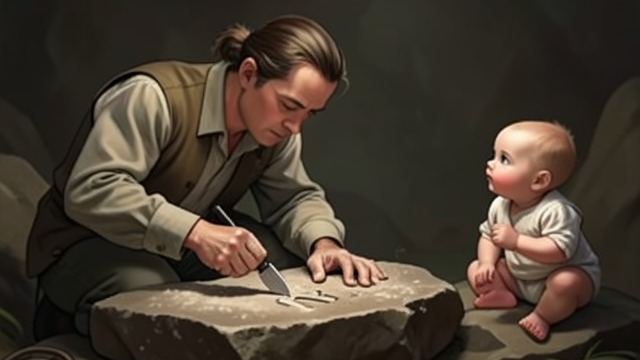
The First Number
A year recorded
Isherwood Williams cuts a numeral into the flat rock where earlier inhabitants left signs of their own life. The gesture gives his household a way to identify a year that might otherwise blur.
A family meaning
Em remembers the year through the baby rather than the number. Their two ways of marking time become the beginning of a shared calendar and a family memory.
Years Named for Lives
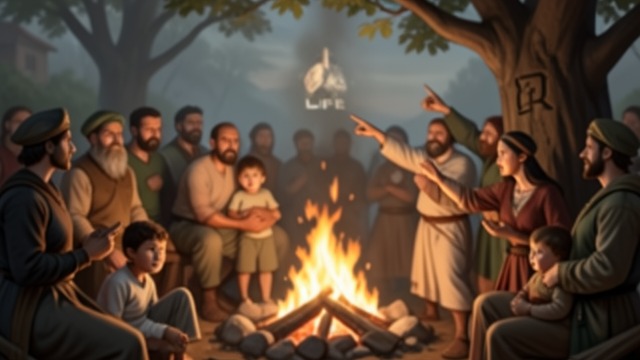
Years Named for Lives
Events become names
The Tribe remembers years through births, visitors, fires, and losses. Ezra’s visit, the forest fires, and the arrival of new families become markers that people can recall together.
History at human scale
The custom gives a small society its own record. Rather than preserve an official calendar alone, it binds time to the people and events members have actually shared.
The Bad Year
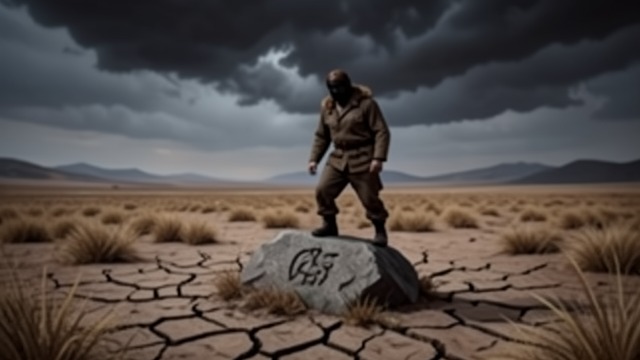
The Bad Year
Disaster remembered
Drought, grasshoppers, and dying cattle leave the landscape stripped and the adults fearful. Even Isherwood Williams doubts that the land will recover.
Naming a shared wound
The Tribe calls the year the Bad Year, acknowledging that the damage cannot be turned into an uncomplicated story of progress. The name holds collective grief alongside the returning green grass.
A Year Without a Name
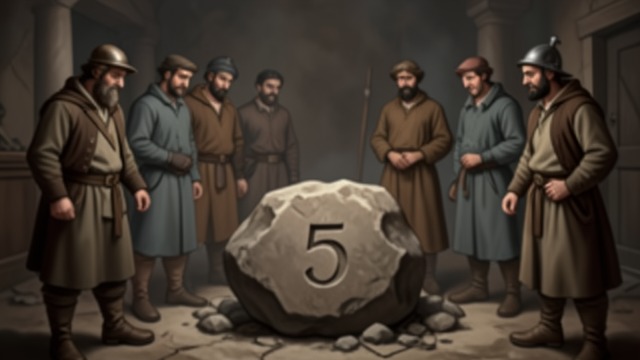
A Year Without a Name
Too much to commemorate
The adults cannot agree on a name for a year marked by an expedition, Charlie’s execution, illness, and the loss of children. Ezra suggests that a number may be easier to bear.
Memory without a label
The Tribe keeps Year 22 in its record but does not attach a story-like title. The silence acknowledges that shared memory can preserve events without making them feel resolved.
The Date Falls Away
The Date Falls Away
A ceremony postponed
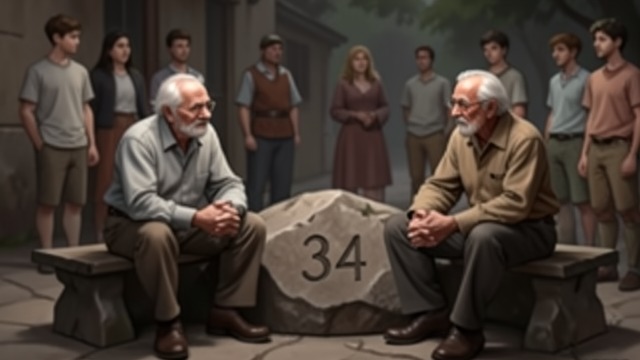
Isherwood Williams and Ezra are too frail to travel to the rock, and younger people repeatedly put off carving the next year. A ritual that once gathered the community gradually loses its force.
Memory changes hands
People continue living without knowing exactly how many years have passed. The community’s history becomes less dependent on a written sequence and more dependent on living traditions and shared habits.
At the end of the first full solar year
During Quick Years, from the Year of the Baby onward
At the winter-solstice ceremony after the locust plague
At the end of Year 22
After the beginning of Year 43
