
Belief After the Old Order
Earth AbidesThis flow traces the emergence of sacred beliefs and taboos in a community where education, churches, and inherited traditions have weakened.
increasing Bearing strength in each event
 decreasing
Bearing strength in each eventdecreasingReligion Without Institutions
Religion Without Institutions
Familiar texts lose context
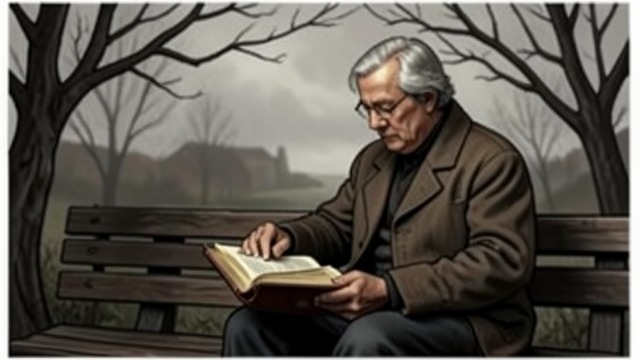
Isherwood Williams reads the Bible and finds that many teachings presuppose a functioning society. Without taxes, government, and neighbors, the old language does not fit easily.
A search for meaning remains
Ecclesiastes feels closer to his solitude, while the question of God stays unresolved. The loss of institutions does not eliminate religious need; it changes where and how it appears.
An Unfinished Service
An Unfinished Service
A proposed source of unity
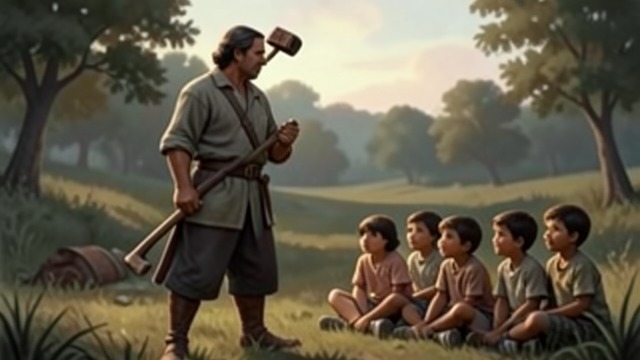
George and Maurine suggest holding Sunday services for the children. Isherwood Williams sees that religion might comfort people and bind the group together.
Honesty restrains him
He refuses to invent beliefs he does not hold. The services continue in a limited form, then end when they create division rather than shared conviction.
The Hammer’s Superstition
The Hammer’s Superstition
A vacuum fills
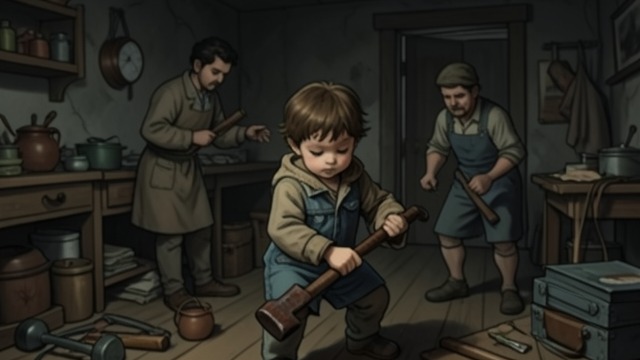
The children treat the hammer as dangerous, and other everyday habits begin to acquire ritual meaning. Isherwood Williams realizes that an isolated society lacks the broader traditions that once corrected small superstitions.
A dangerous responsibility
He could deliberately supply a creation story, but any account might harden into dogma. His skepticism offers no ready-made substitute for the beliefs arising around him.
Americans Become Old Ones
Americans Become Old Ones
Children explain the world
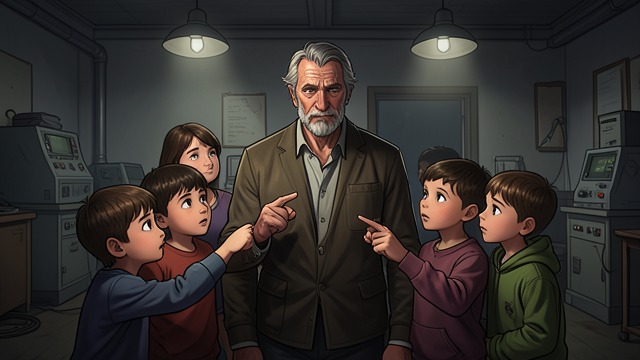
The children say that the Americans made everything, and that Americans were the people of the Old Times. When Isherwood Williams says he is an American, they hear confirmation of his special status.
History turns mythic
His ordinary identity has become evidence of supernatural power. Knowledge that was once commonplace is becoming legend because no broad educational tradition remains to interpret it.
An Oracle in Old Age
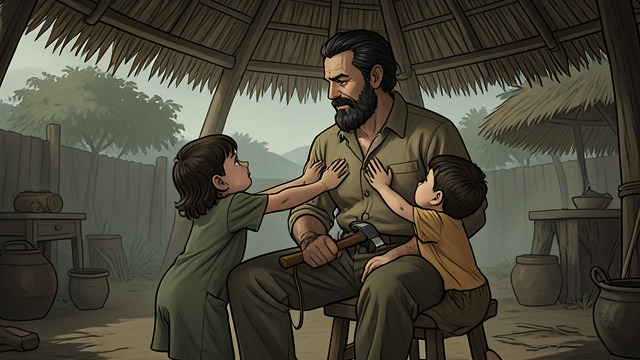
An Oracle in Old Age
Reverence and roughness
Younger members bring gifts and ask Isherwood Williams about weather or hunting. They sometimes pinch him when he fails to answer, treating him as both an oracle and an ordinary dependent.
A role he never sought
He understands that the hammer and his surviving memories have given him sacred authority. The community’s belief provides continuity, but it also transforms a mortal elder into a figure of myth.
During the first rainy season after the Disaster
During The Tribe’s early years
After the children refuse to touch the hammer
During a classroom discussion in Year 22
In Isherwood Williams’s last years
