
The Ecological Succession
Earth AbidesThis flow follows the disruption of human-managed ecosystems and the unpredictable returns of wild species after people disappear.
increasing Bearing strength in each event
 decreasing
Bearing strength in each eventdecreasingThe Untended Streets
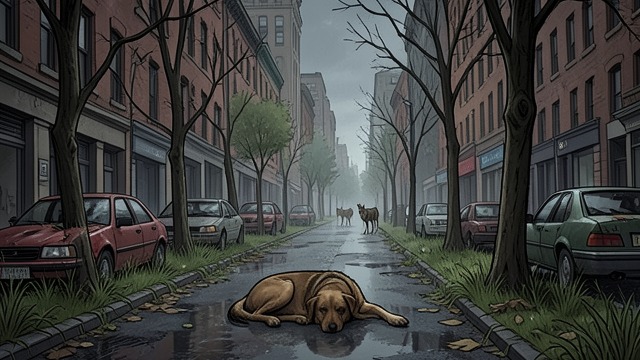
The Untended Streets
Domestic life unravels
Dogs, cats, and livestock are suddenly without owners or routine care. Some find food and water, while confined animals die where they are trapped.
Wildness advances
Plants overgrow lawns and roads, and coyotes move through formerly busy highways. Isherwood Williams reads these changes as the beginning of a new ecological order.
The Sheep’s Decline
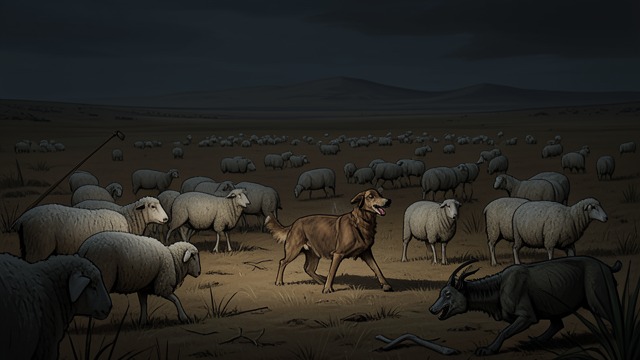
The Sheep’s Decline
A lost protector
Flocks survive briefly after their shepherds vanish, while sheepdogs continue to herd them through habit. Predators begin taking animals the flock cannot defend.
Domestication’s cost
Without human protection, sheep struggle to find water and avoid hazards. Their dependence on shepherding shows how specialization can make a species vulnerable when its supporting system disappears.
The Ants’ Sudden Peak
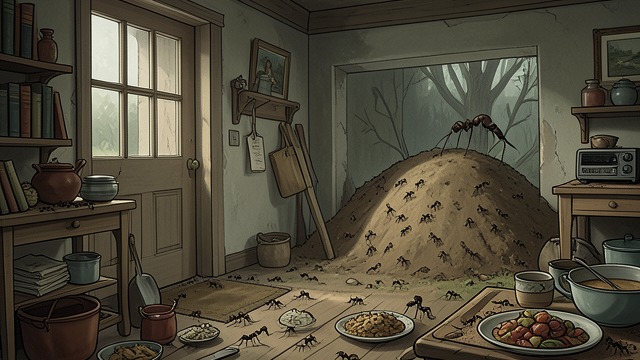
The Ants’ Sudden Peak
A population explosion
Ants spread across Isherwood Williams’s neighborhood, invading houses and overwhelming efforts to keep food clean. Their numbers seem to challenge every familiar limit.
A silent collapse
The ants then vanish from sight almost as abruptly as they appeared. Isherwood Williams suspects depleted food or disease, but cannot determine the cause.
The Rat Outbreak
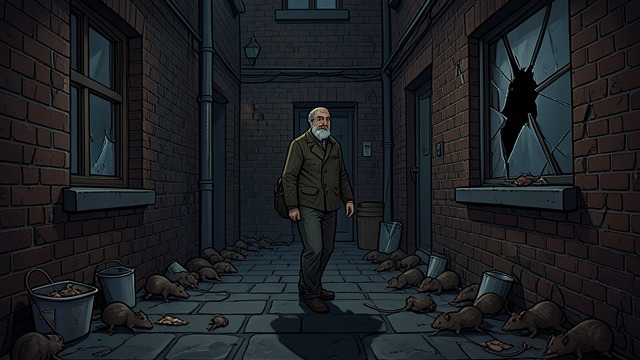
The Rat Outbreak
A citywide surge
Rats multiply on stored food and fill the built-up area. The household fears that the infestation may carry plague, while the rodents strip stores of edible goods.
Scarcity and retreat
As food dwindles, rats attack one another and become harder to see. Their visible swarm subsides, leaving the surviving population to shelter and forage beyond the open streets.
The Animal Balance
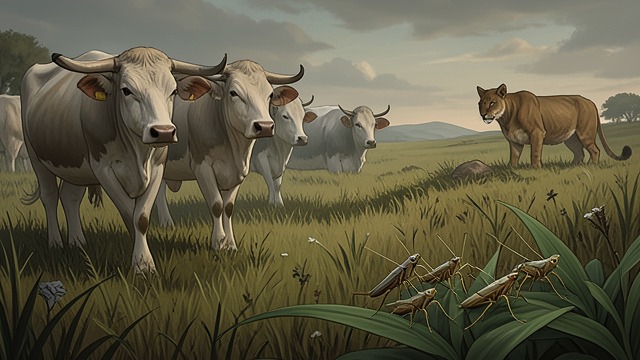
The Animal Balance
An unsettled landscape
Cattle expand, grasshoppers consume vegetation, and mountain lions flourish while prey is abundant. Success for one species repeatedly creates pressure elsewhere.
A shifting equilibrium
Drought and predation reverse temporary booms. Isherwood Williams learns that nature is not simply recovering a fixed past but developing new balances without human control.
During Isherwood Williams’s first journey through the Bay Area
During Isherwood Williams’s west-to-east journey
Within the first post-Disaster year
After Isherwood Williams and Em establish a household
Across the first decades after the catastrophe
