Bad Year
Earth AbidesThe Bad Year is Year 6 in the community’s post-Disaster calendar, remembered for drought, grasshoppers, and the deaths of cattle. Its defining contrast is between a growing human community and a landscape that could no longer reliably sustain it: births made the group feel less precarious, but drought and successive ecological shocks brought its food supply and confidence under pressure. When the community named the year at the winter solstice, it chose the memory of hardship over the hopeful alternative of celebrating its babies.
A Growing Community Under Pressure
Year 6 was eventful from its beginning. All four women bore children, including Maurine, who had seemed too old to do so. Since Em had led the way, the adults had developed a strong desire for larger families. Their decision carried the memory of the Great Loneliness, the term they had given to the dread each adult had experienced while living alone. The group was still a small light against the surrounding darkness, and each newborn seemed to make that light more secure.
By the end of the year, the ten children outnumbered the adults. Evie did not fit neatly into either group, an exception the account preserves even as it describes the community in terms of its changing numbers. The births offered a powerful sign of continuity, but they did not protect the group from the conditions around it. The same year that enlarged the community also exposed how vulnerable its food and morale remained to forces beyond its control.
Drought, Cattle, and Grasshoppers
The year was dry, with little grass. Cattle had become increasingly numerous, and the animals grew thin and wandered widely in search of food. One night a hungry herd broke through the strong fence around the small vegetable plot. The men, roused by the intrusion, fired rifles at close range; before the herd could be driven off, however, the garden had been ruined. The irony was that the cattle destroyed it by trampling: amid the milling animals, none had been able to eat the crops.
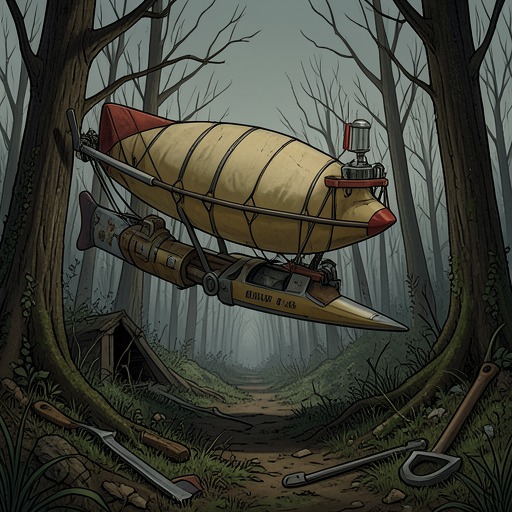
Grasshoppers then descended on what the cattle had not reached. They stripped leaves from trees and ate the flesh of ripening peaches, leaving bare seeds hanging from leafless branches. Afterward the insects died, leaving the land with another consequence of the outbreak. Cattle also began dying by the hundreds in dry streambeds and muddy waterholes. Their bodies, along with those of the grasshoppers, marked the scale of the die-off, while the stripped land looked to the community as if it might never recover.
This was not a single failure but a chain of losses: too many cattle had become a nuisance, drought left them hungry, and their search for food destroyed the garden; the grasshoppers then consumed much of what remained beyond their reach. The year’s abundance of cattle turned into mass death, while the community’s garden—an important cultivated resource—was lost without providing food to either people or herd. That sequence made the environmental readjustment after the loss of human controls immediate and difficult to dismiss as an abstract idea.
Fear and the Return of Rain
The damage frightened the community. Ish tried to explain that the ecological upheaval was part of the readjustment following the loss of human controls, but explanation did not prevent despair. Molly fell into depressions and sometimes wept loudly. Even Ish, despite his rational account, became despondent about the future. Among the adults, Ezra and Em were the ones who seemed best able to accept events as they came.
The children responded differently from the adults. The older ones appeared little affected; Jack, still six, held his father’s hand confidently and regarded a dying cow with mild interest, as though it belonged to the ordinary world he knew. The nursing babies, with the exception of Em’s, seemed to absorb their mothers’ distress and cried fretfully. Their crying further disturbed the mothers, creating a cycle that intensified the strain. October became the month the community associated with horror.
Rain changed the outlook. Two weeks after the first rain, the hills were faintly green with new grass. The community’s mood turned suddenly toward happiness, and Molly and Maurine wept with pleasure. Ish, too, felt relief: in the preceding weeks, the others’ despair had shaken his confidence in the earth’s capacity to recover. The new growth did not undo the losses of the year, but it gave visible grounds for hope after a period when even the land’s ability to regenerate had seemed uncertain.
Naming the Year
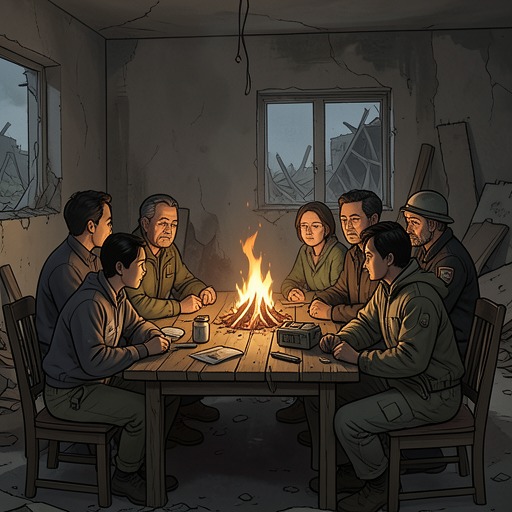
At the winter solstice, the people gathered at the smooth rock where they cut the year’s numeral and chose its name. They considered calling it the Year of the Four Babies, a name that would have marked the births as a good omen. But the alternatives—Dead Cattle or Grasshoppers—better matched the hardship that had dominated their memories. They settled on the Bad Year.
The choice makes the name more than a record of weather or animal deaths. It sets the community’s strongest hopeful event, four births, against the destruction of its garden, the loss of cattle, the insects’ devastation, and the fear that followed. The newborns had seemed to push back the darkness of annihilation, yet the year’s final name was governed by the damage that the group had endured. Rain and fresh grass offered a partial reversal, but not enough to displace that shared memory. In the calendar, the Bad Year stands as a record of how survival depended both on human continuity and on an ecological recovery the community could hope for but could not command.