Collapse of civilization
Earth AbidesCivilization’s collapse in The Great Disaster unfolds after the initial catastrophe, as the intricate systems that once supported daily life fail without the people and maintenance that kept them working. Power and water do not vanish at once: they persist, then falter through small neglected weaknesses. For Ish and the people who become The Tribe, the resulting challenge is not simply to stay alive, but to decide whether a society dependent on the remains of the Old Times can create the means to continue.
The delayed failure of infrastructure
At first, the disaster does not immediately switch off the electrical system. The generators continue sending power through the network, and when a wire or power-house fails, the larger system adjusts to compensate. Its apparent resilience conceals its dependence on routine human attention. The governors controlling the generators are not fully automatic: they need regular oil inspections and occasional replenishment. As the oil runs low, the governors fail one by one. Water continues through the system, but without turning the turbines; each lost generator increases the strain on those still operating, so decline accumulates rather than arriving as one clean break.
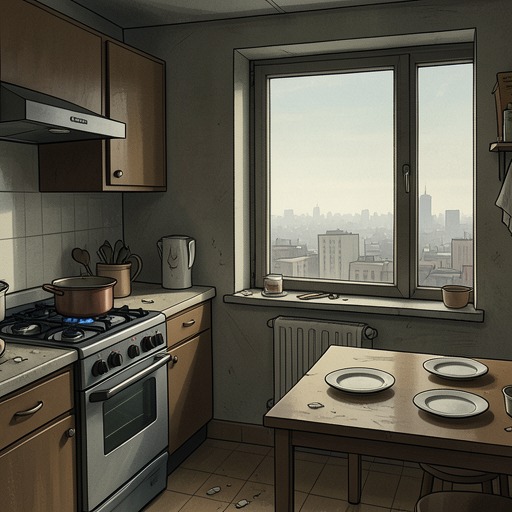
The change reaches Ish in stages. The lamps fade from their familiar brightness to a dim glow, and he turns to candles. Even after he has them, the spreading darkness weighs on him; he gathers matches, flashlights, and candles as a form of reassurance. Yet the loss of electric power matters more immediately than the absence of electric light. Refrigeration stops, and food in the ice-box and deep-freeze spoils. The failure of one service thus alters the value of other resources: stored food that had seemed secure becomes unusable because the system that preserved it no longer operates.
Waterworks reveal the same vulnerability on a larger scale. A steel section in the main aqueduct had been imperfect from manufacture, but it passed inspection when the inspector’s judgment was impaired at the end of the day. A foreman later noticed a leak and had it patched; after the Great Disaster, no one returned to maintain the pipe. Its slow deterioration allows water to escape unnoticed for years, until a dry spell follows heavy rain and the reservoir’s level drops sharply. The breach is not a spectacular act of destruction. It is the final consequence of a flaw that ordinary inspection and repair might once have contained.
The everyday landscape comes apart
The same process is visible on San Lupo Drive after the first autumn rain. Leaves left uncleared block a drain-pipe; water crosses the street, floods the former Harts’ lawn, enters the house, and cuts a small gully through the rose-garden before reaching a storm sewer. Ish recognizes that the obstruction could have been cleared quickly. He also recognizes why he does not clear it: the same kind of blockage must be happening across countless roads and drains, and there is no one left to tend to them all. The scene makes maintenance itself visible. Roads, drains, and walls may remain standing, but they function only while people repair their many small failures.
The collapse also changes how Ish understands the survivors’ prospects. In the initial crisis, institutions had still organized emergency food distribution, hospitals, and mass burials; reports suggested that many people had continued to help rather than giving way to panic. But the survival of people and fragments of public service did not mean that civilization had recovered. Ish comes to distinguish the original disaster from the subsequent deaths it makes more likely: disease without treatment, accidents without help, and the consequences of isolation or shock. His own survival is partly different because he did not experience the catastrophe while watching his family and others die, an experience he understands could have left others more deeply shaken.
Knowledge preserved, practice lost
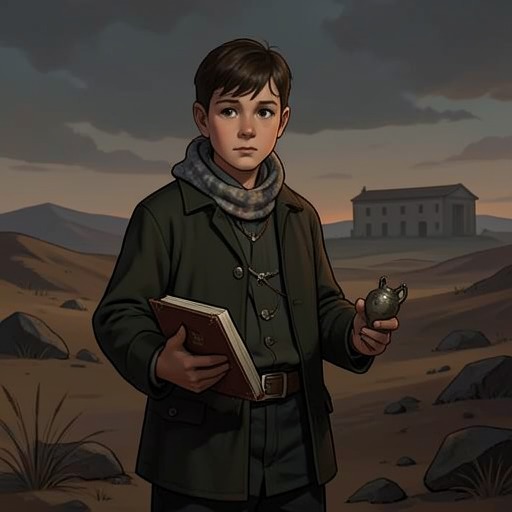
The University Library gives Ish a glimpse of what might be recovered. He enters it with the intention of finding books on obstetrics, but the stacks and reading room overwhelm him with the scale of their stored knowledge. Now expecting a child, he imagines a future in which that child need not live forever by scavenging. Books preserve knowledge, but they cannot rebuild civilization by themselves: people must be able to read and know how to use them. Ish also thinks of seeds and the need to preserve important domestic plants. The library is therefore both a resource and a measure of what has been lost: information survives materially, while the skills, institutions, and supplies needed to turn it into a functioning society do not automatically survive with it.
That gap becomes a lasting concern as The Tribe grows. Twenty-one years after the Great Disaster, Ish looks at the community and sees people from whom a new civilization might be made, yet they still depend on what the past left behind. He urges them to stop treating scavenging as a permanent way of life. Their supplies will eventually run out, and future generations may not know how to produce even necessary goods. His warning extends from elaborate conveniences to basic practical knowledge, such as making fire after matches have been used or spoiled. The community’s apparent comfort is fragile because it rests on inherited objects rather than renewed productive ability.
Ecological disruption and recovery
The post-disaster landscape is not simply empty or stable. In the Year 5, cattle have multiplied until they are a nuisance; people can obtain plenty of tough beef, but they must also watch for charging bulls. The next year brings drought and sparse grass. Hungry cattle break through the fence around the vegetable plot, and the garden is ruined by the herd’s trampling before it can be eaten. Grasshoppers then consume what remains of the vegetation, including leaves and the flesh of ripening peaches. These pressures expose how vulnerable the Tribe’s food supply is to ecological change, even when animals appear abundant.
The damage does not continue in one direction. Two weeks after the first rain, grass sprouts across the hills, and the people’s despair eases. Ish, too, had begun to doubt whether any seeds remained. The sudden greening restores confidence in the earth’s capacity to recover, but it does not undo the garden’s destruction or make the community independent of environmental conditions. The account places human loss and ecological renewal beside one another: the land can recover, while the people must still learn how to live within its fluctuations.
Rebuilding as a social choice
The Tribe’s later decisions show that survival also depends on changing social arrangements. In the Year 34, a messenger from another group living north of the Bay proposes a union. Fear of disease and suspicion of unfamiliar customs compete with the practical need to strengthen the community, including the need for marriage partners as births have left fewer girls than boys. Ish and Ezra oppose the union, while younger men argue for it. Em responds by insisting that life cannot be preserved simply by refusing its risks; the group votes unanimously to admit the newcomers. The resulting measles outbreak affects The Others, who recover. The episode does not restore the old civilization, but it shows a community making a collective choice to meet a demographic and social problem by expanding its ties.
The collapse, then, is not only the destruction of machines or the disappearance of public order. It is the unmaking of the maintenance networks, knowledge, and cooperation that allowed those systems to endure. The Tribe inherits waterworks, roads, books, and stored goods, but inheritance alone cannot supply the labor that kept them useful. Across Ish’s changing understanding—from the fading lamps and spoiled food to his warning against scavenging—the central distinction is between living amid civilization’s remnants and acquiring the practices that could make a new one.