Ish’s effort to rebuild civilization in the tribe
Earth AbidesIsh’s effort to rebuild civilization in the tribe is a speech that turns a familiar complaint into a vision of collective responsibility, then runs up against the community’s easy habit of letting the matter drop. At the beginning of Year 22, he urges the people gathered in his living room to stop depending on supplies left from the pre-disaster world and begin producing, teaching, and organizing for themselves. His appeal reaches beyond tools and food: civilization, he argues, also requires rules and forms of social life. The speech does not produce an immediate program of action, but it exposes the cost of the tribe’s dependence and the weakness of a community held together mainly by family ties and informal opinion.
A speech about dependence
Ish begins speaking almost without intending to. In the small company assembled in his living room, he calls for an end to their prolonged inaction. Although he knows he is addressing only a handful of people, he feels as though he is speaking to a nation, or even to the world. That contrast gives the moment its scale: the audience is intimate, but the future he fears belongs to everyone who will inherit the tribe’s way of life.
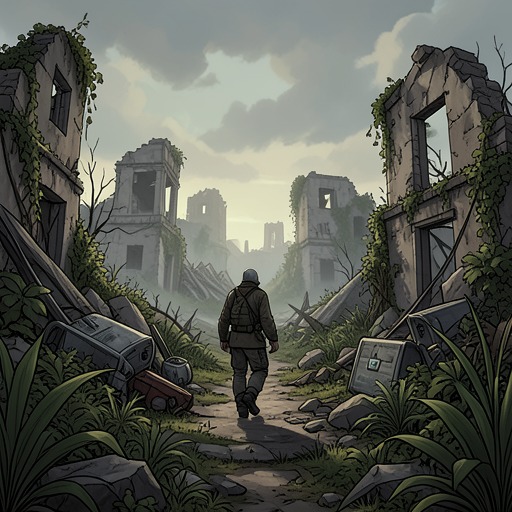
His central warning is that scavenging cannot sustain the community indefinitely. Supplies inherited from before the Great Disaster will eventually run out, whether during the lives of those present or those of their children and grandchildren. Food may remain obtainable through cattle and rabbits, but Ish worries about less immediate forms of dependence: what people will do when they can no longer find complicated goods, or even light a fire after their matches have been used up or spoiled. The examples make the danger concrete. The problem is not simply that the tribe lacks particular objects; it has ceased to maintain the knowledge and practices needed to replace them.
Ish links this stagnation to the time elapsed since the catastrophe. He allows that people may have needed time to recover after their world was destroyed, but points out that twenty-one years have passed and that many members of the community were born after it. In his view, a temporary response to shock has become a settled way of life. His appeal is therefore directed both backward, toward the original disruption, and forward, toward people who have never known the former world but may still inherit its material dependence.
The program Ish proposes
Ish’s practical proposals span several parts of community life. The tribe should acquire more domestic animals instead of relying mainly on dogs; grow more of its own food instead of continuing to raid old grocery stores; and teach children to read and write more fully. He notes that his calls for education have never received strong support. Together, these proposals define progress as the recovery of capacities, not merely the possession of useful things: raising food, maintaining animals, and passing knowledge to the young.
The refrigerator discussed by the group supplies Ish with an example of the divide between conversation and action. The tribe can talk about a device from the former world without doing anything to restore the practical abilities that made such devices possible. Ish compares the community to an enchanted king who can watch things happen but cannot act to break the spell. The image captures his frustration with a society that recognizes its dependence yet remains passive within it.
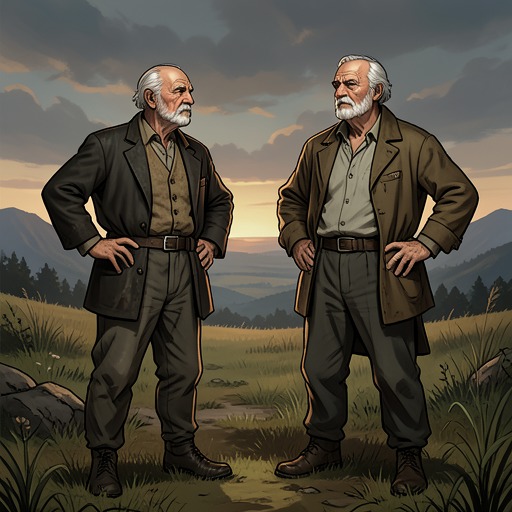
When Ish pauses, the listeners applaud. At first he thinks his eloquence has persuaded them; then he recognizes the applause as largely affectionate irony. Roger calls it the familiar speech of an old man, and Ish briefly bristles at being treated as a comic relic after having led the tribe for twenty-one years. Ezra laughs, however, and the others join him; the tension falls away. Ish asks what they intend to do, insisting that the truth of his argument does not depend on whether he has made it before. The exchange reveals a limit of speech as an instrument of change: he can state the need, but the group’s response turns his repeated warning into a social joke rather than a decision.
Jack’s departure and the problem of authority
Jack’s conduct gives Ish a second subject for his appeal. As Ish waits for a response, his oldest son gets up from where he has been lounging on the floor and says he has to go. Jack is now taller and more powerful than his father, and is himself a father. His departure is an ordinary personal choice, but Ish experiences it as evidence of a larger political problem: the tribe has no accepted means of requiring adults to remain, obey a decision, or take part in collective business.
Ish expands his argument beyond material recovery. Civilization, he says, consisted not only of devices and the knowledge of how to make or operate them, but also of social organization: rules, laws, and ways of life among people and groups. The family is what remains of that organization, and Ish recognizes it as a natural foundation. But he argues that it cannot be sufficient once the community grows. Parents can correct young children; they cannot govern grown children in the same way.
He describes the tribe as lacking a defined form of government, whether democratic, monarchical, or dictatorial. Even if those present vote to do something, he observes, they have no means of enforcing the decision beyond public opinion. Jack’s departure makes this weakness visible at precisely the moment when Ish is asking the community to act together. Ezra encourages him to continue and suggests that the others want to hear his ideas. Ish’s anger subsides; he acknowledges that Jack is an adult acting independently and recognizes that he should be glad his son is no longer merely a boy. But the departure still supplies the emotional force behind his warning about the absence of shared rules.
An appeal left unresolved
The gathering does not become a council that adopts Ish’s proposals. Someone proposes a toast to law and order; the older people laugh at the familiar phrase, while the younger ones do not understand its former associations. After they drink, the occasion settles naturally back into a social event. The shift is small but decisive: the language of collective order is voiced, yet it does not establish a new order or bind anyone to a course of action.
Ish hopes that his renewed speech may have planted a seed whose effects will appear later, but he doubts that it will be enough. He recalls the joke about waiting to repair a roof until it rains and expects people to delay action until circumstances force them. If that happens, he thinks, the forcing event is likely to be unpleasant and serious. The speech therefore ends not in triumph but in a forecast of crisis: the community may understand its vulnerability only when that vulnerability becomes immediate.
The scene is framed by the beginning of a new year. On the same day Ish carves 21 into the smooth surface of the rock, marking the start of Year 22, he becomes more conscious of the possibilities in his youngest son. This juxtaposition sets the community’s uncertain future beside the younger generation that will live it. Ish’s call to recover production, education, and social organization remains unanswered in the moment, but the scene makes clear what is at stake: a new generation cannot inherit civilization merely as a store of abandoned supplies. It would also need the skills and common arrangements to make a life for itself.